Italy has spent almost a month in the grip of a protest movement that keeps growing and that brings together very distant parts of the country: students camped in tents outside universities, farmers in the South, and truckers blocking ports and motorway interchanges.
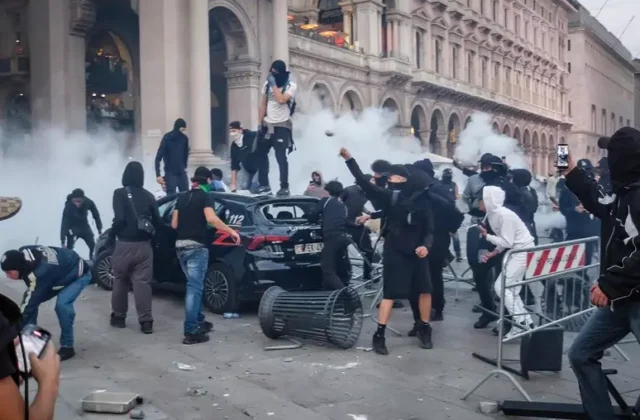
News coverage has focused almost exclusively on episodes of tension during marches, which remain a tiny fraction of demonstrations that are overwhelmingly peaceful.
Far less has been said about why all these people have taken to the streets. The reasons are specific, and largely come down to numbers.
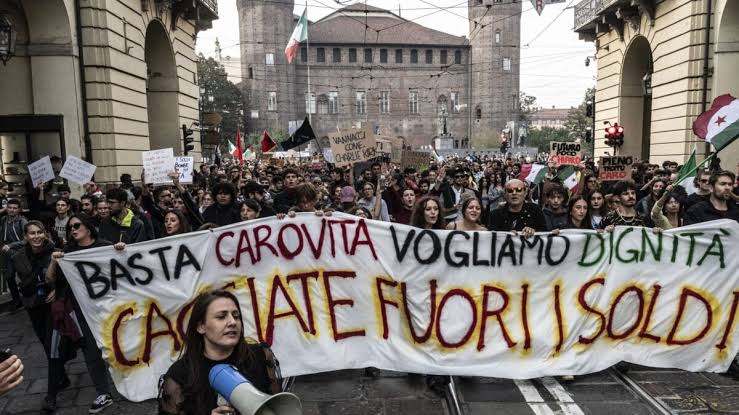
“Enough with the cost of living, we want dignity”
This is the banner that recurs most often at marches these days, and it sums up what unites a farmer from Calabria and a student from Milan: a balance sheet that no longer adds up.
Over the past thirty-five years, Italy’s average real wage has fallen by 2%, while it grew by 35% in Germany and France, 16% in Spain, and 36% across the OECD average.
Today the average Italian worker’s gross annual salary stands at 36,594 euros, compared to 45,964 in France and 66,700 in Germany.
And while wages stood still, prices did not: according to Istat, in the second quarter of 2026 households’ purchasing power fell by 0.9%, with acquired inflation at 3.1% for the year, and the savings rate slipped to 6.7%, the lowest level since the end of 2012. Adjusted for inflation, Italians’ overall purchasing power is worth 297 billion euros today, the same as in 2010: sixteen years without moving forward a single step.
This weighs differently on those now entering the job market. It doesn’t just mean a lower standard of living — it means being unable to build one at all: frozen wages and soaring rents make it impossible to plan ahead, move out, or start a family.
It’s no coincidence that another phrase appearing on protest signs is “precarious future”. And those who look for a way out often find it elsewhere: in 2024, around 25,000 Italian graduates aged 25 to 34 emigrated, against just over 4,000 who returned — a net loss of nearly 21,000 skilled young people in a single year.
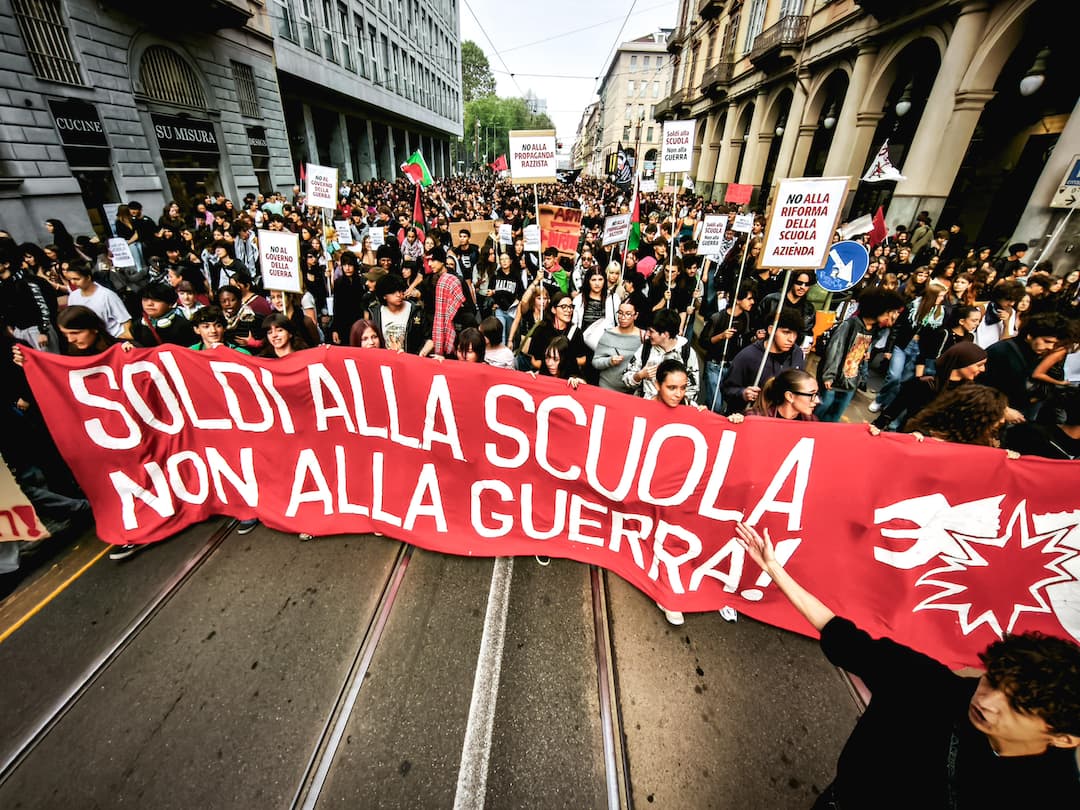
Students aren’t just protesting about school
It would be a mistake to read the student mobilisation as a narrow, sector-specific dispute.
What young people are bringing to the streets is the cost of living in its entirety: rent, which affects not only out-of-town students but anyone trying to live independently; the weekly shop; the cost of filling up the car; utility bills.
The same fuel price surge that has brought the South to a standstill is paid by families every time they fill up their tanks.
On rents, the most visible figures come from university cities: in Milan, a single room on the private market costs around 700 euros a month, and a place in a residence hall can reach 1,300 euros, while in Rome students say they spend more than half a monthly salary just to have somewhere to sleep.
Of the more than sixty thousand student housing places promised, only thirty-three thousand have actually been delivered, and according to the Union of University Students (Unione degli Universitari), only 3.8% are publicly funded. These prices apply to everyone, not just students: the difference is that at twenty, without a salary behind you, they make independent living simply impossible.
Roughly one in four young people drops out of university to go to work instead.
Hence the tents outside Montecitorio, at La Sapienza, and behind the Library of Trees (Biblioteca degli Alberi) in Milan, along with a set of fully quantified demands: seven billion euros for public universities and the right to education, 1.7 billion for scholarships, four billion for fully public student housing, two billion to gradually abolish tuition fees, and 1.5 billion for free transport and caps on canteen prices.
Another slogan at student marches places two budget items side by side: “money for schools, not for war”. The reference is to Italy’s military spending, which according to the Milex observatory will exceed 33 billion euros in 2026, up by more than a billion compared to the previous year.
The South at a standstill for weeks, with families caught in the middle
In the South, the protest began earlier and has a clear starting point: 6 October, when the fixed discount on the diesel excise tax expired. Since then, prices have risen to an average of around 2.30 euros per litre — and for anyone driving a truck or a tractor, this isn’t just another price hike, it’s the single biggest cost item.
For farmers, this has compounded a pre-existing problem, summed up at the Calabrian pickets in five words: “we produce at five euros, we sell at three”. The price paid at the farm gate sits below production costs, leaving a loss instead of a margin on every harvest.
In Falerna, among farmers who had come from the Lamezia area and Nocera Terinese, an eighteen-year-old put it this way: “if things carry on like this, we’ll be forced to shut down — we won’t make it to the end of the year.”
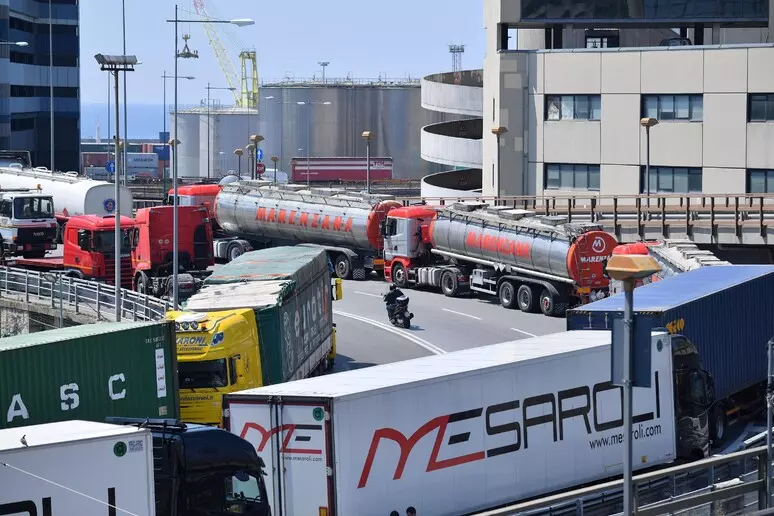
Since 21 October, farmers and truckers have been acting together, and the protest, which started in Calabria and Puglia, has spread to Sicily, Basilicata and Campania. Five hundred trucks formed a convoy in Brindisi, blockades held Cerignola for a week, an open-ended sit-in took place at Palermo’s Santa Lucia pier, and pickets were set up at the port of Gioia Tauro and along the A2 motorway interchanges.
Caught in the middle have been ordinary families.
Eni reported that 150 of its 300 Enilive stations in Puglia had run out of fuel, several filling stations in Potenza ran dry, and Bari’s mayor warned that within days waste collection and public transport could be affected.
In Cerignola, a town of sixty thousand people, the ten largest supermarkets found themselves with largely empty shelves.
This has been going on for weeks, not days.
What the government has done
On the fuel front, more than 600 million euros have been allocated, later raised to around a billion, with a further 175 million announced in recent days.
On 21 October came a tougher response too, with the suspension of blockades in Sicily and Calabria.
What hasn’t been addressed, however, is the root cause of the protest: the excise discount that expired on 6 October. The Ministry of Transport has called trade associations to a meeting on 27 October, and Minister Adolfo Urso has said that any further measures will be decided after that encounter.
In Calabria, the fifteen million euros allocated by the regional government for agriculture and transport have been deemed insufficient by farmers themselves.
On the student front, no substantive response has come to the demands put forward during this weeks-long campaign. The next mobilisation has already been set for 20 November.