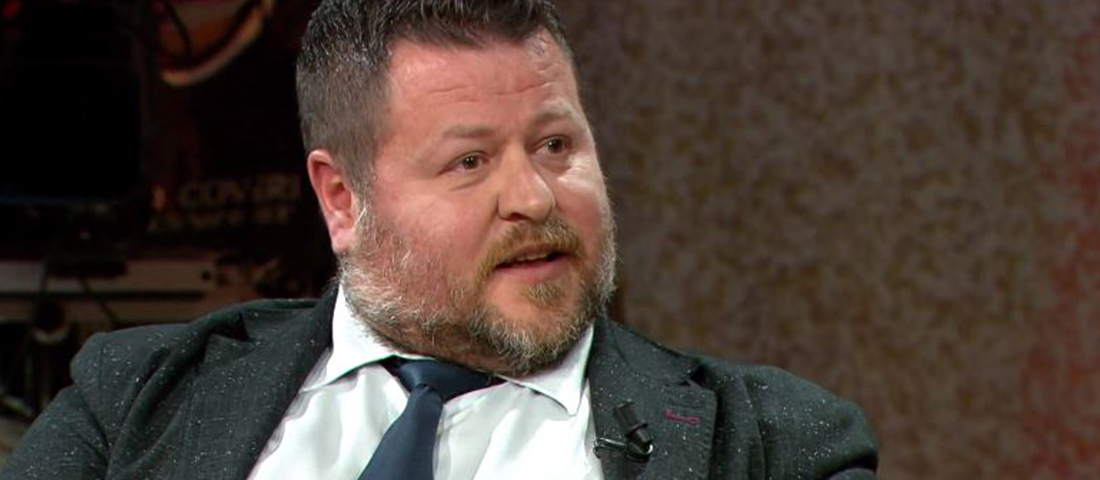
Building a distinctly San Marino response to the birth-rate decline by combining welfare, family services and economic support. This was the political thrust of the speech given by Giuseppe Maria Morganti (Libera) in the Grand and General Council (Consiglio Grande e Generale) during discussion of the bill. According to Morganti, the reform attempts to outline a “San Marino model,” though its effectiveness will need to be assessed over time, with further action taken if necessary. The full text of his speech follows.
«I would like to begin by returning to a significant point made by the Secretary of State during his presentation, who highlighted how this bill is the result of an extremely careful and mature analysis that the Grand and General Council has carried out over time – an analysis that has also involved testing solutions through the adoption of earlier laws, in order to understand what the most suitable model might be when set against modern social needs, which all too often risk diverting attention from issues of extraordinary importance, first and foremost the need to support the birth rate. It is precisely on the basis of this in-depth contextual analysis that a number of concrete solutions have been identified and put forward. The work carried out in Committee has undoubtedly been thorough, and it has allowed for the organic definition of a coordinated set of legislative measures. I do not know whether a genuine “San Marino model” for tackling the complex challenge of the falling birth rate has already been fully established, but I firmly believe we are on the right track. Nor do I know whether this specific model can be said to be fully defined by this bill, which in some respects is markedly comprehensive – intervening directly on structural and fundamental issues – while in others it addresses certain specific aspects perhaps somewhat more marginally or timidly. If we ask ourselves what the real problems are that today explain why fewer children are being born in our country, we must recognise that widespread precariousness and a deep sense of uncertainty about the future – which characterise the lives of young couples – rank first. This is a substantial, global phenomenon, in the face of which a small reality such as our Republic can, objectively, do very little, and we as individual legislators can do even less. However, there are certain domestic factors on which we can and must act with determination and courage: I am referring, for example, to the need to understand how access to all those essential public services that concretely support families in their moments of greatest need – particularly when they have young children – can be significantly improved. This support must not be limited solely to the very first years of a child’s life, but must take the form of an ongoing process, since families and household units face these educational and economic challenges over the long term, not only in the short term. Consequently, this kind of service and support cannot be exclusively economic or welfare-based in nature. Although there are specific cases in the Republic of San Marino where there is a genuine need for direct monetary assistance – and it would be appropriate for these cases to be regulated in a transparent and equitable manner through the definitive introduction of the ICEE (equivalent economic situation indicator) tool – it is at the same time essential that public services and legislative and operational instruments work in perfect harmony, rather than in conflict, with emerging new social models, managing somehow to integrate with these models and redefine them positively. In the current historical moment, in which both men and women within a household work, an important and significant gap inevitably opens up with regard to so-called “family time” – that is, the time parents can genuinely devote to nurturing family bonds and, in particular, to raising and educating their children. It is precisely on this critical issue that politics and institutions have a duty to intervene, and I must acknowledge that this bill attempts to do so in a number of ways – for instance, by extending the possibility of parental part-time work, though other colleagues who spoke before me have already illustrated admirably the scope of the amendments introduced – and by decisively tackling the issue of family leave, so as to ensure a fairer and more balanced distribution of this important tool between fathers and mothers. The reform then addresses strictly economic support through the reduction of co-payment fees for access to childcare services, the introduction of a baby bonus, and the adoption of other measures which I nonetheless consider secondary to the guiding principle that must inspire us: finding overall systemic coherence – in other words, generating a genuine San Marino model. In this regard, I want to stress that a great many of the issues we are discussing today form part of a very rich cultural and political legacy. This was aptly noted by the councillor who spoke before me, who recalled how these achievements stem from the long and difficult battles for emancipation waged by women from the period following the Second World War onward – and, I would venture to say, even during the war itself. These are historic battles that have shaped many aspects of our civil society, and which saw, alongside the well-known initiatives of the Christian Democrat movement active since 1952, the fundamental, valuable and incisive role played by other organisations, such as the Unione Donne Sammarinesi (Union of Sammarinese Women), which historically expressed a different but no less worthy ideal inspiration. It is not my intention to slip into a pointless ideological discussion, which would be out of place at this moment, but I do wish to underline how social achievements in our country have always come about at multiple levels and thanks to the contribution of different political forces. Only time – together with careful monitoring and the practical testing of this broad and comprehensive project – will tell whether this law manages to establish a genuinely effective and lasting model for the Republic of San Marino to counter the falling birth rate. It will therefore undoubtedly be necessary to revisit these issues in the future, to check whether the measures adopted prove truly effective or whether they need to be further amended, strengthened or corrected. This is the real political challenge that awaits us. Looking at the European experience, we see that different countries have tended to adopt alternative models: on one hand, systems focused mainly on strengthening and improving the efficiency of public welfare services; on the other, those based almost exclusively on direct economic aid and contributions to families. Our choice has been to outline a mixed model, in which both solutions find room simultaneously, and this could represent a strong and positive novelty capable of uniquely characterising what we are building. I therefore welcome this bill, in the hope that it can begin bearing the desired fruit for the country as soon as possible. The statistics will be there for all to see in the coming years, and if we find that these measures prove insufficient to reverse the trend, we must be ready to intervene again to strengthen and refine the structures we are putting in place today».