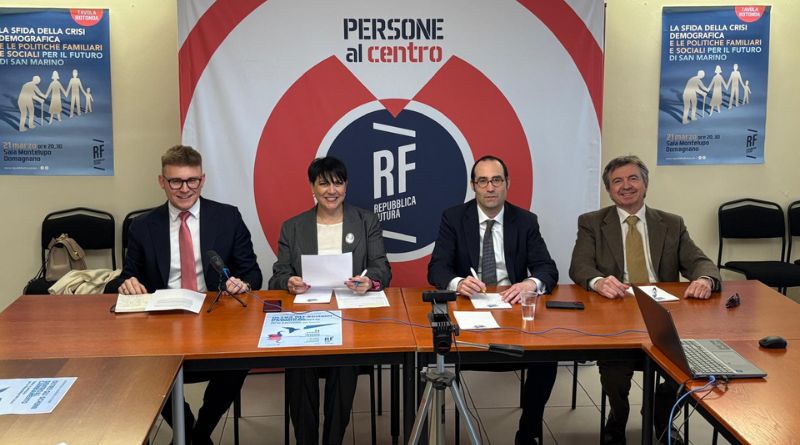
The ruling by the European Court of Human Rights in the case of Casali v. San Marino has reignited political tensions over the state of justice in San Marino. Opposition party Repubblica Futura has issued a scathing critique of the government’s handling of the case before the Strasbourg judges, renewing its concerns about the functioning of the Titan’s judicial system.
“The ruling published last Thursday by the European Court of Human Rights in the Casali vs. San Marino case only adds to the enormous concerns surrounding San Marino’s justice system. This decision, moreover, follows closely on two other serious rebukes from the Strasbourg Court, directed at both the government and the Court,” reads the statement issued by the opposition party.
The case concerns a San Marino citizen who was convicted over a Facebook comment about the then Secretary of State for Health. After being convicted at first instance and on appeal, the woman was acquitted by the third-instance judge. Later, however, the judge for extraordinary remedies overturned the acquittal, reinstating the earlier conviction.
Repubblica Futura disputes this decision, pointing directly to the European Court’s findings.
“The problem is that this remedy simply does not exist in criminal matters, as the same judge had candidly admitted just months earlier. The European Court of Human Rights therefore stated the obvious, finding that the judge who invented an extra level of judicial review “was not a tribunal established by law“.”
The party recalls having previously denounced the introduction, through judicial decisions, of levels of review not provided for by law, calling it a particularly serious issue. But what has drawn the sharpest criticism is the conduct attributed to the government during the proceedings before the ECHR.
“In this case, however, a careful reading of the ruling is especially troubling with regard to the government’s conduct in attempting to defend the indefensible, scattering accusations in every direction — against Repubblica Futura, San Marino’s judge at the ECHR, the third-instance judge, the applicant, and her defence counsel.”
At the heart of the controversy is the government’s request to have the citizen’s appeal declared abusive, citing — according to Repubblica Futura’s reconstruction — the political affiliation of the applicant and her lawyer, as well as the party’s interventions on the matter within the Grand and General Council (Consiglio Grande e Generale).
“The government went so far as to request that the citizen’s appeal be declared abusive because the applicant and her lawyer are members of an opposition party, and because Repubblica Futura had dared to raise the issue in the Grand and General Council.”
The party stresses that the Strasbourg Court was critical of these arguments, reaffirming every citizen’s right to turn to European justice regardless of political affiliation.
“These glaring improprieties did not go unnoticed.
The Court noted, “at the risk of stating the obvious,” that a member of an opposition party has the right to apply to Strasbourg and to be represented by an opposition member of parliament, and that raising a matter of general interest in parliament is a sign of a healthy political climate.
It added that the government’s submissions “reveal strong internal political tension” and that the Court “is not a forum for the expression of such hostilities“.”
According to Repubblica Futura, the European judges also expressed concern over the government’s reference to the confidential phase of the proceedings, despite having been warned that such conduct was not permitted.
Another key point concerns the criminal proceedings for defamation brought against the applicant’s lawyer, following a report by the head of the Court, while the third-instance proceedings were still ongoing.
“The Court noted that the criminal proceedings for defamation initiated ex officio against the applicant’s lawyer, following a report by the head of the Court and while the third-instance proceedings were still pending, could reasonably be perceived as a form of pressure, “especially in a heated political context.” Those proceedings, moreover, were subsequently dropped.”
For Repubblica Futura, the European ruling thus confirms the concerns the party has long raised about the state of justice in San Marino, with consequences that extend to the Republic’s international image.
“In short, the concerns we have been raising about justice for some time are evidently being noticed beyond our borders as well,” the movement observes, closing its statement with a question addressed to the institutions: “We therefore ask: who will pay for this incalculable reputational damage?“