Maternity, parental leave, support for student mothers, caregivers, assistance for family members with disabilities and family allowances. These were among the many issues addressed on Wednesday morning by the Grand and General Council (Consiglio Grande e Generale) during its examination of the bill dedicated to supporting families and countering the birth-rate decline.
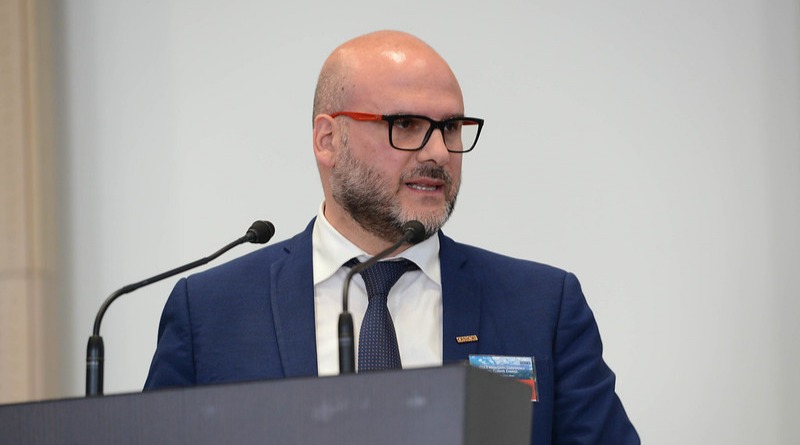
One of the first topics concerned self-employed women. Gaetano Troina (D-ML), while acknowledging the improvement to the allowance, argued that the measures for this category remain too limited. Secretary of State Stefano Canti clarified that the rule is designed in particular to protect those who have been running a business for less than three years. The reform also introduces the possibility for mothers and fathers to take leave periods simultaneously, while a minimum threshold has been added to the allowances for part-time workers as well.
Maternity support extended to women without work
One of the most significant innovations comes with Article 6. Financial support for maternity is extended to women who are not employed and do not receive social security benefits. For residents and holders of an ordinary residence permit, an allowance equal to 80% of the average local contractual wage of an industrial worker is envisaged, for a maximum of 150 days.
The underlying principle is to decouple maternity protection from the existence of an employment relationship. The measure has broad cross-party support: RF, Libera, AR and PDCS all stressed, with different nuances, the importance of recognising economic support even for mothers without a job. Gian Nicola Berti (AR) nonetheless urged that the measure be seen only as a first step, hoping for a longer coverage period in the future.
Paternity leave doubled from 10 to 20 days
Another central change concerns paternity leave, which rises from the current 10 to 20 paid days. It can be taken within the first year after birth and will also be granted in cases of stillbirth.
On this point, Repubblica Futura called for greater ambition. During the debate, reference was made to an earlier proposal to extend leave to 90 days, and the issue of protections for self-employed workers was also raised. Canti clarified one aspect of the rule: the 20 days are guaranteed to the father regardless, while any agreement with the employer applies only to the second ten days, and only if they are used in fractional, hourly instalments. For Libera and PDCS, the doubling nonetheless represents a step forward toward a more equal sharing of childcare between parents.
Richer parental leave that now counts toward career progression
The reform also significantly overhauls parental leave. Allowances are doubled compared with the 2022 rules, with rates of 80%, 40% and 20% and the introduction of minimum thresholds. An amendment further specifies that these percentages also apply when a worker interrupts their leave, returns to work, and later resumes it.
But the point generating the most political debate concerns career progression. Periods spent on parental leave will now count toward professional advancement, even for periods prior to the new law’s entry into force.
Sara Conti (RF) raised concerns that this could create a form of reverse discrimination against women without children who continue working. Libera rejected this reading: for Guerrino Zanotti and Giulia Muratori, the measure is instead meant to eliminate the penalisation mothers have faced in the workplace until now. Andrea Ugolini (PDCS) recalled cases in which maternity and related absences have affected the chances of securing assignments and permanent positions.
Up to 18 months of support for student mothers
An additional amendment introduces specific support for unemployed student mothers enrolled in secondary school or university.
The allowance can last up to 18 months, extended to 24 in the case of multiple births. Under certain conditions, it provides €1,500 per month for the first three months, €1,000 up to the first year, and €500 up to 18 months.
This measure, too, enjoys broad support. The shared goal is to ensure a young woman is not forced to choose between motherhood and continuing her studies. Matteo Casali (RF) raised a fairness concern regarding unemployed mothers, who receive lower support. Libera countered that, in the case of students, the measure also protects an educational path already under way that should be allowed to reach completion. Canti described the measure as a “starting point,” leaving open the possibility of expanding it in future.
Eight hours of paid leave for children’s medical appointments
The law also introduces eight hours of paid leave per year for each child up to age 14, which mothers and fathers can use for medical visits, diagnostic or clinical tests, and vaccinations.
Workers must notify their employer in advance and submit documentation of the healthcare service received. Wages will be advanced by the employer and later reimbursed through social security contributions, with the cost ultimately falling on the ISS Compensation Fund.
Leave extended to care for relatives living in Italy
The rules also change for those who must care for a family member with a severe disability or illness. The requirement that the person being cared for reside in San Marino has been removed.
An employee or self-employed worker based in the Republic will now be able to request leave even to care for a relative residing in Italy, using certification from the relevant Italian health authority (ASL). However, leave cannot be requested if that same person already has a designated family caregiver.
The change was welcomed by both the majority and the opposition. The debate nonetheless highlighted the need to verify certifications issued outside San Marino, and the issue of certain categories of cross-border workers, for whom disparities in treatment persist, remains unresolved.
The “family caregiver” status is officially created
Among the most politically significant developments is the formal introduction into San Marino law of the family caregiver – that is, a person who provides daily care for a non-self-sufficient relative.
Canti described this recognition as one of the defining features of the reform. Its rollout, however, will be gradual: a maximum of 50 caregivers and an overall cap of one million euros. These parameters may be revised once it becomes clear how many applications are submitted and what the actual financial impact on the ISS will be.
The recognition was also welcomed by Repubblica Futura, which nonetheless criticised the initial constraints – from the size of the allowance to the 50-beneficiary cap and the duration of the leave. The Government replied that these are precautionary limits, necessary precisely because it is not yet possible to predict with precision how the new measure will be used.
A single point of contact for information on family support
Article 21 also establishes a family information desk, to be based at the Technical-Administrative Secretariat Office for Equal Opportunities, Bioethics and Social Inclusion.
The goal is to create a stable point of reference for information on services, contributions and resources, as well as assistance in submitting applications. During the debate, a proposal was also put forward to use the desk to gather feedback, needs and suggestions directly from families, providing lawmakers with useful input for possible future amendments.
The decision to place the service within a permanent administrative office, rather than one tied to a particular legislature, was also praised. The article was approved.
Family allowances: no income brackets for now – ICEE to come into play later
The morning’s final major topic was ordinary family allowances. The Government presented an amendment removing the income brackets initially envisaged, postponing any differentiated calibration of amounts until the ICEE (equivalent economic situation indicator) becomes fully operational.
Political debate then focused on the criteria for distributing resources in the future. Several parties called for directing more support toward lower-income families, citing the rising cost of living, utility bills and everyday expenses.
Canti outlined the Government’s strategy: in the immediate term, allowances are being increased, while later the ICEE will allow amounts to be better calibrated to households’ actual economic situations. The goal, the Secretary summarised, is to “give more to those who need more and less to those who need less.” This article was also approved.
The Council’s proceedings were finally suspended at 1:30 pm. The examination will resume on Tuesday, 15 September.