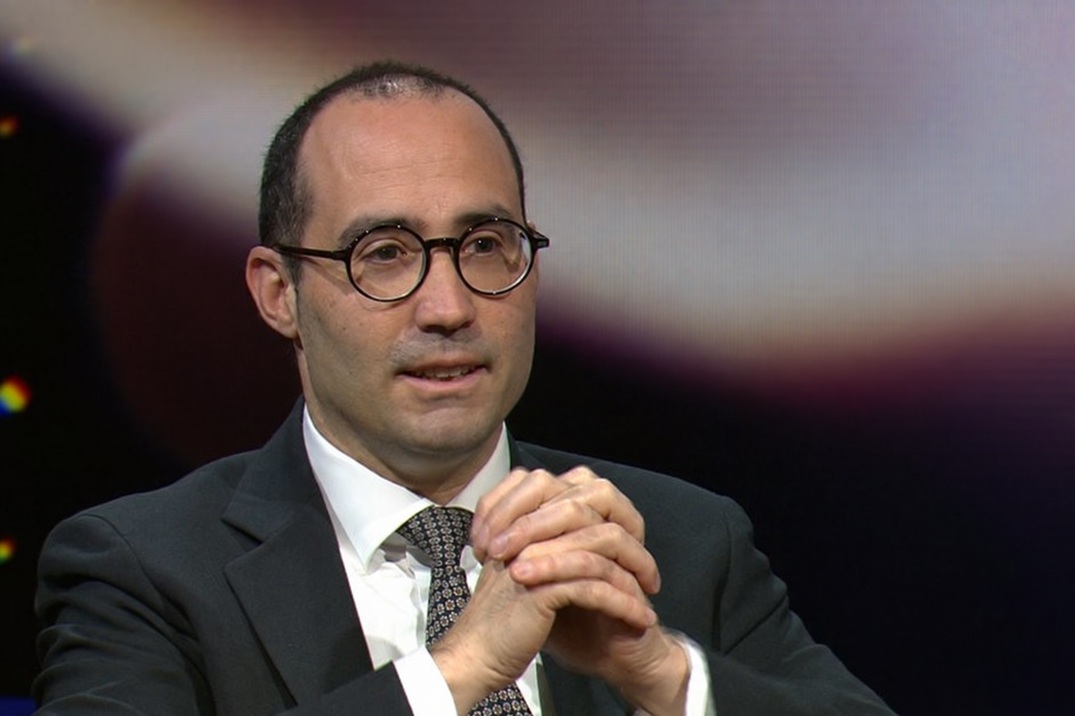
“Let’s try to set aside the rhetoric of triumphalism, the idea that everything is fine.” This is the appeal launched by Nicola Renzi (Repubblica Futura) during the communications item of the Grand and General Council (Consiglio Grande e Generale) session. The councillor reaffirmed his support for the Association Agreement with the European Union, while calling for concrete results for citizens, particularly in banking and financial services. He was also harshly critical of the government’s record, referencing events that have marked the current legislature.
The full remarks by Nicola Renzi (RF)
First of all, I want to acknowledge the remarks made by Their Excellencies, because I believe it was an important address. Beyond the message of hope they wished to convey, what struck me most was also a strong appeal to this Chamber — to mutual respect and, above all, to the need to always remember that the work we carry out here must serve our citizens and only our citizens, none of whom can be excluded from what we do. I believe this is truly very important.
Returning to what has been said, unfortunately I don’t have time now to comment on some of the statements made by the colleague who spoke before me. However, I believe his remarks deserve serious attention, which will certainly need to be given in the coming days.
Let’s start from 19 October, a date that is certainly historic, one that will go down in the history of our Republic. It is a date that, on one hand, surely deserves not only to be remembered but also celebrated. From here, however — and I hope what I’m about to say isn’t misunderstood — I would like there to be a genuine and renewed willingness to cooperate, one that sets aside political games on one hand, which don’t interest us, and rhetoric on the other.
So I make an appeal right away, both to the government and to the majority. Let’s set aside the rhetoric of triumphalism, the notion that everything is fine, and instead of fighting the opposite rhetoric — that of defeatism at all costs and the supposed loss of sovereignty and independence — with more rhetoric, let’s fight it with facts. This is the most important point.
So I’ll say it right now, because from today we will be pressing the government and the majority to clarify not only whether we are ready to request the provisional entry into force of the Agreement, but also how we intend to approach this crucial path, which we support.
I believe asking these questions does not mean being opposed to or discouraging of the Agreement itself and the process we must undertake — rather, it represents a stimulus. Let me try to explain.
We had a very interesting session of the Institutional Reforms Committee, in which we discussed the transposition of the EU acquis. We believe — indeed, we strongly ask the government — to put its cards on the table and tell us clearly what the guidelines and practical methods will be through which we will transpose the EU acquis, and how we can turn the resulting opportunities into reality.
Staying on the subject of the sovereignty and independence of the Republic of San Marino, I believe the answers, both theoretical and practical, are simple. The Association Agreement gives us tools. There are at least three, though there are many others as well: the Joint Committee, the Association Committee, and the Parliamentary Committee.
These instruments represent recognition of our sovereignty and will give us the opportunity to have a recognized forum in which to assert our rights vis-à-vis the European Union.
So, if we want to talk about sovereignty, let’s approach the issue from a historical perspective. The history of the Republic of San Marino is centred on the constant pursuit of our sovereignty, which is never something taken for granted, never something self-referential, but is based solely on the recognition that others grant to that sovereignty. The affirmation of our sovereignty cannot come from ourselves alone, as a kind of self-evident truth.
What guarantees it are legal instruments, bilateral agreements, including trade agreements such as the Association Agreement with the European Union, which strengthens our sovereignty and gives us the tools to advance it.
But we must answer to our citizens, and here there is another serious mistake to avoid: that of closing ourselves off and failing to provide answers. We need to go out and talk to citizens, and above all, the government and the majority should do so even more than we do.
We should go and speak precisely with those citizens who have doubts about the Association Agreement, and demonstrate with facts what the actual benefits are.
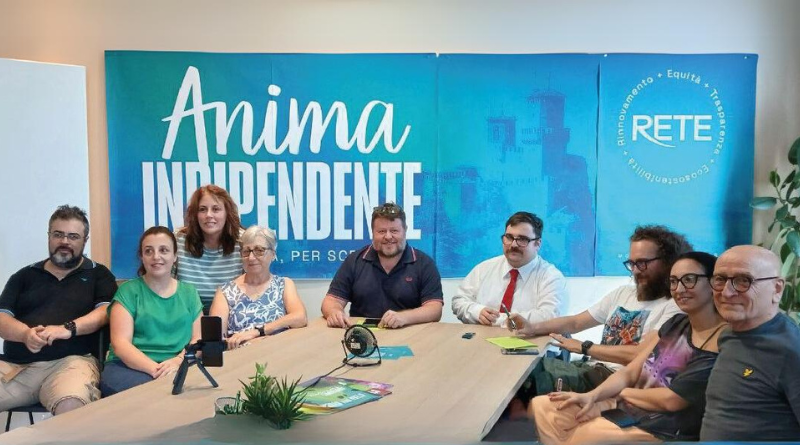
As Repubblica Futura, we have tried to do just that. We did so last week, and we deliberately did it in a bar. We set up there, said a few words, and then engaged with the people who were there having a drink, living their everyday lives.
There were a great many questions, and what I can tell you is that, at the end of that discussion — which lasted two hours and was genuinely relaxed and pleasant, in which we truly engaged with the substance of the issue — many people told us: “But why doesn’t anyone tell us these things?”
That, right there, is the fundamental point. It’s not enough to stage grand events, it’s not enough to keep gathering in this chamber to push through, via more or less lavish and more or less elaborate celebrations, the idea that the Association Agreement is a good thing. We need to talk to people.
We tried to do that, and we remain available — perhaps you’d like to do it with us too — because we believe this is necessary.
On the other hand, there is a great deal of work to be done — truly enormous — in transposing the EU acquis, and above all in identifying, within its various sectors, those that could prove most beneficial for us right away.
So we can no longer afford to lag behind on the banking and financial system, continuing to talk about scandals and banking risk instead of discussing prospects, while mortgages remain more expensive, while getting an international card involves real difficulties, and while we remain excluded from certain circuits.
These are some of the immediate benefits we must manage to draw from the Agreement. And our citizens would understand them. Think about being able to buy on certain platforms — because it’s clear that if European citizens have access to certain services and we don’t, this represents an evident form of discrimination within the single market.
I would have liked the government to come forward with the first ten things, the first ten tangible benefits that citizens will get from the Association Agreement. That is what we should have done.
Not focus on the number of additional staff we’ll need to hire — we could hire eighty, if the resulting benefits are proportionate to that expense.
That is what the government should have done. It should have said: “Ladies and gentlemen, from tomorrow, a citizen who wants to use Revolut may well be able to — in fact, will certainly be able to.” I’m giving one of the simplest examples.
A citizen who wants to buy something on an online platform will be able to do so from tomorrow, because we will work to put an end to all the forms of discrimination that exist — because they are discrimination within the single market.
These are the packages the government should have presented to us, and from today we will keep asking for them daily. This does not mean being against the Agreement. Don’t think you can use that rhetoric against us. It means being, if anything, even more in favour of the Agreement than you are.
But unfortunately, our country keeps finding itself hamstrung. And instead, Councillor Ugolini — if you’ll forgive me — you have described an idyllic, wonderful world.
Let’s go back over what has happened during this legislature: the DES affair, the paedophile case, certain rulings by the European Court of Justice, the mammography issue, banking risk over these past two years, and then the Giochi del Titano affair.
Is it really possible for our country’s political history to concentrate such a series of adverse events — so serious and unacceptable — all within just two years?
The agenda of the Grand and General Council still includes reports on the paedophile case to be examined, a matter that now dates back a year. How is that possible?
So, unfortunately, you are describing a world that does not exist. History will be the judge. Today, we are here in this Chamber, and we hold different opinions.
There are those who still come here to criticize Adesso.sm, perhaps forgetting certain things that happened under the Adesso.sm government — but we will remind them, we will certainly remind them.
And so perhaps, now that we are halfway through the legislature, it really is time for a surge of pride, to take stock of what has happened so far and change course — if you are capable of it — or else to draw the necessary conclusions.