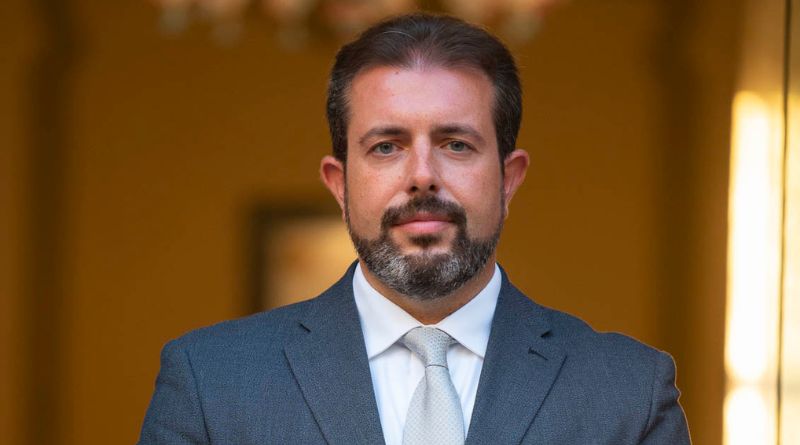
“We want answers. What does the government intend to do about healthcare? What stage is the hospital project at?” This was one of the questions raised by Gaetano Troina (Domani – Motus Liberi) during the communications session of the Grand and General Council (Consiglio Grande e Generale). The councillor criticised the lack of information surrounding the Association Agreement with the European Union, seeking clarification on €171,000 spent on consultancy work, and also raised concerns about electronic invoicing, age limits in public job competitions, and the future of the hospital.
Gaetano Troina’s (D-ML) full address
In my address I wanted to focus mainly on the European issue, as many colleagues before me have done, but also on other matters — I hope I’ll have time for them — which are certainly not of minor importance and which concern our country nonetheless.
Let’s start with the European issue. First of all, I would like to recall that the process leading to the Association Agreement originated from an initiative launched by the European Union towards a number of small states that are not EU members, with the aim of standardising and establishing a single set of rules to apply to these small states, so as not to fragment the application of European law by customising it for each individual case.
I recall that at the start of this process, alongside San Marino, there were also Monaco and Andorra. Monaco withdrew some time ago. Andorra, which signed alongside San Marino two days ago, has not yet made a final decision despite having signed.
I want to point this out because, from the information we have, in addition to certainly having a referendum scheduled — which I imagine will take place early next year — Andorra has nonetheless carried out a series of initiatives and in-depth studies that, from our point of view, our country has not undertaken, thereby missing a tremendous opportunity.
So let’s suppose that Andorra were to choose, that the Andorran population were to vote no. What would the consequence be? In effect, this Agreement would become bilateral between the European Union and the Republic of San Marino, and the unifying effect that the European Union originally intended to give this Agreement would essentially be lost.
I think it’s worth remembering this, otherwise pieces of the picture get lost along the way.
I would also like to clarify another matter. There is continued talk here of the Association Agreement, of the Republic’s isolation if the Agreement is not concluded, and of a whole series of other claims whose origin is unclear.
Because I don’t believe any political force in this Parliament has ever said that the Republic of San Marino should not have relations with the European Union or should not make agreements with the European Union.
I want to repeat this once again, hoping this concept will finally be understood. Domani – Motus Liberi has never said that the Association Agreement with the European Union should not be made, or should not be made now.
We have always said that, from our point of view, the negotiation — and above all the need to preserve our distinctive characteristics within the Association Agreement — needed to be addressed and examined more thoroughly.
So much so that what have we repeatedly asked for, to the point that I’ve lost count? We asked for citizens to be informed about what the effects and consequences of applying the Agreement in San Marino would be — something you still have never explained to us in detail — and for the Agreement to be put to a referendum, letting citizens have their say.
Clearly, holding a referendum without first informing the public serves no purpose. It becomes a head-on, ideological battle with no real basis. No one has ever asked for that. It makes no sense to hold a referendum with the data we currently have available, because no one would be able to form a complete judgment.
On this point — and then I’ll conclude the section on the European Union, because honestly this topic has worn me out somewhat — I would like to recall that there are two resolutions passed by the Congress of State (Congresso di Stato).
The first is Resolution No. 17 of 4 August 2026, which granted a consultancy assignment for developing a communication plan aimed at informing citizens about the contents of the Association Agreement with the European Union.
Where is this plan? The resolution dates back to 4 August, and today is 20 October. Is this consultancy work moving forward or not? Where is the information for citizens? Or was that money spent on something else? Because we’re talking about €16,000 in consultancy fees.
Then there is another resolution, dated 8 September 2026, concerning the awarding of consultancy and collaboration assignments aimed at preparing the alignment of the national regulatory framework with the EU acquis, with specific reference to the subjects and acts included in certain annexes of the Association Agreement.
This involves €155,000 paid to professionals whose names I personally have never heard and who certainly do not operate within the Republic, tasked with carrying out this alignment work.
Where do these chosen professionals come from? Do they know Sammarinese law? How do they intend to carry out the work? You have never informed us of any of this.
We want answers, and citizens would like answers too. That concludes the topic of Europe.
There are three other issues I would like to address. The first is electronic invoicing. Everyone knows, because a notice was issued in recent weeks, that between the end of 2026 and the beginning of 2027 businesses will essentially have to prepare to use electronic invoicing if they exceed a certain annual turnover threshold.
What we are being told by numerous professionals is that there are actually a great many problems, particularly with using the software application, but also with the clarification requests submitted to the Tax Office (Ufficio Tributario).
So we are asking ourselves — and we are being asked — whether, before making the use of a tool mandatory, it might not be wise to test it first and verify that it actually works.
Because every single time, a law is passed imposing an obligation on businesses, but the necessary tool is never ready to be implemented, and then there’s always a scramble to get things up and running within the set deadlines, just to avoid embarrassment.
I ask myself: before imposing the obligation, couldn’t you have checked that the tool worked? First you verify that it works, then you impose the obligation. This country has done things this way on many occasions, and continues to do so. Perhaps it’s time to change approach.
Another issue I would like to raise concerns public job announcements. I’ve noticed this particularly lately: a series of public notices are being published on the IOL website, and invariably, among the requirements, there is an age limit of 35.
This happens for police force announcements, where there may be some justification linked to the specific nature of the work that police corps must carry out, but it’s not limited to those. It also happens for other roles.
I would like to understand why the State should, from now on, only offer employment to people under 35. If there are already-trained professionals willing to make themselves available, especially when no particular physical characteristics related to the type of work involved are required, can someone explain to me why these notices must be aimed only at people under 35?
I’ve really been paying attention to this — there’s practically not a single one where the age requirement doesn’t appear. Fine, it’s right that young people should be given work, and we are the first to say so, but since we know very well that there are skilled professionals in our community who should be valued, it doesn’t seem right that all these announcements include this specific requirement.
Because many people who might be interested can’t even apply, and that’s unfair. No law imposes that age limit — it’s a choice made by the government.
There would be much more to say, but I have very little time left. I reiterate what I requested in Committee just the other day, and I ask it again today, especially regarding healthcare.
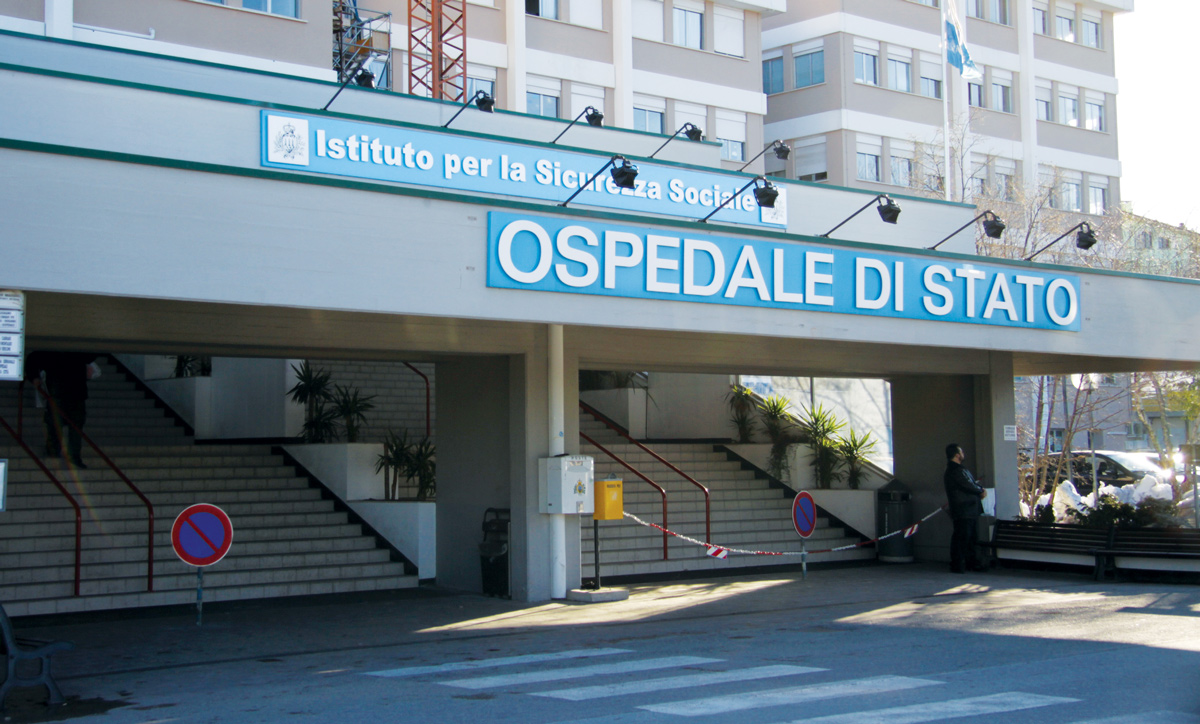
We want answers. What does the government intend to do about healthcare? What stage is the hospital project at? Will the new one be built? Will the old one be restored? What do you intend to do? We keep asking for answers, and you keep failing to give them to us.