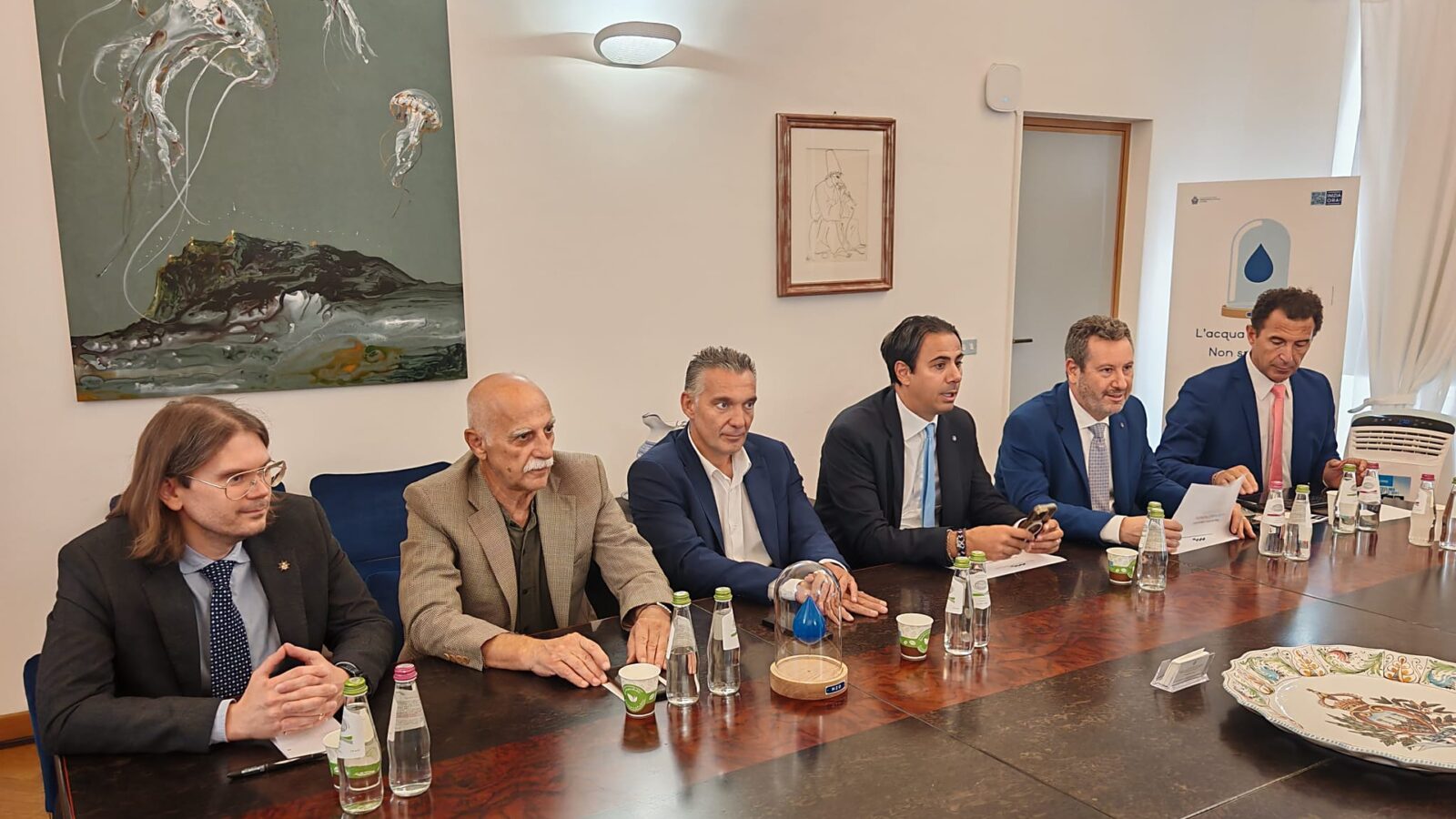
The water reserve that San Marino can draw from Lake Torello will rise from roughly 60,000 to 230,000 cubic metres — nearly quadrupling current availability — through an estimated investment of around two and a half million euros. The agreement was signed in July by the state utility company AASS together with the Government and the municipality involved, and for the Secretary of State for Territory and Environment Matteo Ciacci, it represents «one of the most concrete responses» to the 2023 Arengo Petition on water resource security.
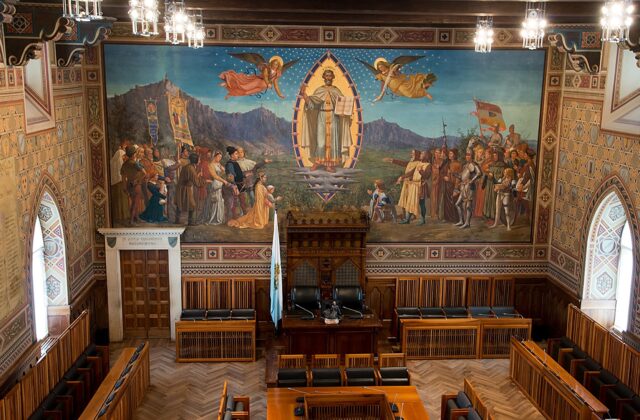
But the update, delivered on Wednesday afternoon to Council Commission IV, opened the door to a broader reckoning with years of water-related announcements. It was Matteo Casali of Repubblica Futura who raised the issue, arguing that the subject «has been exploited extensively for propaganda purposes, especially during election campaigns». His target was the Gorgascura reservoir project: the Sustainable Development Plan approved in 2023 envisaged construction between 2023 and 2030 at an estimated cost of around 37 million euros, while a study conducted by the University of San Marino during the same period placed the central estimate at roughly 45 million, with a range that could exceed one hundred million. «On one hand, we approved a document in Council that presented an imminent construction project with a specific cost, while at the same time studies already existed describing a completely different economic reality», he said.
Casali nonetheless acknowledged that in recent months AASS has taken steps to better manage existing water resources, and pointed to what he considers the more serious path forward: the reuse of treated wastewater. He laid out the figures himself: the Gualdicciolo treatment plant processes around half a million cubic metres a year, Gorgascura about 1.3 million, and Faetano roughly 300,000, against the country’s total consumption of approximately three and a half million cubic metres. «If we could recover even just the half a million cubic metres from the Gualdicciolo plant and reintroduce it into a circuit for irrigation and industrial use, we could make an enormous contribution to managing water crises», he noted, pointing out that some of the country’s most water-intensive industrial facilities are concentrated along Via del Lavoro. «Every cubic metre of treated water reused in industry is, essentially, a cubic metre of drinking water that we can reserve for civilian use».
Echoing this view from within the majority, Guerrino Zanotti of Libera agreed. «It’s true that until now we’ve often gone overboard with pharaonic projects. In San Marino, it happens frequently that the country’s fate gets tied to grand works that are supposed to suddenly transform the Republic’s future», he said, crediting Ciacci with a more measured approach based on small and medium-scale interventions. «So I believe the solution doesn’t necessarily have to be one giant reservoir that’s meant to solve everything once and for all».
Zanotti added another significant point: the relationship with Romagna Acque. «The Republic’s status could also change compared to the current situation, in which we are essentially just a customer — and therefore potentially subject to restrictions decided elsewhere».
Ciacci welcomed both observations. «I believe what’s needed above all is humility, practicality and rationality», he responded, confirming that work on the relationship with Romagna Acque is «equally important», since that partnership «can guarantee us a highly significant safety valve in times of difficulty».
On the subject of land use, the Secretary recalled the two decrees approved this year, No. 87 and No. 111, which incentivize depaving and improving soil permeability, tying the incentives exclusively to green space. «The goal is very simple: remove asphalt and concrete where they aren’t necessary and restore permeable ground, reducing heat, allowing more water to infiltrate the soil, and lowering the risk during intense rainfall». The first concrete experiment is Piazzale Mericucci, which has already been cleared; the next intervention will focus on Parco Laiala. The Sustainable Development Working Group, established by the Congress of State in 2020, has also been reactivated.
On 5 October, the Secretariat is organizing a public evening event featuring two officials from Forlì and Genoa — the other two municipalities that, alongside San Marino, have incorporated depaving into their urban planning frameworks.