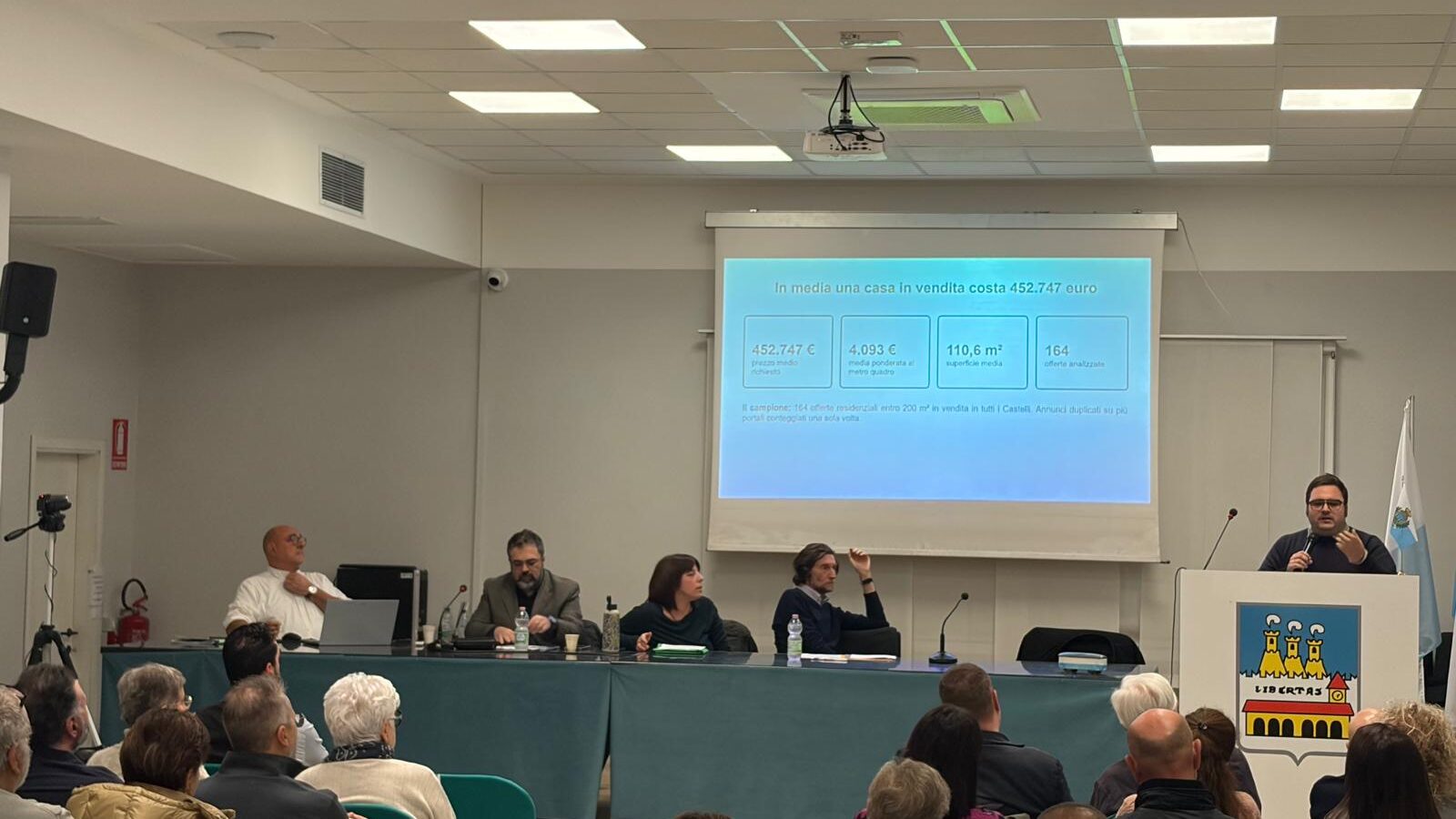
A rent averaging 1,055 euros a month, a home for sale listed at an average of 452,747 euros. And wages that, over the past ten years, have grown far more slowly than rents.
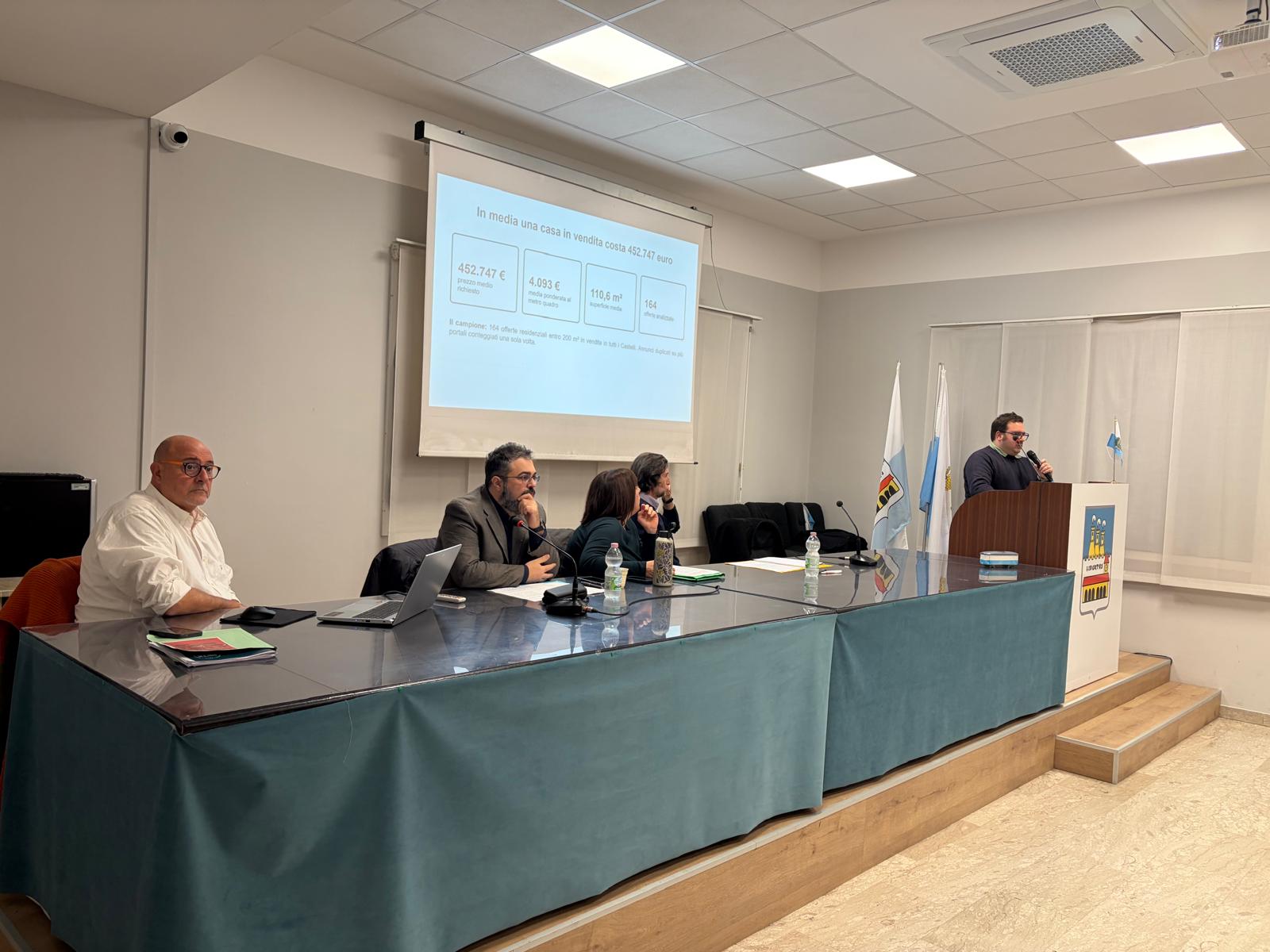
These were the figures behind the evening on the housing emergency organised by RETE yesterday, Thursday 12 November, at the Sala Joe Cassar in Borgo Maggiore. RETE is working on a bill to address rents, unused properties, mortgages and social housing.
The political issue was put on the table immediately: having a job is no longer enough to guarantee access to housing. The difficulties also affect those with a steady salary who would like to live on their own or start a family, but cannot afford the prices being asked.
The research was presented by Council member Giovanni Zonzini. The working group reviewed the property listings available in San Marino, removing duplicates, properties over 200 square metres, derelict buildings, and listings without a price or surface area.
That left 164 homes for sale. This is a snapshot of what is currently available to homebuyers, not necessarily a reflection of prices actually paid in completed sales.
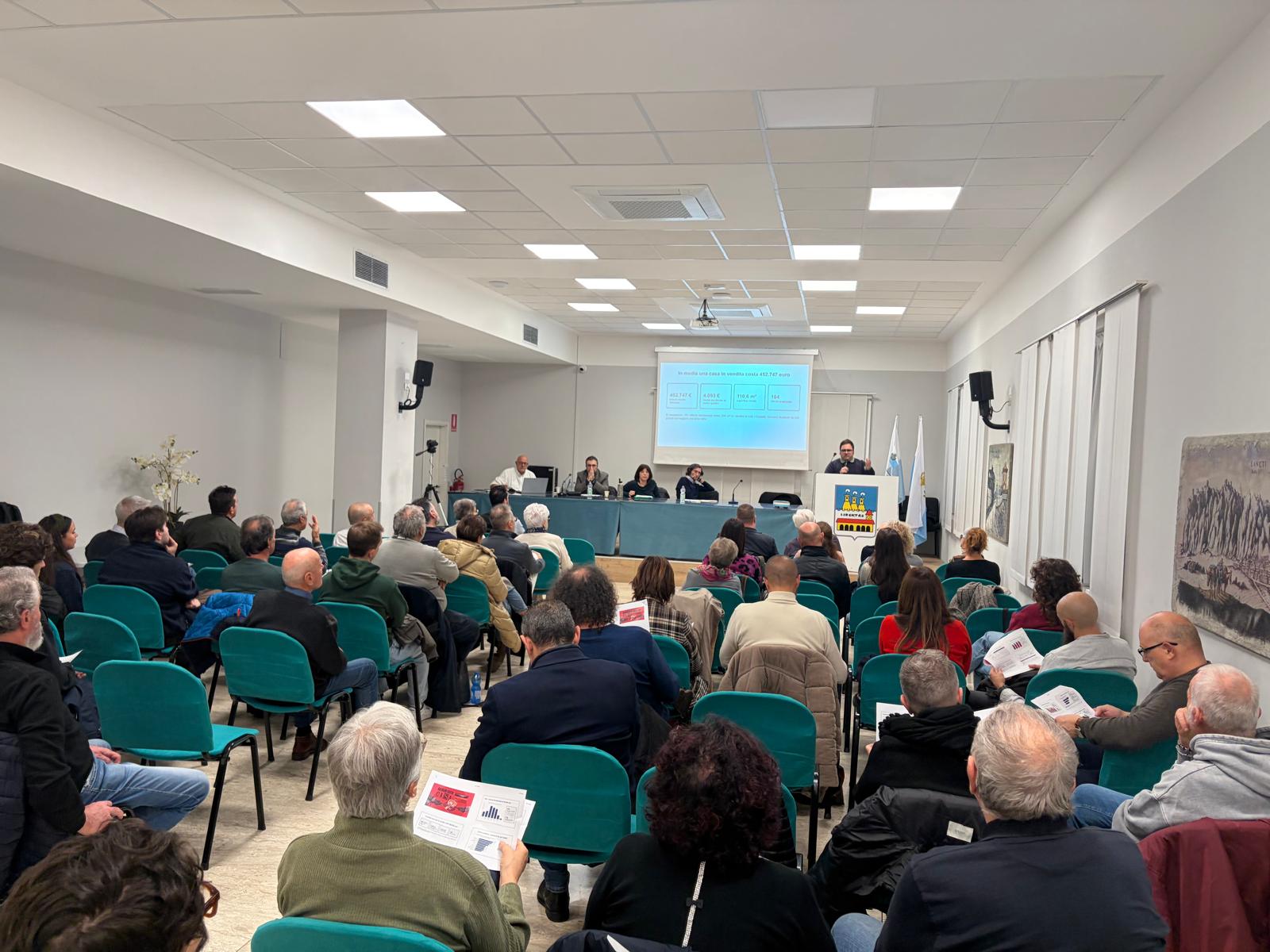
The results leave little room for more affordable options: just 17 listings under 200,000 euros, roughly one in ten. By contrast, 126 of the 164 properties are listed at 300,000 euros or more. The weighted average price is 4,093 euros per square metre, with an average surface area of 110.6 square metres.
Regional differences are stark. Domagnano reaches 5,250 euros per square metre, while Fiorentino stops at 2,688.
Zonzini, however, urged caution in reading the figures for the smaller Castelli, where listings are so few that one or two unusual properties can skew the average. Nor does opting for a resale property guarantee lower prices: the weighted average there is 3,683 euros per square metre, against 4,732 for new builds.
On the rental front, the research identified only ten homes across three Castelli, with an average monthly rent of 1,055 euros. The sample is too small to represent the entire market, but for RETE it signals just how limited the visible supply is for anyone searching for a home.
The strain on paychecks emerged from the simulations presented during the meeting. A rent of that amount absorbs 59% of a net salary of 1,800 euros. For a retail worker earning 1,425 euros net per month, the figure rises to 74%, and for an industrial worker earning 1,475 euros, to 72%. Even factoring in two incomes totalling 2,900 euros, rent still eats up 36% of earnings.
“When housing costs exceed 30% of one’s salary or income, you enter a situation considered unsustainable,” Zonzini explained.
Making matters worse is the growing gap between incomes and rents. Between 2015 and 2025, average rents rose by 36.4%, while wages grew by just 15.9%, compared with a 21.1% rise in consumer prices. Once inflation is factored in, rents gained 12.7% in real terms while wages lost 4.3%.
Then there is the duration of lease contracts. Among those registered in San Marino in 2025, 45.7% last no more than a year, and only 2.7% extend beyond three years. By comparison, in Rimini new contracts lasting more than three years account for 70.8%.
For Zonzini, the short duration of rental agreements compounds the economic hardship: finding a home does not mean being able to plan on staying there.
Gianluigi Macina focused his remarks on the lack of complete, accessible information. Knowing how many homes exist, how many are available, and under what conditions they are sold or rented is essential for citizens, businesses and policymakers alike.
Macina acknowledged the work done to digitise the Land Registry and update information systems, but criticised the fact that the process remains incomplete.
Eleven years after the land registry reform, according to RETE’s findings, the San Marino real estate market observatory is still not operational. It is meant to provide insight into market values and track trends in rents and sales.
Criticism also extended to the outcomes of measures introduced to address the housing emergency.
Macina lamented the absence of a comprehensive overview showing which tools have been used and with what results. He also cautioned against confusing the number of properties with the number of owning families: one person may own several homes, some properties are registered to companies, and part of the supply never appears in public listings.
Valentina Quadrelli outlined the measures under consideration. “We have decided to start drafting a bill that shifts the paradigm — a bill that moves from a housing emergency to a right to housing.”
The first measure concerns regulated rent agreements (canone concordato), which would be linked to the average local income, with maximum per-square-metre values determined through the real estate observatory.
Tax incentives are planned to encourage landlords to take part. For short-term leases, RETE proposes requiring a concrete, verifiable justification — related, for example, to work, study, or planned renovations on the property.
In the absence of a demonstrated need, the standard lease contract would apply by default.
Another section addresses homes left empty. Quadrelli indicated the intention to update and finally enforce an existing tax — one that, according to RETE’s research, has never actually been applied. The proposal targets residential properties left vacant for more than twelve months, with exemptions including for those who own up to two homes, including their primary residence.
Also in the crosshairs are commercial B&Bs that occupy entire homes, as distinct from those renting out a single room within the home they live in. RETE proposes a levy on these, which — together with revenue from vacant properties — would feed into a fund dedicated to the right to housing.
Quadrelli also outlined protections for those who rent out a property. RETE proposes a public guarantee against unpaid rent, with the State stepping in to cover missed payments and subsequently recovering the sum from the tenant. This would be paired with a 50% tax credit on insurance policies covering non-payment and damages, available to both landlords and tenants.
The plan also includes joint liability for individuals residing in the property, excluding minors and legally protected persons. The stated goal is to also address the concerns of small landlords, who may be reluctant to rent out their properties for fear of non-payment or damage.
For first-home purchases, RETE intends to propose a cap on the total cost of mortgages, including interest and ancillary charges, and to make rent-to-buy schemes genuinely workable.
The social housing plan would unfold over several years, focusing on the renovation of existing buildings and zero land consumption. Among the measures outlined is a public right of first refusal on residential properties sold at auction, to be allocated to social housing, along with a relaunch of undivided-ownership housing cooperatives.
Andrea Giani broadened the discussion to the governing majority’s choices. His criticism targeted both the measures taken to address the housing emergency and the territorial strategic plan, which he considered insufficient to correct the situation. For Giani, making credit more accessible means little if prices and instalments remain out of reach for most salaries.
He then pointed to a number of factors that, in his view, are adding pressure to the market: new residences, atypical forms of residency, demand for student housing, and properties kept off the market. On co-housing, he took a firm stance: it cannot become the default answer for anyone seeking a home of their own, especially for a couple wanting to start a family.
“So we are witnessing a sort of reverse cross-border commuting — Sammarinese citizens becoming commuters in their own country, because they simply cannot find a home here.”
Giani stressed the widening gap between generations, and the difference between those who can rely on family support and those who must face rent or purchase costs entirely on their own.
He called for a review of tools designed at a time when available housing was far more plentiful, also pointing to the possibility of using tax policy to curb speculation, incentivise renovation, and experiment with construction techniques capable of lowering costs.
“I’ll say it again — I would not want to see, a few years from now, a San Marino that resembles Monte Carlo, where residents are forced to live outside the territory and return only to work.”