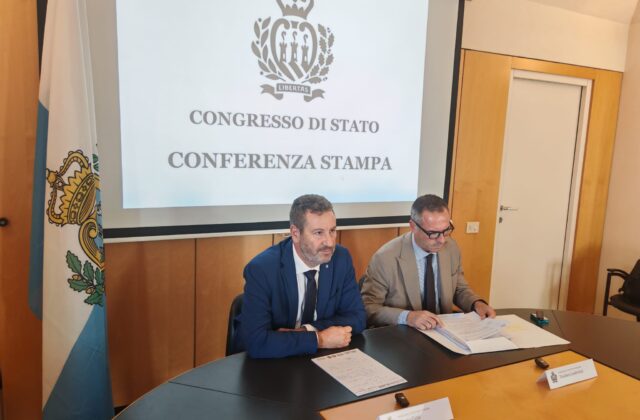
By Gerardo Giovagnoli (PSD)
A series of circumstances never seen before in the Republic of San Marino – as in many other European countries – call for a set of analyses and questions, some of which are pressing and uncomfortable.
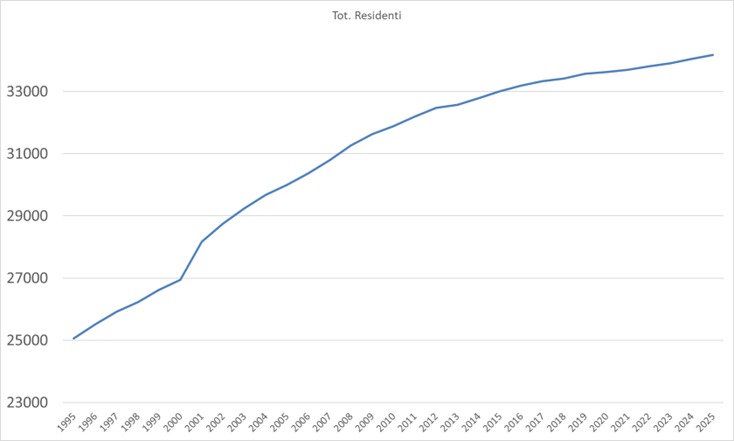
The starting point is the demographic situation: San Marino’s resident population is growing much more slowly than it was twenty years ago, particularly among resident citizens, a trend largely offset by resident Italians.
This is mostly a function of the real dividing line, the collapse in births: these fell from 316 in 2018, the peak reached after a long period of growth, to 130 in 2024.
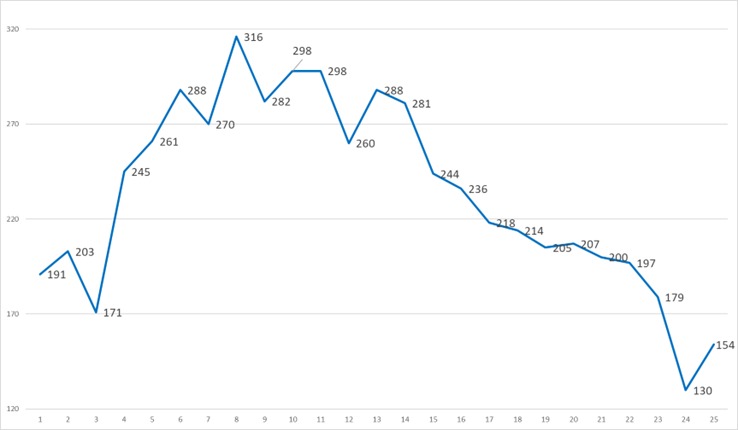
Even excluding these two extreme figures, the trend line is clear and strongly downward. To this must be added the counterbalancing effect of longer average life expectancy. The outcome is easy to guess: the average age of the population is rising as never before.
Unprecedented facts
Probably at no other point in the Republic’s history have all these conditions occurred together: rising life expectancy, normally the result of better economic and healthcare conditions, has typically been accompanied by an increase in births, or at least not by stagnation.
The lack of growth in the number of residents most likely stemmed from an increase in deaths per year, not from a decline in births or emigration.
The fertility rate has never been so low.
These are not considerations foreign to other Western European contexts: after all, Italy, the country whose economic sphere we live in, is one of the oldest countries in the world and has seen a comparable collapse in births.
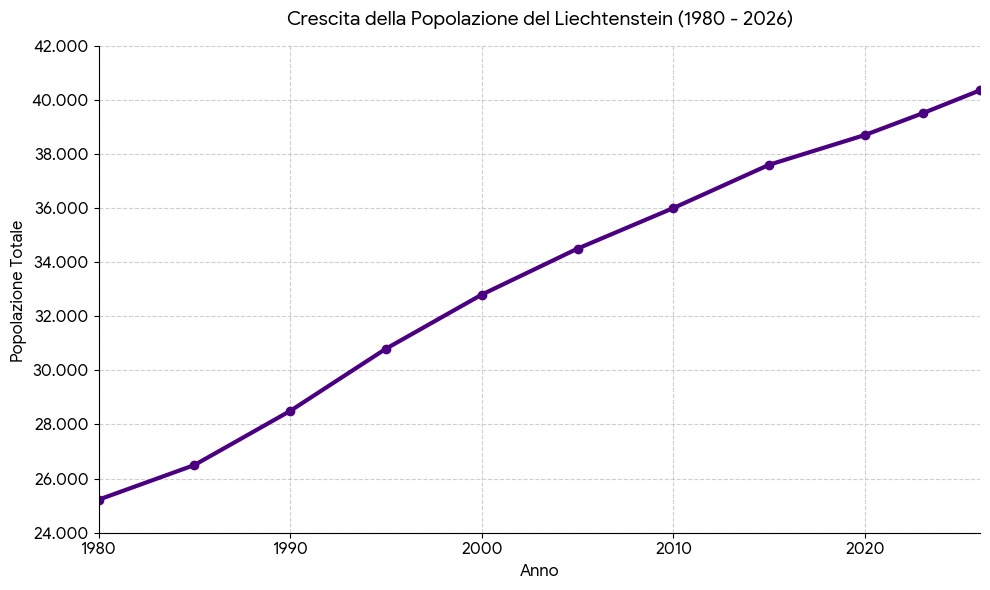
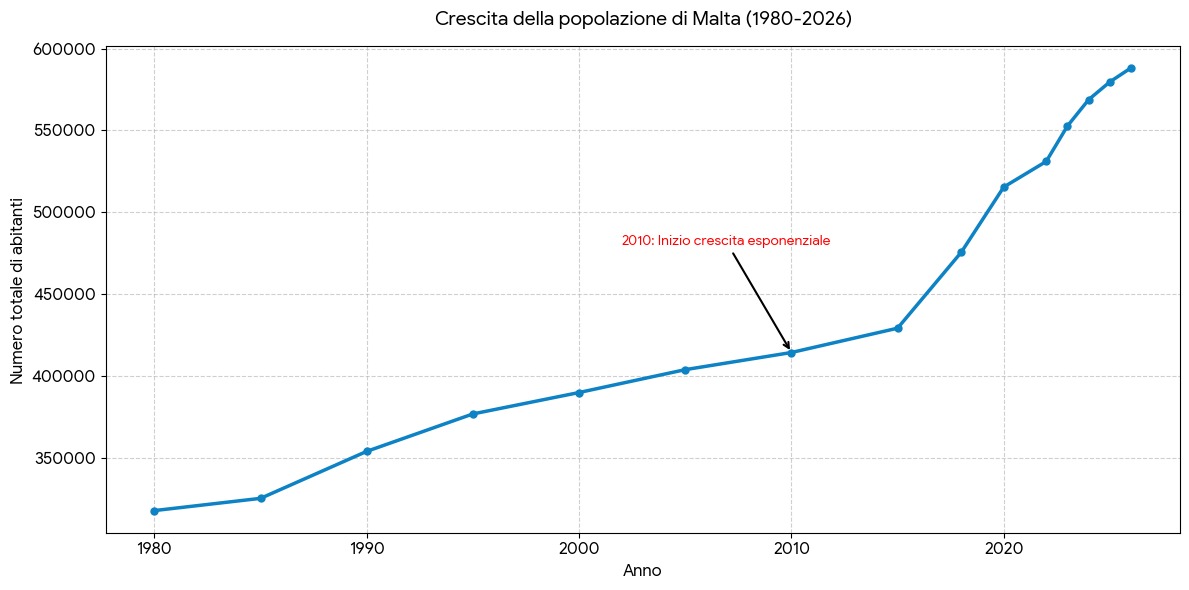
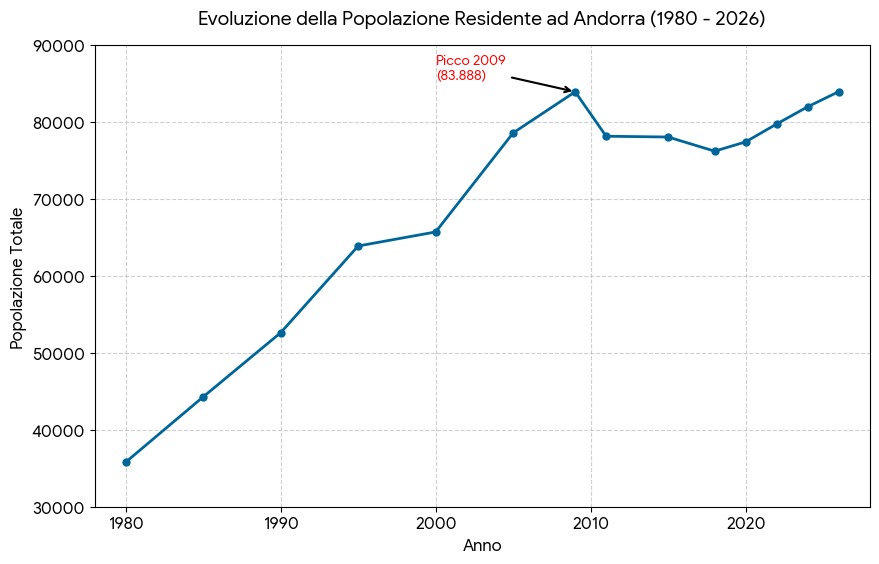
It is curious to note that, by contrast, small countries we usually compare ourselves to are not following the same demographic trajectory: Monaco and Liechtenstein have grown by around 10% in the last 10 years and around 20% in the last 20 years; Malta has even increased its population by more than 35% in the last 10 years and by roughly 45% in 20 years, while Andorra reached its peak in 2009 (after growing by more than 60% in the previous 20 years), before a crisis prompted many residents to leave, cutting the resident population by around 9%, only now returning to pre-crisis levels.
How much will our social model be affected by these dynamics?
If births continue to stagnate while life expectancy keeps rising, how will pensions be sustained? Clearly this depends, first and foremost, on the ratio between the number of workers and the number of pensioners, and one figure immediately stands out: for many years now pensioners have been increasing at a faster percentage rate than workers, and in some recent years the increase in pensioners has even outpaced the increase in workers. (https://sanmarinofixing.com/2025/12/03/i-pensionati-aumentano-piu-dei-lavoratori/).
That ratio, which stood at 4 for a long time, has now fallen below 2, making the current model unsustainable.
This is happening despite the fact that strict unemployment has halved over the past 10 years. Indeed, considering that unemployment in San Marino is very low (a strict unemployment rate of between 2% and 3%), and even assuming we could bring back Sammarinese citizens who choose to work outside the Republic (which is in any case a problem to be solved, especially since they are skilled people we need), doesn’t it follow that the only option left is to increase the number of jobs for cross-border workers? (leaving aside here any analysis of a restrictive pension reform involving higher contributions, a higher retirement age or a lower pension replacement rate).
This would be a less complicated and faster solution than increasing the birth rate, although it must be acknowledged that a separate discussion is needed specifically to address that problem.
Here too it may be useful to look at other small countries, since, like us, they share a high proportion of cross-border workers: we have reached around 9,000 out of a total of roughly 23,500, or 38% (not counting self-employed workers, whose numbers are steadily and slightly declining, now standing at around 1,500). In fact, it must be said that San Marino’s share of cross-border workers pales in comparison with the countries mentioned above. For example, in Monaco more than 50,000 commuters enter the Principality every day from nearby towns in France and Italy to work in tourism, retail and construction – 50,000 commuters against roughly 39,000 residents (fewer than 10,000 of whom are citizens), representing 85% of the total workforce.
A number of observers believe that sustaining the Monegasque model in the near future will require a further 15,000-20,000 commuters.
Liechtenstein too employs far more cross-border workers than we do, since more than 57% of the workforce active in the Principality lives across the border, in Switzerland or Austria, commuting daily without placing any strain on domestic demographic infrastructure – around 25,000 workers.
As for Malta, as already noted, being an island it has chosen to grant residency to the many new workers arriving – around 160,000 in 10 years (out of a current total of around 600,000 residents).
Andorra, once again, is a case apart, with “only” 20% of its workforce made up of cross-border workers – a phenomenon that is nonetheless growing rapidly given how attractive employment in the Principality is, though the severe housing shortage encourages many to keep their Spanish residency, mostly in Catalonia.
Certainly the entry into force of the Association Agreement represents the most effective change for attracting new businesses and therefore jobs. Access to the Single Market brings with it a very long list of opportunities, which we have already discussed extensively in the Grand and General Council (Consiglio Grande e Generale), in the Joint Committee, and across the country.
Given the low unemployment rate described above, new jobs will have to be filled by people who are not already residents, which raises another question: how much capacity is left in the surrounding catchment area from which to draw workers? Are the economic conditions relating to double taxation still attractive enough? Or will we need to grant more residencies to tackle the problem at its root?
The (non-)role of the Association Agreement
On this point, one entirely unfounded claim deserves a clear rebuttal: that the Association Agreement would trigger an influx of hordes of people.
This is simply not true, first of all because the Agreement (and the freedom of movement whose full scope we will finally enjoy) applies to European citizens or residents, not to the rest of the world.
No Africa, no Asia, no the Americas, no Oceania.
Moreover, the “sectoral agreement” we negotiated with the EU provides for a set of quotas, which are quite restrictive, even for European citizens.
Specifically, the quota system is set out across 3 categories of permits defined in Annex VIII, an excerpt of which is reproduced below:
- Long-term residence permits
The number of new residence permits available each year, for periods exceeding twelve months, to citizens of EU member states carrying out an economic activity in San Marino shall be set so that the net annual increase in the number of such economically active citizens residing in San Marino is no less than 3% of their number as of 1 January of the preceding year.
- Short-term residence permits
San Marino’s authorities shall issue residence permits of twelve months’ duration or less to citizens of EU member states carrying out an economic activity. Citizens of EU member states holding a short-term residence permit and carrying out an economic activity must be included within the quota referred to in paragraph 1.
- Right of residence for persons not carrying out an economic activity
An additional quota equal to 1% of the basic quota referred to in point 1 is reserved for citizens of EU member states wishing to settle in San Marino.
When applied to current figures, these percentages produce numbers lower than the residency grants already being issued today, which stand at around one hundred for points 1 and 2.
It will therefore not be the Agreement, or the EU, that imposes any constraints; if anything, it could be the hoped-for effect of the Agreement – strong economic growth – that generates demand for more residencies.
There is no doubt that residency is a far more attractive concession for a foreign national, but it is also far more costly for the State: the healthcare and pension entitlements of a resident cost more than those of a cross-border worker.
We already see this today with the system for granting elective, atypical or retiree residencies – a framework that, in light of the Association Agreement, would be worth reviewing from scratch.
Non-European residents
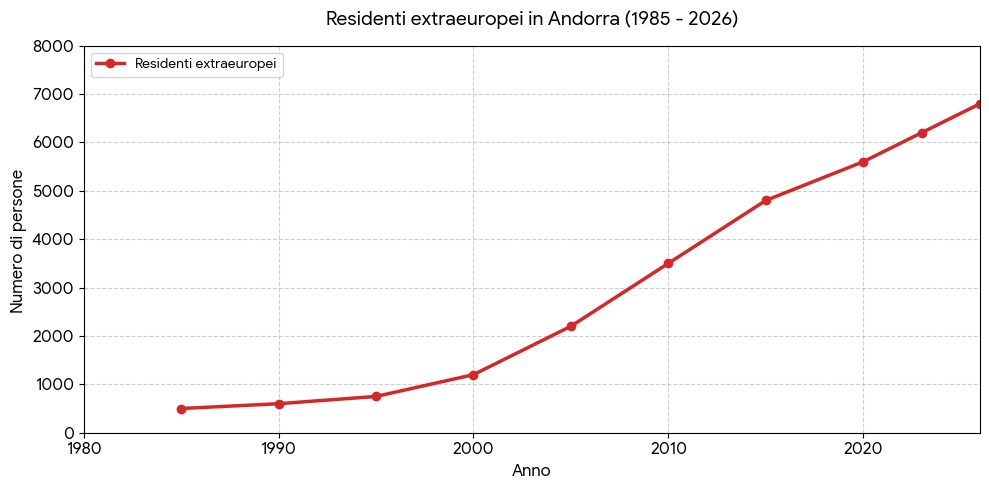
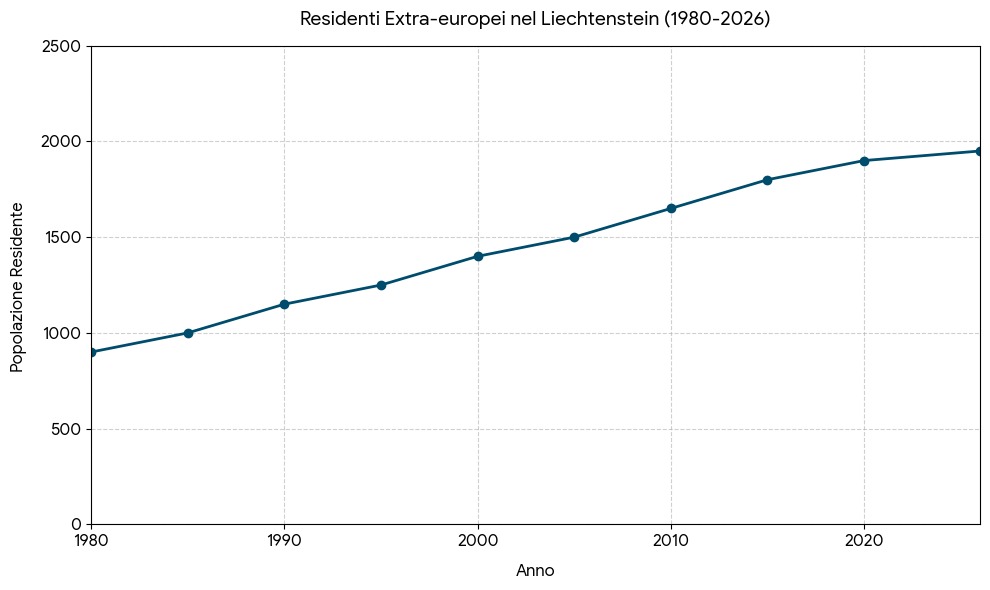
At this point it is again useful to look at the data on trends among residents from outside the European Union: Andorra has doubled their number in 15 years, reaching around 6,900, or roughly 8% of the population; in Liechtenstein the doubling took place over a much longer period, around 40 years, and non-EU nationals now make up around 4% of the population; for Malta the situation is far more dramatic, since the doubling occurred in just 3 years, and going back another 3 years the figure halves again – today, more than 140,000 non-EU residents account for around 25% of the total, while Monaco has doubled its figure over roughly 20 years and now stands at around 12%.
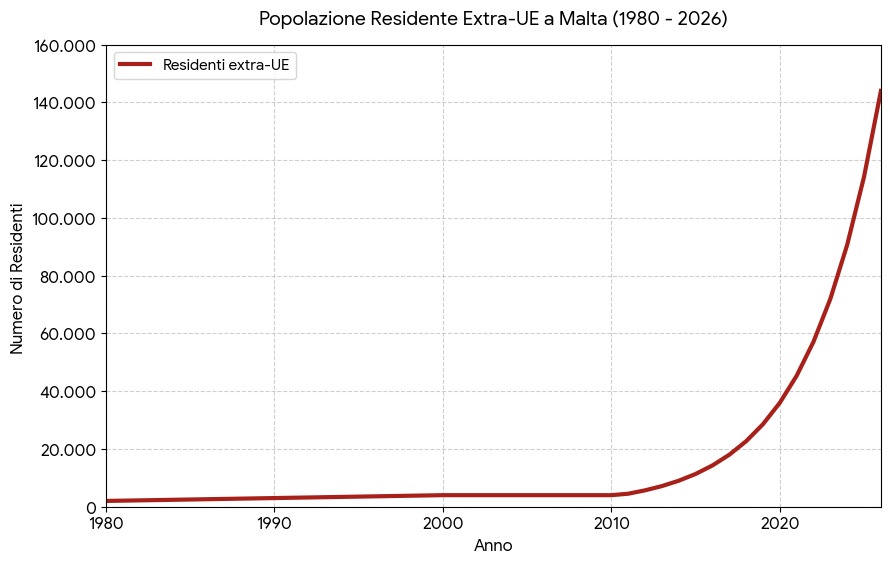
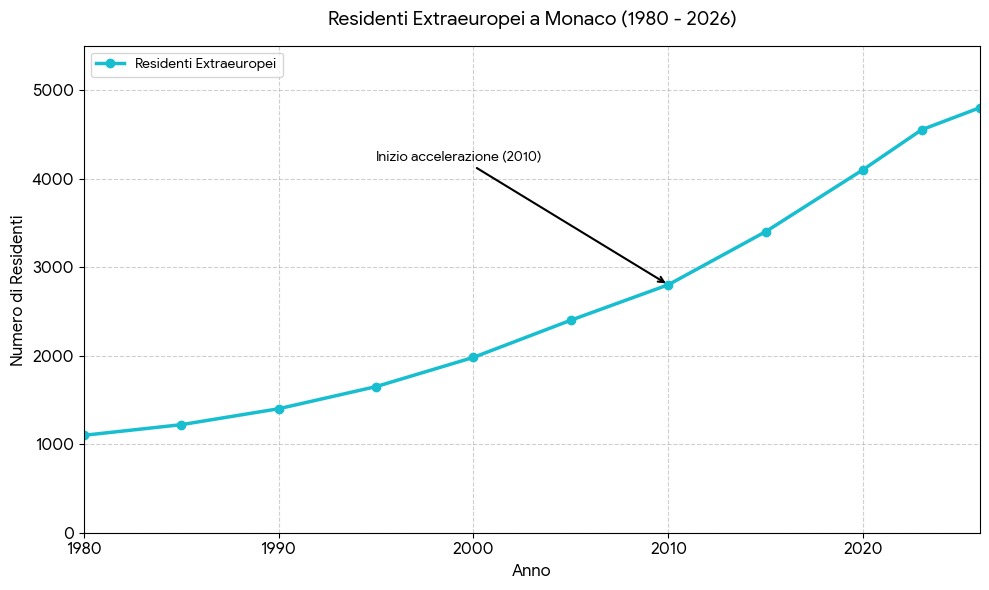
In San Marino, even taking into account all residents who are neither Sammarinese nor Italian nationals – not just Europeans – their number represents less than 2.5% of the population and has doubled over more than 20 years.
Here too we are the most stable country: we are not growing quickly, either as Sammarinese residents or as non-EU residents.
A (non-)conclusion
This set of considerations is clearly not exhaustive, nor does it offer solutions to the problems raised. I hope it can instead serve to open a discussion – one that is becoming urgent – on how to establish a new social and economic balance at a time when the country’s demographics no longer appear able to sustain the social security system as we have known it for the past thirty years or so.
Holding firm to the principle of universal access to services and to pensions that are both sustainable and dignified, I believe the time has come to look the data squarely in the eye and reason calmly but with absolute realism about which direction to take, especially in light of the major changes the Association Agreement will bring.
PS: The data on San Marino’s statistics were provided by the very kind professionals at the Statistics Office, whom I sincerely thank for the analysis carried out at my request. The figures relating to the other small states come from official public sources and were charted with the help of AI.