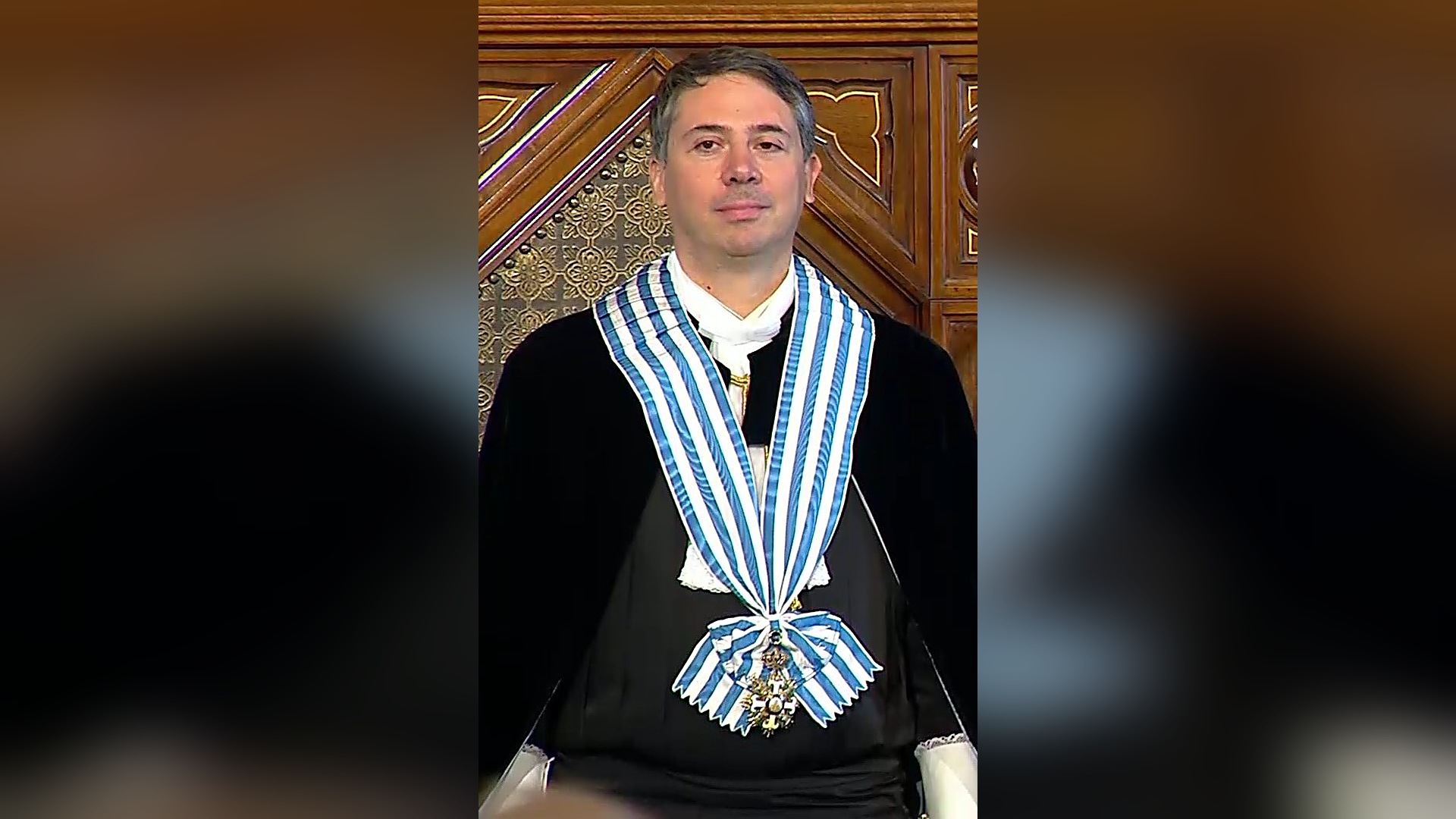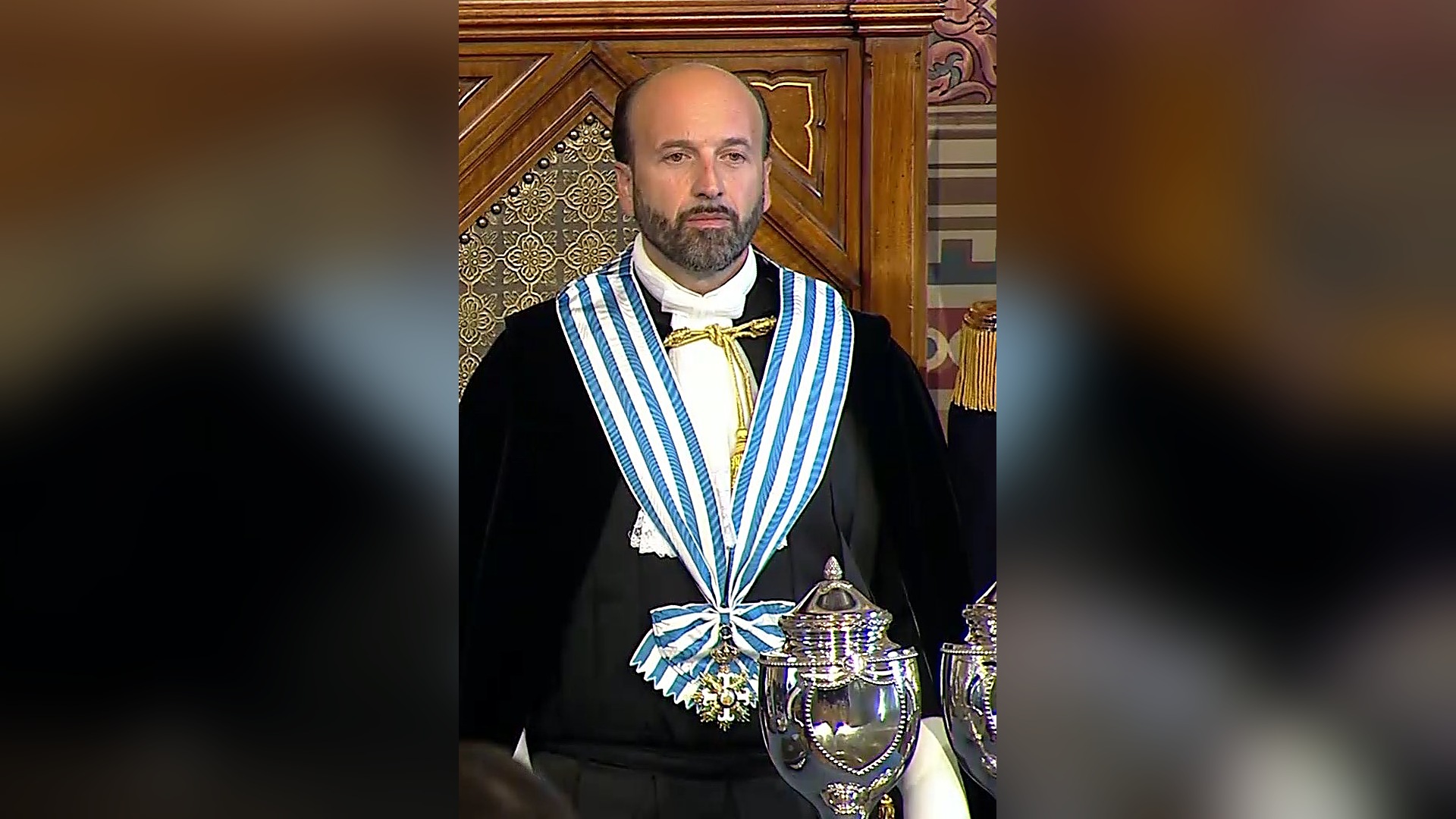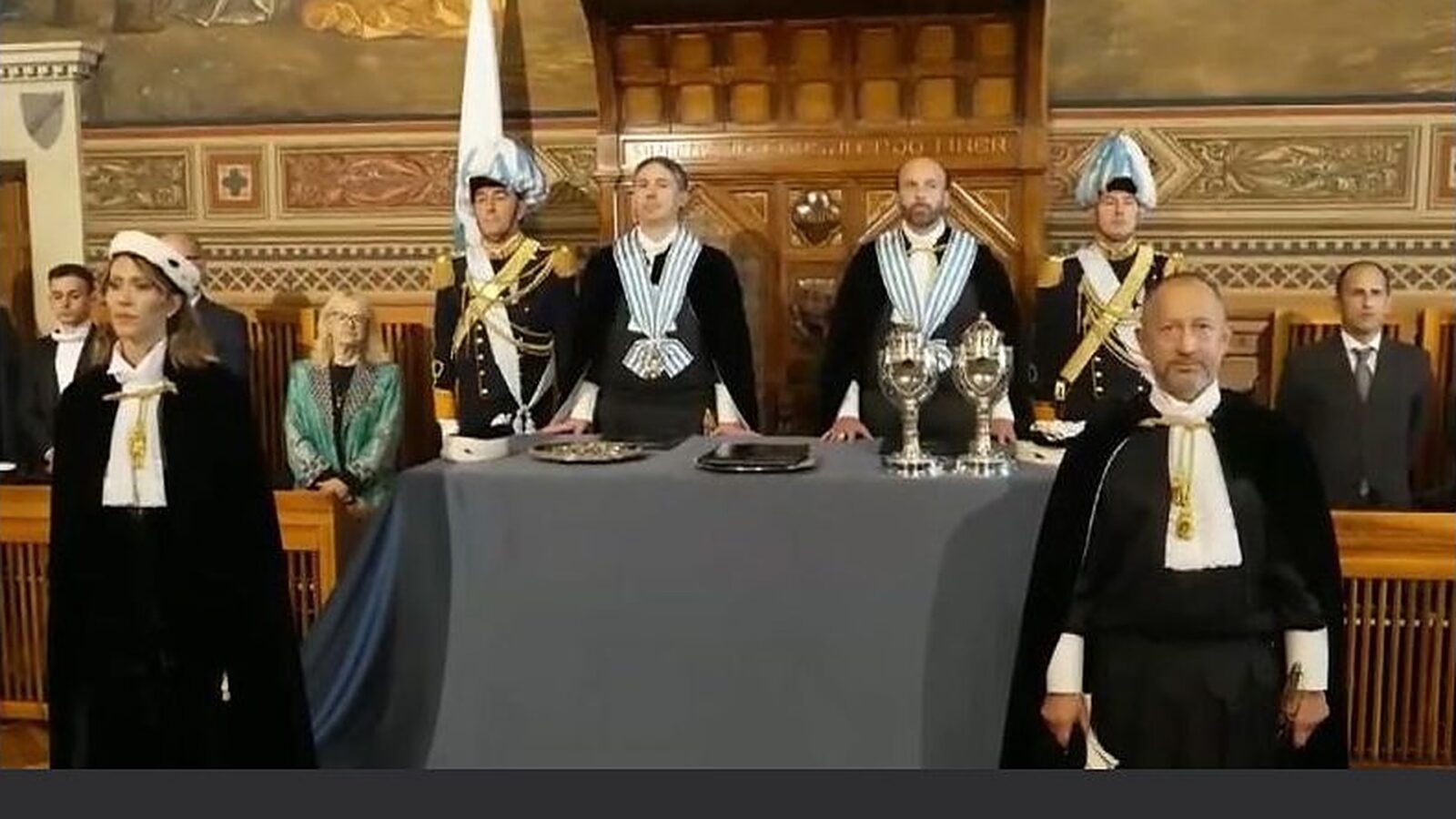
Gerardo Giovagnoli and William Casali are the Republic’s new Captains Regent. The transfer of power took place this morning at Palazzo Pubblico, with the oath read in Latin by the Secretary of State for Internal Affairs and the exchange of the Grand Master’s Collar of the Order of San Marino. For both men, it is their first time holding the Supreme Magistracy: their six-month term runs from 1 October 2026 to 1 April 2027 and will open, in eighteen days’ time, with the signing of the Association Agreement with the European Union.
It was precisely around that date that the two built their inaugural address. On 19 October, they recalled, San Marino will sign an agreement whose path “is rooted in more than a decade of negotiations.” They chose a formula that doubles as a programme: “The signing of the Agreement does not close a chapter, but opens a new one, entrusting our institutions with the task of turning the journey made into new opportunities.” To those concerned about the effect on San Marino’s identity, they responded that “the path toward association will not require any sacrifice of our identity. On the contrary, it will be an opportunity to bring what San Marino is into the European dimension.” To Italy, they acknowledged “the status of our foremost ally in the path toward greater European integration.”
The Official Oration was delivered by Imma Tor Faus, Minister of Foreign Affairs of the Principality of Andorra, introduced by Secretary of State for Foreign Affairs Luca Beccari. Hers was a lesson on small states delivered by someone who has walked the same road: “Sovereignty is not measured in square kilometres, just as influence is not measured solely by population or economic weight.”
Tor Faus traced Andorra’s path — the 1990 customs union with the European Community, the 1993 Constitution, accession to the Council of Europe in 1994, six years after San Marino — up to the negotiations conducted jointly with Brussels: “Two states, each characterised by historically unique identities, chose to negotiate a new relationship together, while safeguarding their own sovereignty.” In July, the Council of the European Union authorised the signing and provisional application of the Agreement. “Being a small state does not mean being isolated,” she said. “A small country does not need to speak loudly. It must speak clearly, consistently and with conviction.”
The new Regency’s address, however, covered much more ground. On the international front, there was a call for active neutrality: “No conflict can find a lasting solution through force alone, and no peace can be built by denying the other.” There was also an explicit word of praise “for the project to welcome Palestinian citizens and for our State’s effort to stand close to those in need.”
One section was devoted to technology. Giovagnoli and Casali recalled the 2024 signing of the Council of Europe’s Framework Convention on Artificial Intelligence, Human Rights and the Rule of Law, and framed the issue in stark terms: “Governing technology means deciding what we want to delegate and what must remain the responsibility of human beings.” They tied the two themes together in a single phrase: “Every age has asked the Republic to use new tools to protect ancient values.”
On young people, the wording departed most from ceremonial convention: “They are not merely those to whom we will hand down tomorrow’s Republic: today, they are already shaping its transformation.” And to the institutions came a direct appeal, with the Grand and General Council (Consiglio Grande e Generale) identified as the place where debate must be “pluralistic and free of prejudice,” along with a definition of the office that stands as the boundary of the mandate: “The Regency does not belong to whoever temporarily holds it, but belongs to the Republic.”
The ceremony had begun with the flag-raising in Piazza della Libertà before moving to Palazzo Valloni, where the elected Captains Regent received the tribute of the Diplomatic and Consular Corps and the greeting of the Apostolic Nuncio, Monsignor Edgar Peña Parra, attending for the first time in that hall. The procession then wound through the historic districts to Palazzo Pubblico for the meeting with the outgoing Regency, Alice Mina and Vladimiro Selva, before proceeding to the Basilica del Santo for the solemn Mass celebrated by the Bishop of San Marino-Montefeltro, Monsignor Domenico Beneventi.
The address also recalled the 22 August visit of Pope Leo XIV, and the phrase the Pontiff used to describe the Republic — “a laboratory of good practices” — which was taken up less as a compliment than as a mandate. The speech closed by invoking Carducci and his notion of “perpetual freedom”: “Not merely a legacy to be preserved, but a promise to be renewed.”