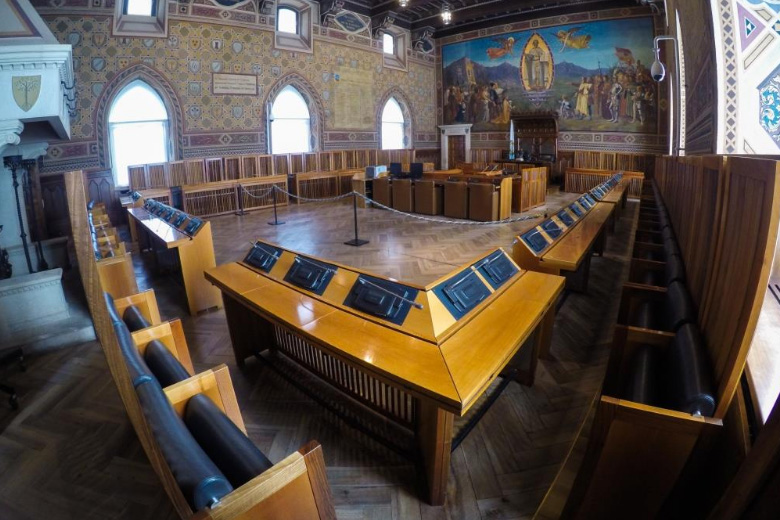
Giving debates a set duration, scheduling sessions months in advance and guaranteeing the opposition more tools. These are the proposals at the heart of discussions in the special committee on institutional reforms, which met on the afternoon of Tuesday, November 17.
On several points, common ground is emerging. The main point of division is whether some discussions can be held without a quorum — that is, without the minimum attendance required to hold a session. Also unresolved is the question of speaking times: some committee members want to limit speeches, while others want to first assess the effects of the newly approved regulation.
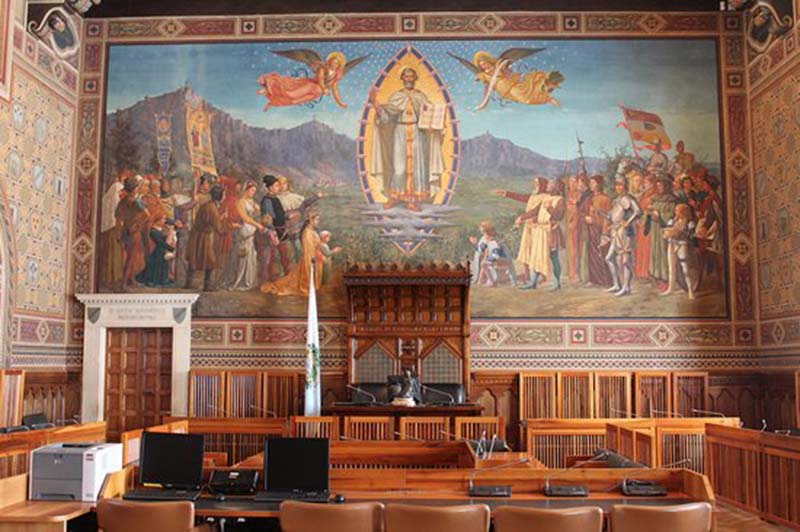
The goal is to make the work of the Grand and General Council (Consiglio Grande e Generale) more predictable. Knowing when a debate will start and when it will end would allow groups to organize themselves, divide up topics and better balance politics with their other work.
Filippo Tamagnini clarifies the proposal: “The real change isn’t tweaking the minutes, adding or cutting them, but shifting the paradigm: establishing that a given agenda item — not just the ‘communications’ item — lasts a certain number of hours.” The duration could vary depending on the topic being addressed.
Communications are one of the most debated points. Created as a space to raise issues outside the formal agenda, they often end up taking up a significant portion of sessions.
Francesco Mussoni (PDCS) calls for a change of course: “Parliamentary practice has degenerated, and today we hold communications sessions that last an entire day, where everything gets discussed.” Speaking in a personal capacity, he proposes shorter speeches, a set number of interventions per group, or more time for group leaders to present their shared position.
Denise Bronzetti (AR) suggests allocating a fixed amount of time to each group, while preserving speeches that add substance or express dissent.
Rete opposes any further cut to speaking times without new guarantees. “My group is absolutely opposed to reducing the ten minutes currently allotted for speeches under the communications item,” says Emanuele Santi. He wants to first understand what space will be guaranteed to the opposition.
Mirko Dolcini (D-ML), Enrico Carattoni and Maria Katia Savoretti (RF), on the other hand, suggest waiting to see the results of the new regulation before amending it further. Dolcini also challenges the idea that the Bureau (ufficio di presidenza) could decide how many councillors are allowed to speak.
Protecting individual voices runs through the debate. Giuseppe Maria Morganti (Libera), who favors setting fixed debate durations, asks that those who disagree with their own group’s line still be allowed to speak. Iro Belluzzi (Libera) notes that a debate can require responses that cannot be anticipated in advance.
Fabio Righi (D-ML) shifts the focus to the work that happens before matters reach the floor: limited political dialogue and calendars that change at the last minute end up dumping the entire debate onto the Council. He therefore calls for also addressing the conditions under which councillors must study and prepare.
Concrete proposals emerge on scheduling. Nicola Renzi suggests a quarterly calendar for the Council and its committees, while Paolo Crescentini (PSD) proposes extending it to six months, to avoid overlaps. There is also discussion of separating the debate phase from the voting phase.
For those who hold other jobs, knowing dates and times in advance would make it easier to plan time off.
The disagreement is sharper on the issue of quorum. Guerrino Zanotti (Libera) is open to eliminating it for certain activities, such as first readings of laws and question time. Renzi agrees: “Whoever is interested takes part, but the absence of others shouldn’t prevent the item from going ahead.” Savoretti, however, fears debates with very few attendees and proposes still setting some minimum threshold.
Santi rejects the idea outright: “Speaking in an empty chamber is not dignified.” Belluzzi is also opposed, and would only accept very limited exceptions for international missions or specific institutional needs.
On strengthening the opposition, there is more common ground. One proposal is to reserve part of the agenda items for opposition groups, without allowing them to be withdrawn without consent, and to introduce a question time, with immediate questions and answers directed at the government. The aim is to prevent a request from becoming irrelevant while waiting for a response.
Renzi points to delays that can stretch to three months for interpellations: “This is unacceptable, because the tool is stripped of its purpose.”
Other requests include set timeframes for discussing opposition initiatives, hearings with Secretaries of State, and direct access to government office documents. Carattoni frames the issue in practical terms: “I shouldn’t have to file an interpellation and wait thirty days for a Secretary of State’s response just to get a document.” Santi also calls for the possibility of setting up commissions of inquiry, while Belluzzi points out that this would require a law and the votes to pass it.
Belluzzi also proposes lowering the number of signatures needed to petition the Collegio Garante (Guarantor Panel). Renzi, meanwhile, raises the issue of appointments: when a majority alone holds the votes required, opposition involvement risks being bypassed even in cases where a qualified majority is supposed to be required.
Still on the table are technical support for groups and protections for councillors who continue to hold outside jobs, including leave and job security in the private sector.
The afternoon session opened with discussion of the transposition of European rules linked to the Association Agreement with the EU. The challenge is how to handle a large volume of new rules without bringing the Council to a standstill or shifting too much power to the Congress of State.
Santi speaks of 29 macro-themes and potentially 100 to 150 measures, calling for technical rules to be distinguished from political ones in advance, and criticizing an approach he considers too government-centered.
Righi wants the Council, not the government, to set priorities, and asks that the proposal on a confirmatory referendum be discussed alongside ratification of the agreement. Dolcini and Carattoni both support amending the Declaration of Rights to include a reference to European law.
Dolcini also argues for a technical body representing all groups, with the rules made available to every councillor before examination begins.
The majority signals openness to preliminary consultation and expert support. Morganti sees a political agreement as a way to simplify the work without further reducing the Council’s tools.
Gian Carlo Venturini (PDCS) urges preparation for the provisional application of the agreement in the early months of next year and proposes bringing in professionals to help groups select and study the rules. Renzi first calls for a complete overview of everything that will need to be transposed, along with the procedure set out for each measure.
Mussoni, however, dismisses fears that the Council would be sidelined. He argues that the government’s proposal already distinguishes the most sensitive matters — to be handled through ordinary law — from technical ones, which would be handled through decrees still subject to Council ratification.
Crescentini considers the text a good starting point and hopes to bring it to the floor in December, despite the calendar already being packed with budget matters.
The committee’s work was adjourned at 7:00 p.m.