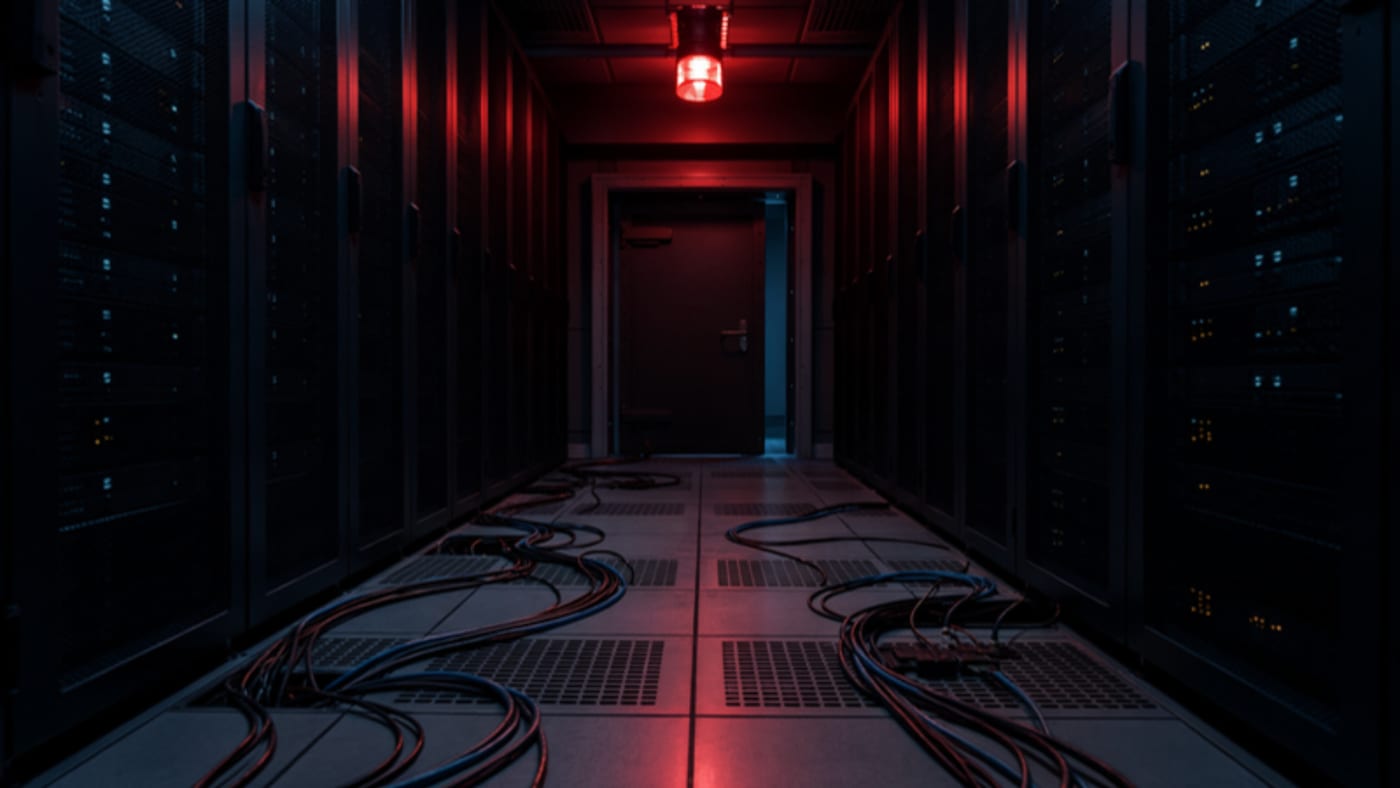
The National Security Agency’s classified internal network — used by the American eavesdropping agency to intercept communications — is not working as it should. CNN revealed the malfunction on Tuesday, citing six informed sources. The network, known as NSANet, is used by employees to exchange classified information. According to CNN’s sources, there is so far no evidence of a cyberattack.
It is the latest in a string of American technology failures that began last Thursday. Microsoft’s email service, flights across the country, JPMorgan Chase bank and United Airlines have all been hit. In none of these cases has evidence of an attack emerged so far.
The case is far from San Marino. The lesson, however, is not — because here too, businesses and offices run on systems that are constantly being updated.
What we know
According to the specialist website The Record and Fox News, the network is not entirely down but is functioning intermittently. One current and one former American official, speaking to CNN, said urgent information was still reaching President Trump, currently traveling in Asia, through backup networks.
At the agency’s headquarters in Fort Meade, Maryland, staff without emergency duties were told to report to work in staggered shifts, not before noon local time (6pm in Italy), according to a recorded message for employees heard by The New York Times. The Record reported that the staggered approach was meant to prevent tens of thousands of people from logging on simultaneously.
The cause remains known only through anonymous sources. Two CBS sources describe it as a routine system update. Four of the six people who spoke to the website Nextgov said software updates could be behind the problem. A source for The New York Times and one for The Record both said the network has been unstable for weeks.
The NSA has not commented. It is unclear when the malfunction began or when it will be resolved.
A new outage every day
On Thursday, November 12, Microsoft’s Outlook and Teams were down for nearly twenty-four hours. Microsoft has pointed to a flaw in a fix deployed in July.
On Friday the 13th, the US Federal Aviation Administration (FAA) grounded flights nationwide for almost five hours. Possible causes cited include a new router in Arkansas or a radar issue in Texas.
On Monday the 16th, Chase’s operations — both online and in branches — went down. Chase has pointed to a software error. Fox Business, citing an FBI official, reported that an update had been installed that same day. United Airlines suffered a technical malfunction during the same hours; the airline says there are no signs of foul play.
On Monday, before the NSA story broke, White House cybersecurity director Sean Cairncross ruled out a coordinated attack. Stuart Madnick, a professor at MIT, told the broadcaster NBC Boston, however, that he did not believe in coincidences — though he offered no specific cause.
Technical analysis
An outage a day raises an obvious question: could this all just be coincidence? Honestly, we still don’t know.
The causes cited differ from case to case — a flaw hidden for months, a router, a software error at a bank.
In four out of five cases, however, a system change appears to be involved. Microsoft points to a fix installed in July.
The FAA lists the installation of a new router among the possible causes. For Chase and the NSA, it is anonymous sources making the claim. According to Google’s site reliability engineering handbook, roughly seven out of ten outages in its experience stem from changes made to live systems.
Far more outages occur than ever make the news. ThousandEyes, the Cisco-owned company that tracks internet performance, recorded 419 network disruptions worldwide during the week of November 9 to 15.
With numbers like these, it’s not unusual for several high-profile cases to cluster together. Cambridge statistician David Spiegelhalter calculated something similar in 2014, for three plane crashes within eight days.
Over a ten-year span, a cluster of that kind had roughly a six-in-ten chance of occurring.
This reasoning does not settle the matter. It applies to independent events, and a common cause could still exist. Moreover, if the NSA’s network really has been unstable for weeks, as two sources claim, the problem would not have started just this week.
Official reports will change the picture. Microsoft has promised a final report by Friday the 20th. The FAA is investigating with assistance from the FBI.
The takeaway
If initial accounts are confirmed, the NSA’s malfunction, too, will turn out to have originated from an update.
Every update carries risk. Major tech companies test changes first on a small portion of a system and keep a rollback path ready. According to the Uptime Institute, which studies data-center failures, nearly nine out of ten operators hit by a serious outage say it could have been avoided with better management, procedures and configuration practices.
Until the NSA explains itself, no one can say with certainty what brought its network down.
Situation updated as of 7:13pm on Tuesday, November 17.
Osservatorio Strategic.sm