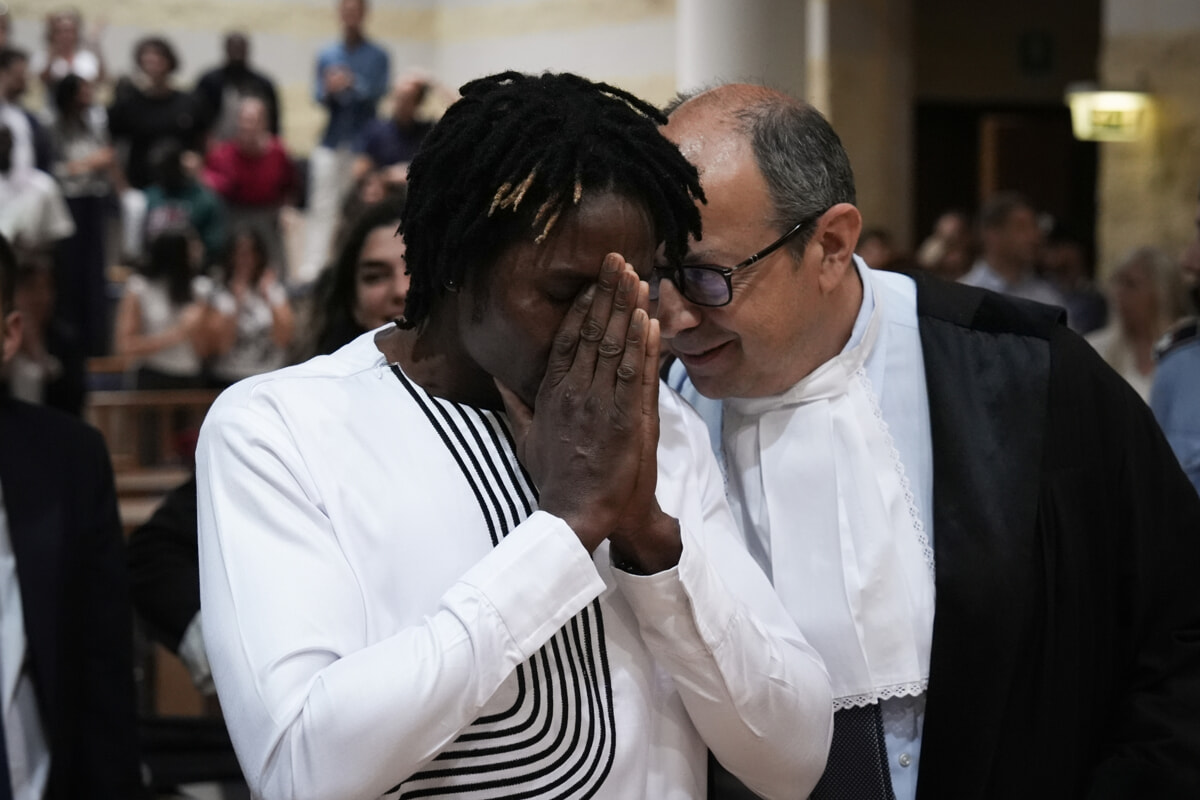
Ninety days after Louis Dassilva’s acquittal, today marks the long-awaited moment when the reasoning behind the verdict will finally be revealed. The deadline expires today for the Rimini Assize Court (Corte d’Assise) to file the written explanation of why, on 10 June, it acquitted the 36-year-old of murdering Pierina Paganelli.
It is a crucial step in understanding which elements led the judges to conclude that Dassilva’s guilt had not been proven. The verdict was delivered during the night between 10 and 11 June, following more than 16 hours of jury deliberation, and was immediately followed by the defendant’s release from custody.
Pierina Paganelli, 78, was killed on the evening of 3 October 2023 in the garage of a condominium on Via del Ciclamino, in Rimini. Her body, struck by 29 stab wounds, was discovered the following morning by her daughter-in-law, Manuela Bianchi. According to the prosecution, the killer was Dassilva, a neighbour of the pensioner who was allegedly having a secret affair with Bianchi herself – a reconstruction the defence has disputed throughout the trial.
The written reasoning will now clarify how the Court evaluated the evidence, testimonies and other elements discussed during the proceedings. The reading of this document will also mark the start of the next phase of the legal case. Rimini’s public prosecutor’s office, led by prosecutor Daniele Paci, has already signalled its intention to appeal the acquittal.
«During the trial we raised numerous points that demonstrate Louis’s innocence,» explains lawyer Riario Fabbri, who defends Dassilva alongside Andrea Guidi. «We will find out which of these were accepted and deemed decisive by the Court once we read the reasoning, but we believe there are many aspects pointing in this direction.»
Once the document is filed, the prosecution will have 45 days to lodge an appeal. The defence will then be able to examine the objections in detail and prepare its counterarguments. Meanwhile, Dassilva – who has left Via del Ciclamino since his release – has gone back to work and is trying to rebuild his everyday life. «Louis is completely calm,» Fabbri concludes, «and firmly convinced that the outcome reached is the correct one.»