New course offerings, vocational training and the reorganisation of the ITI (Industrial Technical Institute) mark an important turning point. But alongside these reforms, one question remains: what kind of school does San Marino want to build?
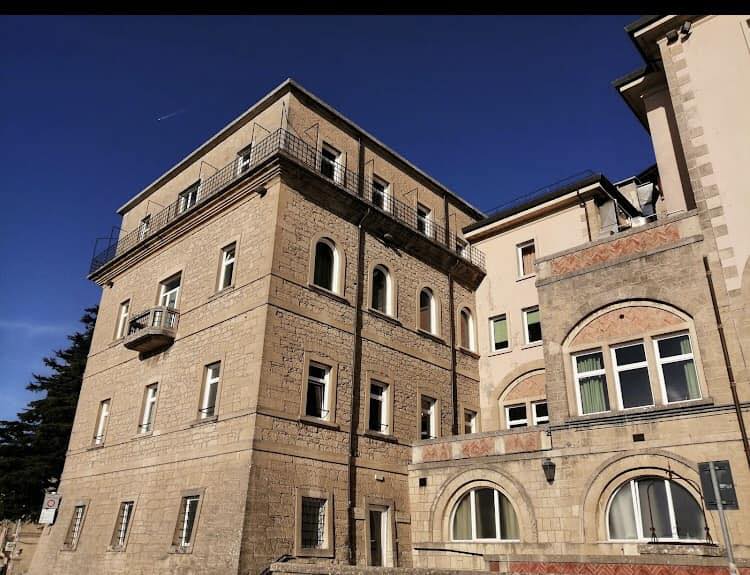
San Marino’s school system is changing. And this, even before being an assessment, is simply a fact. The completion of the Istituto Tecnico Industriale (Industrial Technical Institute), the new Liceo delle Scienze Umane (Human Sciences Lyceum) and the transformation of the CFP (vocational training centre) into a genuine vocational school all point to a system trying to broaden its offerings and give young people options they didn’t have before.
It is an interesting direction, especially in a small reality like San Marino, where for many students the choice after middle school has often meant looking beyond the border as well. Having more pathways available locally can become an asset, but it inevitably raises some questions. Will these new courses manage to attract enough students? Will they be genuinely connected to the needs of universities and the labour market? And above all: behind the opening of these new paths, is there already an overall vision for what San Marino’s school system will look like in ten or twenty years?
Then there is a less visible, but decisive, issue: who will actually make that school work every single morning. The debate over hiring lists, support staff and the stability of teaching personnel cannot simply be dismissed as a labour-union matter. A reform may be well written on paper, but it needs motivated teachers, continuity in teaching and sufficiently clear rules. How much can a school truly innovate if the people who work there keep questioning their own future?
Even the extension to 30 September for finalising the ITI’s training plans can be read without alarm. Building a new pathway takes time, and allowing for that time may be preferable to rushing ahead. But this very choice raises another consideration: does the school system currently have the facilities, expertise and resources needed to sustain all these changes at once?
Immediate answers are not necessarily required. It would, however, be useful for the debate on schooling to move beyond the scope of individual reforms, decrees or labour disputes. Because behind every new course, every hiring list and every curriculum lies a much bigger question: what do we want a student finishing San Marino’s school system in ten years’ time to be able to do — and what kind of person do we want them to become?
Perhaps this is precisely the question to start from. Because a modern school is not built simply by adding new pathways: it is built when a country decides what future it wants to offer its young people.