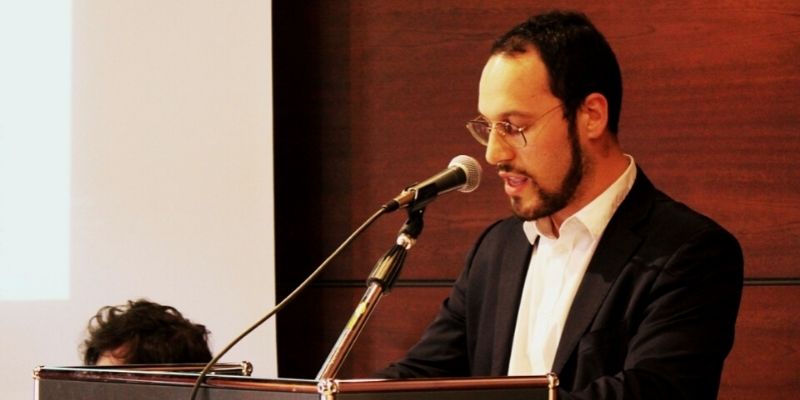
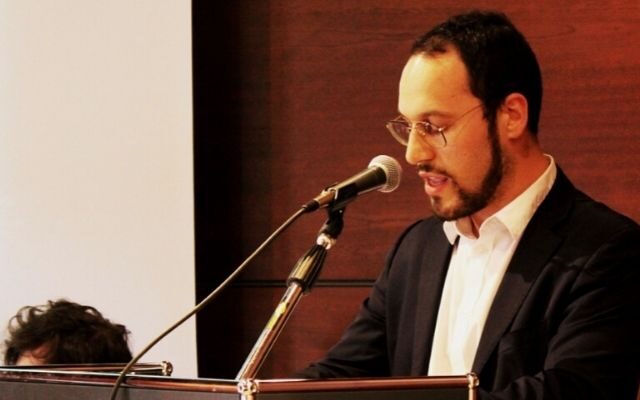
Marco Mularoni (PDCS) spoke during the debate on item 7 of the Grand and General Council (Consiglio Grande e Generale) agenda, dedicated to the ratification of the Association Agreement between the Republic of San Marino and the European Union.
The councillor highlighted the limitations of San Marino’s old economic model, also recalling the difficulties encountered during the pandemic in securing vaccine supplies.
In his speech, he went on to address the issue of participation in the European single market and democratic representation, responding to the positions expressed by Domani-Motus Liberi on the referendum question.
Below is the full text of Marco Mularoni’s speech.
I would first like to acknowledge the work of everyone who, over the years, has worked to bring us here today, in this Chamber, on a historic day for the Republic of San Marino, as we ratify the Association Agreement with the European Union.
I believe particular recognition is owed to Secretary of State Luca Beccari because, to borrow the title of a film, even in our darkest hour, when within this Chamber — and also outside it — there were those who perhaps took satisfaction in certain news, Secretary of State Beccari was in his office at Palazzo Begni, continuing to work, to persevere and to push forward, quietly, in order to reach this important goal.
I therefore believe we must acknowledge the work of the Secretary of State, of San Marino’s entire diplomatic corps, and of everyone who made it possible to bring this achievement before this Council Chamber today.
At this point, I think we must also ask ourselves why we are here today and what reasons brought us to this important milestone. Many colleagues have rightly traced the beginning of this journey back to the events of 2015, others have referred to 2011, and some have cited events dating back to 2000 or 2006.
I believe that the world as we knew it ended in 2001, when that terrorist attack took place, marking a profound change at the international level.
San Marino too, albeit indirectly and perhaps without fully wanting to grasp it, began to realize that its economy could no longer be based on the opaque system that had characterized part of our history.
It was probably also at that moment that we began to ask ourselves what Europe truly represented for the Republic of San Marino. We must ask why we are here today, and I believe one of the fundamental answers lies in the fact that our history, however much it is the history of a small state, is nonetheless a European history.
We have a European culture, a European society, and above all a whole set of principles and values that shape both our legal system and our social fabric, and which are European in origin.
I believe this is a decisive element in understanding the choice we are called upon to make today.
It has taken us many years to reach this result, partly because for a long time we believed we could continue living within an opaque and non-transparent economic model. Today, however, we have reached a fundamental point in our journey.
The paradox is that we do not merely have a European culture — we already have, within our economic and social fabric and within our legal system, a great many European regulations, which we have necessarily had to transpose over the years in order to trade, to operate, and to meet all the needs arising from being part of a European context.
I am thinking, for example, of personal data protection legislation, which a colleague has already mentioned, but also of the entire financial and banking sector.
Under the Monetary Agreement we signed, we have been required to transpose a great many European directives and regulations. A significant portion of the rules we will need to align with under the Association Agreement is therefore already present within our legal system.
The fundamental difference is that, until now, we have done all this while remaining outside the room in which decisions were made. From tomorrow, through the Association Agreement, this will change.
I would like to simply recall what happened in 2021, during the pandemic, also because some have argued that the Association Agreement could have been replaced by individual bilateral agreements. In 2021 we signed a bilateral agreement between two ministries, an agreement that committed both governments to carry out certain activities and to honour certain commitments.
That bilateral agreement, however, was not honoured by one of the parties, and the Republic of San Marino found itself among the last countries to launch its vaccination campaign, consequently having to turn to Russia for help.
Why did this happen?
Because we were outside the European system, we were considered a third country, and all the vaccine manufacturers dealt directly with the European Commission.
The opportunity we later had, particularly with regard to the administration of the third dose, to use vaccines distributed through the European system, also stemmed from the work of some friends who, within the European Parliament, put forward an amendment allowing countries that were geographically located within the European context but did not have specific agreements with the European Union to access those vaccines.
I believe this too represents an important element that we need to reflect on.
Naturally, all of us watch the news, follow current events, and observe what is happening in the world.
Someone might therefore ask why the Republic of San Marino should feel the need to integrate further with the European Union, precisely at a time when we see a Europe that, especially from a geopolitical standpoint, seems to be sidelined from various international contexts, where there are ongoing disputes among member states, and where there are significant issues relating to energy, taxation, budgetary policy, and many other matters.
We must, however, understand one fundamental point. Today we are not discussing the Republic of San Marino’s accession to the European Union.
We are discussing participation in a system founded on the four fundamental freedoms of the European internal market. This is what we decided to negotiate, and this is the substance of the choice we have made, because matters such as taxation, defence and security remain outside this Agreement.
There is also another element I consider fundamental, namely the guarantees and forms of protection that will be offered to us through the Court of Justice of the European Union. Many of the colleagues who spoke before me have already pointed out how much this could change the situation for our businesses, which, in practice, are already required to comply with certain European regulations.
In order to produce and market their products within the European market, our businesses must meet certain compliance requirements, but they have to do so bearing additional costs, precisely because they operate within a country that is classified as a third country.
Until now, as I said earlier, we have always had to transpose regulations imposed on us from outside. From tomorrow, through the Association Agreement, we will instead have the opportunity to play a role in shaping those regulations, and above all we will have the chance to be heard, to represent our needs, and to assert the distinctive characteristics of the Republic of San Marino.
The Agreement also includes clauses that allow, under certain circumstances linked to force majeure, security concerns or situations of necessity, for certain provisions not to be applied. I believe this too is a fundamental element of the Agreement we have negotiated.
I would now like to move on to another important matter, which several colleagues have addressed during the debate — namely, the question of the referendum.
The referendum is one of the fundamental tools of our democracy, and it is entirely natural and healthy that, within a democratic community, there are voices calling for the use of this instrument, especially when dealing with issues that deeply affect our country’s future.
It is equally legitimate for there to be people who harbour doubts or who express genuine opposition to the European Union.
This is absolutely not a problem — indeed, it is part of normal democratic debate.
What I do not consider acceptable, however, is thinking one can rewrite one’s own political history. In 2023, Rete, which was then part of the majority, decided to leave both the majority and the government, while Domani-Motus Liberi made a clear choice: to continue the legislature alongside the Christian Democratic Party.
One of the key premises behind that choice was precisely the will to see the negotiation concluded and the Association Agreement with the European Union signed.
At the time, I was not yet a member of this Chamber, but I do not recall ever reading a single statement from that political party calling for a referendum, or raising particular doubts about the process leading to the Association Agreement.
On the contrary, that Agreement was initialled and the negotiation was brought to a conclusion precisely during that legislature and under that majority.
The very decision to continue the legislature, avoiding early elections, also stemmed from the need to reach the signing of the Agreement without presenting the European Union, on such an important occasion, with a Republic of San Marino governed by a caretaker executive.
Today, one can certainly distance oneself from choices made in the past, one can argue whatever one wishes, but the facts — however much one tries to reinterpret, distort or manipulate them — remain, and they are part of our political history. I believe this is the decisive point from which we must start.
Article 2 of our Declaration of Citizens’ Rights establishes that sovereignty resides in the people, who exercise it also through the instruments of representative democracy.
All of us sitting in this Chamber were voted for by citizens, all of us were elected as part of a political party, and all these parties had included the issue of the Association Agreement with the European Union in their electoral platforms.
As colleague Michela Pelliccioni also pointed out, I did not read the word “referendum” in any of those electoral platforms — not even in the platforms of those who today, in my view, for reasons of political convenience and electoral gain, are trying to present themselves as the champions of justice, as the sole defenders of democracy and the popular will.
We must instead remember that the people of San Marino, through their electoral choices over the course of fifteen years and through four different governments and four different majorities, have already made clear their position on this important process.