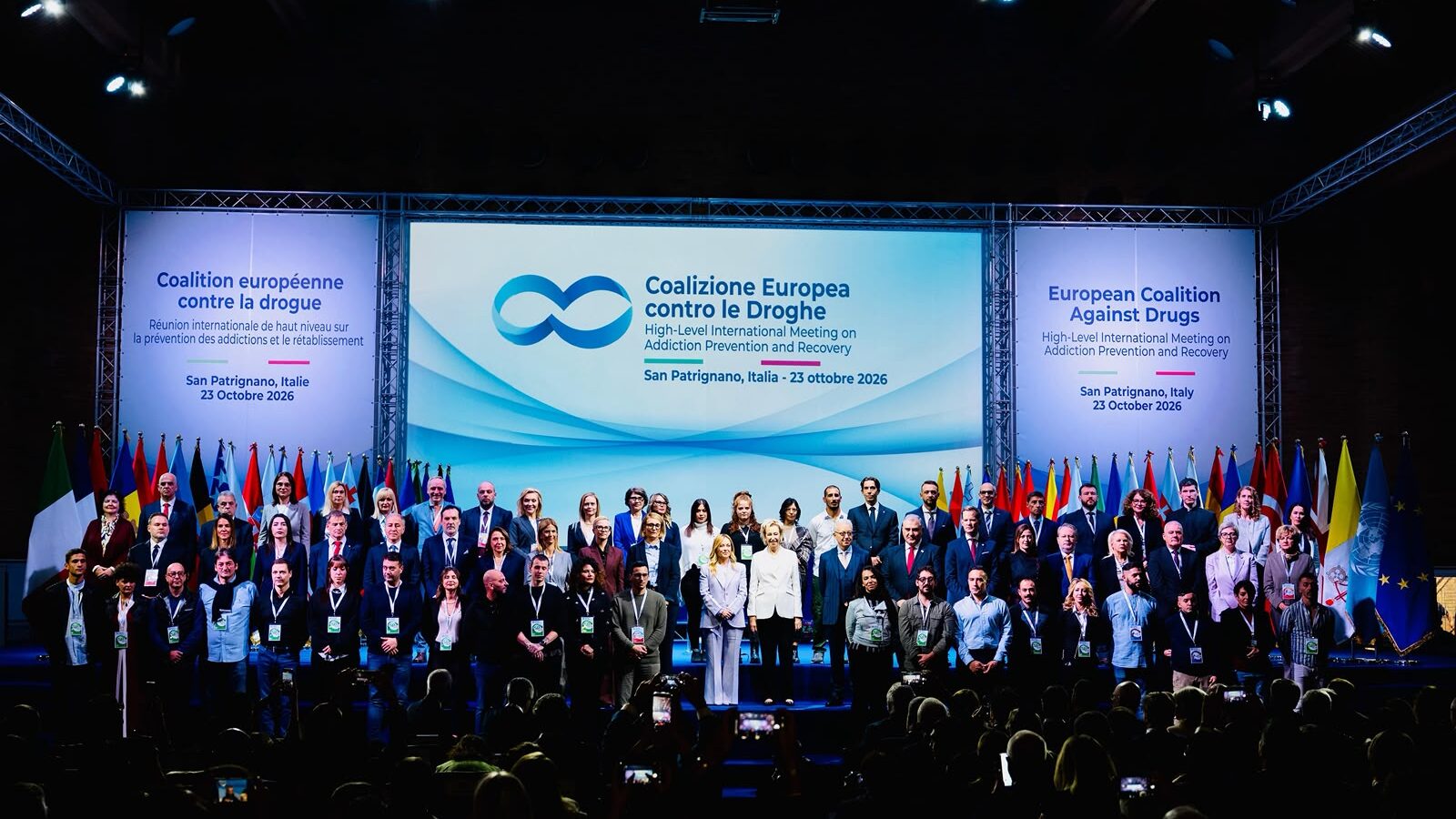
Giorgia Meloni arrived at San Patrignano with a clear anti-drug message, while San Marino brought its own experience and proposals to the international table on addiction prevention and recovery. The Coriano-based community was today, Friday 23 October, the focus of talks bringing together 35 delegations from countries, European institutions and international bodies, as part of the high-level meeting of the European Cities Against Drugs coalition (ECAD), promoted by Italy and France at the initiative of the Italian prime minister and French President Emmanuel Macron.
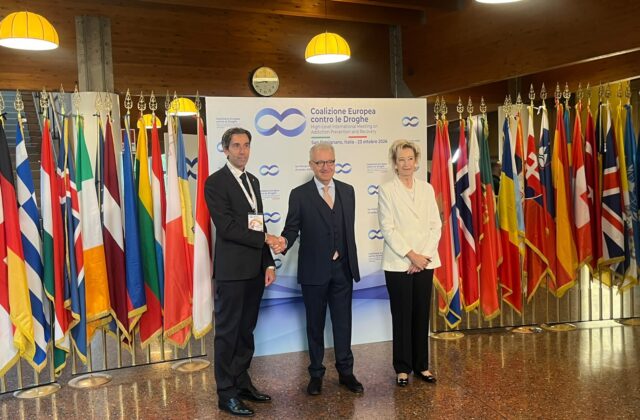
Representing the Republic of the Titan was the Secretary of State for Health, Massimo Andrea Ugolini, who was welcomed on arrival by Letizia Moratti, co-founder of the community, and by Alfredo Mantovano, undersecretary to the Italian Presidency of the Council of Ministers.
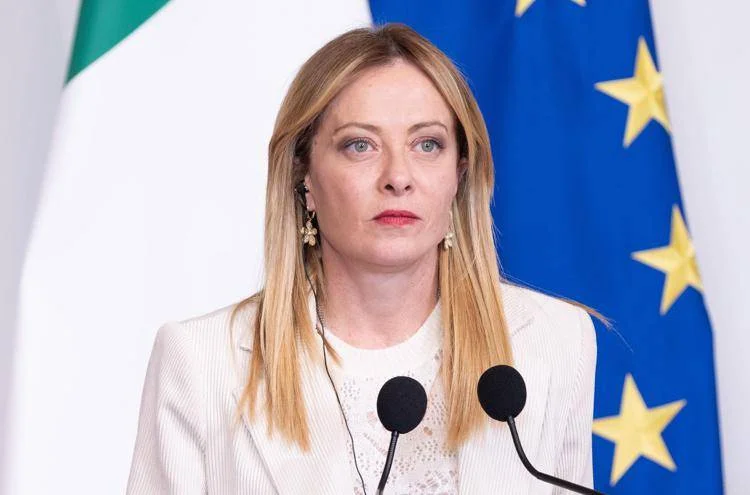
It was Giorgia Meloni herself who opened proceedings, describing San Patrignano as “a factory of hope and freedom”, and reiterating the Italian government’s firm stance against any attempt to downplay the risks linked to drug use.
The prime minister pushed back against the idea that taking drugs can be considered an exercise of freedom, focusing in particular on the spread of new synthetic substances and the growing potency of already known ones.
“Today’s drugs are very different, they’re more potent, cheaper and more accessible,” Meloni explained, also pointing to the role new technologies play in producing an ever-changing array of molecules that are difficult to detect in time.
Her remarks on cannabis were particularly pointed, as the prime minister criticised those who continue to regard certain substances as “light”, arguing that active ingredient levels are now far higher than in the past.
Meloni went on to stress the need to intervene before addiction takes hold, announcing plans for talks with major networks and media platforms to counter misleading messages about drug use.
At the same time, she reiterated that prison cannot be the only answer for those struggling with addiction: treatment pathways and genuine opportunities for recovery are also needed.
In this international forum, San Marino presented a position combining security, healthcare and social reintegration. In his address, Secretary of State Massimo Andrea Ugolini outlined three priorities: preventing substance use, especially among young people and the most vulnerable; ensuring long-term care and support; and strengthening cooperation between states against emerging drug-related phenomena.
“Alongside tackling supply and criminal networks, we must keep a strong focus on prevention, treatment and the recovery of individuals,” Ugolini stated. “No strategy can be considered complete unless it offers people facing addiction a genuine chance to regain independence, relationships and a life plan.”
The Secretary of State also underlined the need to support families and ensure continuity in treatment pathways, so that people are not left on their own once the most delicate phase of recovery has passed.
“Protecting public health and combating illegal trafficking are not alternative goals, but two sides of the same public responsibility,” Ugolini added, calling for adequate services, greater international cooperation and evidence-based policies.
For San Marino, taking part in the summit marks a further step in the process begun with its accession to ECAD, following previous international meetings in Copenhagen and Yerevan.
The Republic also highlighted the prevention initiatives it has already carried out in partnership with San Patrignano, with which it maintains a concrete working relationship on awareness-raising and the fight against addiction.
The meeting also featured messages from Italian President Sergio Mattarella and European Parliament President Roberta Metsola. Both stressed the importance of international cooperation, noting that addiction is a phenomenon that transcends national borders and demands coordinated responses.
Underpinning the discussions were figures confirming the scale of the problem. Cannabis remains the most widely used illegal substance in Europe, while concern is growing over the spread of cocaine and synthetic drugs, which are becoming increasingly prevalent on the market.
Alongside the community’s leadership, Meloni was also welcomed by the Prefect of Rimini, Giuseppina Cassone, the President of the Province, Jamil Sadegholvaad, the President of the Emilia-Romagna Region, Michele de Pascale, and the Mayor of Coriano, Gianluca Ugolini.
The mayor himself highlighted the significance of the day for the local area, recalling San Patrignano’s role as an international point of reference for the recovery of people struggling with addiction.
Also at the heart of the talks was the San Patrignano–Rimini Declaration, a document through which the delegations aim to set out new shared commitments. Among the stated goals are combating international drug trafficking, cracking down on criminal organisations’ financial flows, and strengthening prevention, treatment and reintegration policies.
The event has once again placed San Patrignano and the Rimini area at the heart of the international debate on drugs, with the Republic of San Marino directly involved in shaping future cooperation strategies.