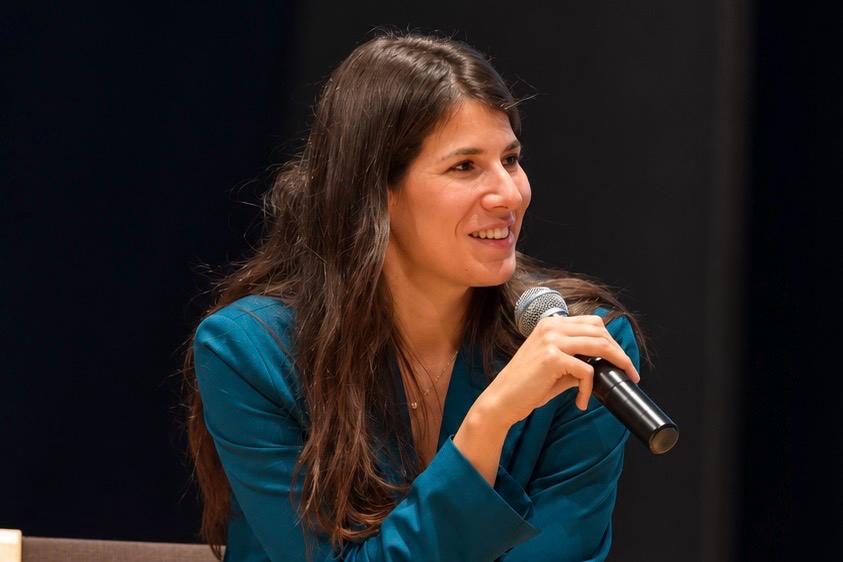
We publish in full the speech given by Giulia Muratori (Libera) in the Grand and General Council (Consiglio Grande e Generale), during the communications item.
Giulia Muratori (Libera): I too cannot help but comment on the signing of the association agreement with the European Union. It is a historic moment for our Republic, one that I believe deserves to be recognised both for its political significance and for the prospects it opens up for our country. I will not hide my personal emotion, but I would also like to highlight the emotion felt by everyone who took part in the signing ceremony organised by Congress at the Kursaal. It was a historic event, a moment that will remain in the memory of our Republic. It is a result that comes after years of work, spanning different legislatures and governments, thanks also to the commitment of many people who, despite coming from different political sensitivities, believed in the possibility of building a new relationship with the European Union. In the debate, I heard some claiming credit for their own contribution and commitment — allow me to say, perhaps putting themselves a little too much in the spotlight. I could do the same, recalling how Libera has always firmly supported this path and how, since its founding, it has believed in the value of the agreement. But I do not think it is useful today to establish who can claim the greater share of this achievement. What I believe is important is to acknowledge the work carried out over time by different people, political forces and institutions, without turning a national achievement into a competition. This is an achievement for the country. It is the result of the work of different governments, of the contribution of the political forces that supported it, but also of trade unions, trade associations and economic and social representative bodies that accompanied this process, recognising its importance for the future of the Republic. This is the important point: the country came together as a system in the face of an opportunity. My personal thanks go to them as well, and I believe that this ability to build a shared vision, beyond political affiliation, represents one of the most significant aspects of this achievement. San Marino has chosen to look ahead, to strengthen its international presence, to invest in cooperation and multilateralism. This, too, is not something to be taken for granted, especially given the historic moment we are living through, as it overcomes a vision of isolation that today would be increasingly unsustainable. But precisely because this achievement is so important, I believe we must immediately turn our attention to what lies ahead. The signing is certainly a political achievement. Implementing the agreement will be the real test of our ability to govern the agreement itself. This is where our work must focus from today onwards. We face an extremely demanding phase ahead, one that will require rigorous planning for the transposition of the EU acquis and a progressive adaptation of our legal system. For this reason, I believe — and we believe — it is essential to define, as soon as possible, a genuine legislative roadmap, if I may use that term, organised sector by sector, which precisely identifies the measures to be implemented, the negotiated deadlines, the responsibilities and the timelines for the approval of each provision. What is needed is planning that involves the government, but above all the administrative structures and the Grand and General Council, with a defined legislative calendar and tools for periodically monitoring progress. But the real crux of the matter, in my view, lies elsewhere: the preparation of the public administration. Here, I believe we must have the courage to acknowledge that we are somewhat behind. We cannot keep speaking in general terms about the need to prepare for the agreement. This work should have already been started and structured well before now, regardless of the date of signing, and it must begin immediately. We have known for years what direction our country would take, and it is precisely for this reason that we must make up for lost time. The expertise exists within our public administration. The point is to put people in the conditions to work, to make the most of their skills and to organise them effectively. We need to know who does what, which offices are called upon to act, which competencies need to be strengthened, and how these structures should communicate with one another. A report had been submitted by the Secretariats of State for Internal Affairs and Foreign Affairs, which we discussed here in Council — a report that already contained proposals and solutions. We now need to decide which of those proposals and solutions to pursue and bring to completion. For this reason, I also believe it is essential to make a steering committee (cabina di regia) fully operational, with clear responsibilities and a system for monitoring activities. I believe this must be, as of today, a priority objective for the government, one on which we cannot afford any further delay.
Changing subject. I would also like to briefly address the Giochi del Titano affair, also in light of what was reported by Secretary of State Gatti and Secretary Fabbri. I believe it is important that a matter of this complexity be handled by the institutions with the necessary attention and responsibility. The government has taken initiatives to follow the situation, and it is important that this work continue seriously. However, I believe two aspects need to be distinguished. The first concerns any possible criminal implications, on which it is certainly up to the judiciary to establish the full facts. The second concerns the management and functioning of the company. It is on this ground that the government has taken action, naturally through the competent bodies, which will need to carry out all the necessary investigations to verify whether there are anomalies in organisational processes, internal controls and management practices. On the matter of terms of office, I too agree with those who believe that perhaps overly long terms need to be reconsidered. Where responsibilities exist, they must certainly be established without leniency for anyone.
I move on to a completely different subject: the hearing of the ISS Executive Committee, which recently took place before the Commission, which I found particularly important and indeed very positive, and from which some significant new elements emerged. I am referring in particular to the attention given to community and home-based medicine, issues we consider fundamental for the future of our healthcare system and which — and I must point this out — did not receive the same level of prominence in the report of the previous Executive Committee. This is a shift in approach that we at Libera consider particularly significant. We have long argued that healthcare cannot be conceived solely around the hospital, specialist services and emergency management. Healthcare must be able to accompany people throughout their entire lives, from prevention to treatment, all the way to home care and support for non-self-sufficient individuals. This is precisely the deeper conception of social security on which our Institute was founded, and I believe it is important today to fully recover this vision. Community medicine, proximity care, the strengthening of home-based assistance, and also the role of the family nurse, represent fundamental elements in building a system that is closer to people’s needs. Strong community healthcare is not an alternative to an efficient hospital system: it is one of the conditions that allows the hospital to function better. I believe we must continue to invest along this path.
Still on healthcare matters, I would finally like to address the discussion that developed in recent weeks on the subject of mammograms, an issue that is particularly close to our hearts. I sincerely believe that the way this matter was handled was deeply inappropriate. Concerns and alarmism were stoked around an extremely sensitive issue, one that touches on women’s health and citizens’ trust in prevention programmes. There was talk of possible cuts and reductions in screening when, in fact, no such decision had been made. Fortunately, healthcare professionals have since spoken out publicly on this matter, recently issuing a joint statement together with the health director, in order to set the record straight and bring the discussion back onto the correct ground — that of scientific evidence. I believe this is an important step. Prevention is essential, but it must be built on science, not on political controversy. Politics certainly has a duty to oversee the effectiveness of prevention programmes, to demand that they are adequately funded and constantly updated, but it cannot take the place of healthcare professionals, and above all it cannot turn a request for scientific clarification into a news story.