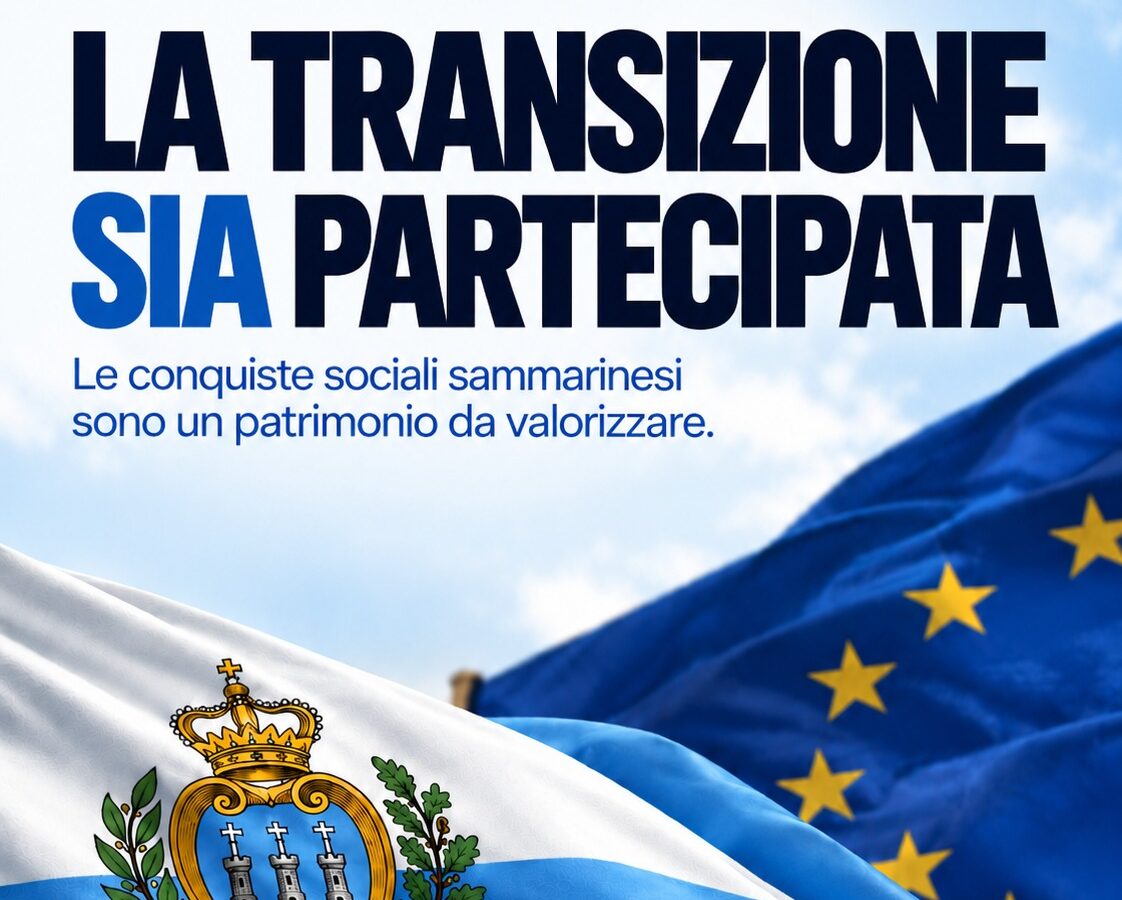
Following the signing of the Association Agreement with the European Union, the CDLS is calling on institutions to clarify the next steps and open a stable dialogue with social partners. The union, which welcomed the signing with satisfaction, is focusing on implementation: which measures will take priority, within what timeframe, and with what effects on businesses, employment and daily life.
The request is to involve trade unions and economic and social representatives before decisions are finalised, through structured and ongoing forums for dialogue. Citizens must be guaranteed clear information and opportunities for participation, so they can follow and contribute to the changes ahead for the country.
One of the points on which the Confederazione Democratica Lavoratori Sammarinesi (CDLS) insists is the defence of the collective bargaining model. The erga omnes effect — meaning the application of contractual protections to all workers concerned — is held up as an achievement to be strengthened through permanent dialogue between institutions, unions and employer representatives. For the CDLS, this experience could also become a contribution to share with European partners.
Attention then turns to the risk of greater job insecurity. According to the union, alignment with European rules must safeguard employment guarantees and rights, preventing new flexibility tools from translating into more precarious working arrangements.
“The modernisation of the labour market cannot be measured by the ease of resorting to temporary and discontinuous forms of employment, but by the ability to combine competitiveness, stability, quality employment and rights.”
For the CDLS, San Marino’s social achievements are an asset to be valued in the relationship with Europe. The application of common rules must therefore take into account the specific features of the Titano’s economic and employment system, making use of the margins of autonomy it has been granted.
The union has declared itself willing to contribute to the process and is calling for a structured dialogue on how the Agreement will be implemented, in order to assess the effects of the new provisions and accompany the transformations with the involvement of social partners and the wider community.