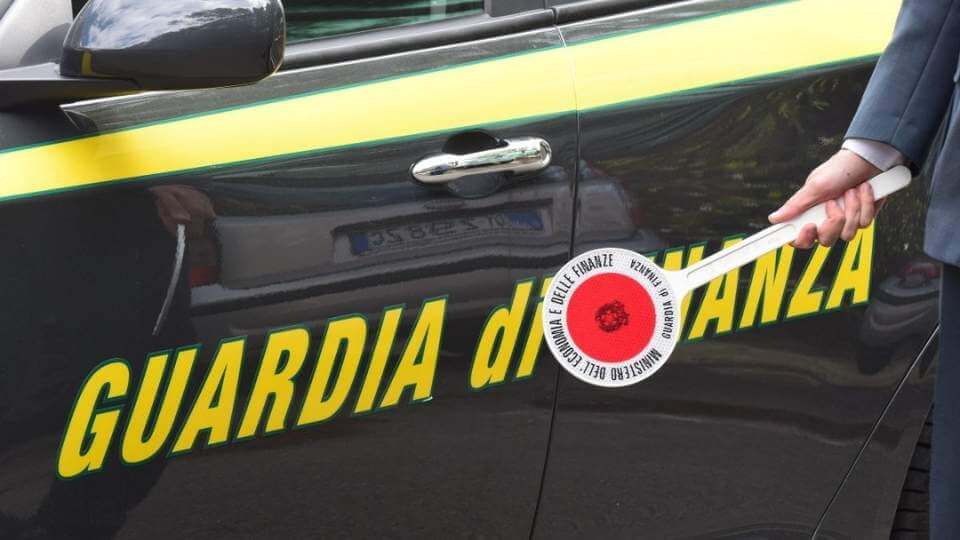
First the invoices. Then the bank transfers, the cash, and a trail leading to San Marino’s slot machines. The investigation into Giochi del Titano began in Ravenna, stemming from tax checks that prompted Italy’s Guardia di Finanza to follow documents and money well beyond the province’s borders. This is the starting point of the inquiry that eventually reached the public company running the Rovereta gaming hall, now at the centre of a probe into alleged money laundering worth nearly €7.5 million.
The original investigation centres on invoices believed to be fraudulent and an alleged system of illegal labour supply. In this branch of the case, 17 people are under investigation: sixteen individuals and one company. Ten of them live in Ravenna, one in Bagnacavallo. Coordinating the inquiry is public prosecutor Raffaele Belvederi, who ordered searches and document seizures in several Italian cities based on a report filed by the financial police on 17 July.
At the heart of the reconstruction is Secom Service srl, with operational headquarters in Ravenna and registered office in Rimini. According to the prosecution, the system worked thanks to agreements between the company’s management — a family from Ravenna — and the individuals who supplied the workers. Those implicated also include an accountant from Lecce and a labour consultant from Taranto.
One of the elements under scrutiny concerns Deepsea srl. The company allegedly formally hired a number of workers previously employed by Secom, only to send them back to work for Secom once again. The employer changed on paper, but the workforce returned to the same company — a mechanism that prosecutors believe amounted to illegal labour supply.
By following the paper trail of invoices, investigators say they also identified a channel used to launder illicit proceeds. This is where Geo Impianti comes in, described by prosecutors as one of the more recently created “cartiere” — shell companies that, according to the investigation, existed purely to issue invoices with no corresponding real transactions.
The network reportedly included eight second-tier shell companies, traced back to three suspects from Campania — an additional layer through which invoices and money could be funnelled.
Prosecutors are now gathering further evidence to reconstruct how the system operated. They want to clarify the relationships between the suspects, calculate the amounts invoiced, tally the hours worked by employees allegedly supplied illegally, and quantify the profits made. For the shell companies, investigators are also trying to establish where the transfer orders originated and where the invoices were actually issued.
The searches targeted the premises of 22 companies, most of them in Ravenna, as well as properties, vehicles and electronic devices. Among the locations searched was also one linked to a woman not under investigation, connected to one of the suspects from Ravenna.
The connection to San Marino runs through the Bergamo area. According to findings by the economic and financial police unit, the Ravenna-based entrepreneur at the centre of the investigation is said to have managed various companies over time, used to dismiss and rehire workers according to operational needs. In this context, he allegedly turned to a group of Albanian origin operating in the Bergamo area.
The service allegedly on offer was converting bank transfers into cash. The money is said to have passed through several shell companies in a cascading series of transfers, before being handed back in banknotes. Overall, the shell-company network described in the investigation is believed to have exceeded €100 million.
It was along this trail that investigators eventually arrived on Monte Titano. In the San Marino branch of the case, according to the investigative reconstruction reported by PressGiochi, one entrepreneur allegedly collected cash in Ciserano, in the province of Bergamo, corresponding to transfers made for invoices considered fraudulent. The sums were then allegedly moved to San Marino, wagered on slot machines, and converted into Giochi del Titano cheques issued as winnings, to be deposited in the bank.
The suspicion is that gambling was used to give the money an apparently legitimate origin. Under the prosecution’s hypothesis, the portion lost on the slots represented the cost of the operation, while the rest returned in the form of documented winnings. However, the payout percentage of slot machines is a statistical average, not a guaranteed return on every play. Technical examinations of the ten seized slot machines will also need to establish whether the gaming systems had been tampered with.
On one side, then, is the Italian investigation into the invoices and labour supply. On the other is the subsequent inquiry into possible money laundering through the San Marino gaming hall, involving seven people and transactions worth nearly €7.5 million between 2019 and 2026. These figures refer to different scopes: the more than €100 million tied to the shell-company network is not the same as the money allegedly funnelled through Giochi del Titano. The link between the two strands lies in the money’s trail, which investigators are tracing from the invoices all the way to the winnings cheques. Responsibility has yet to be established.