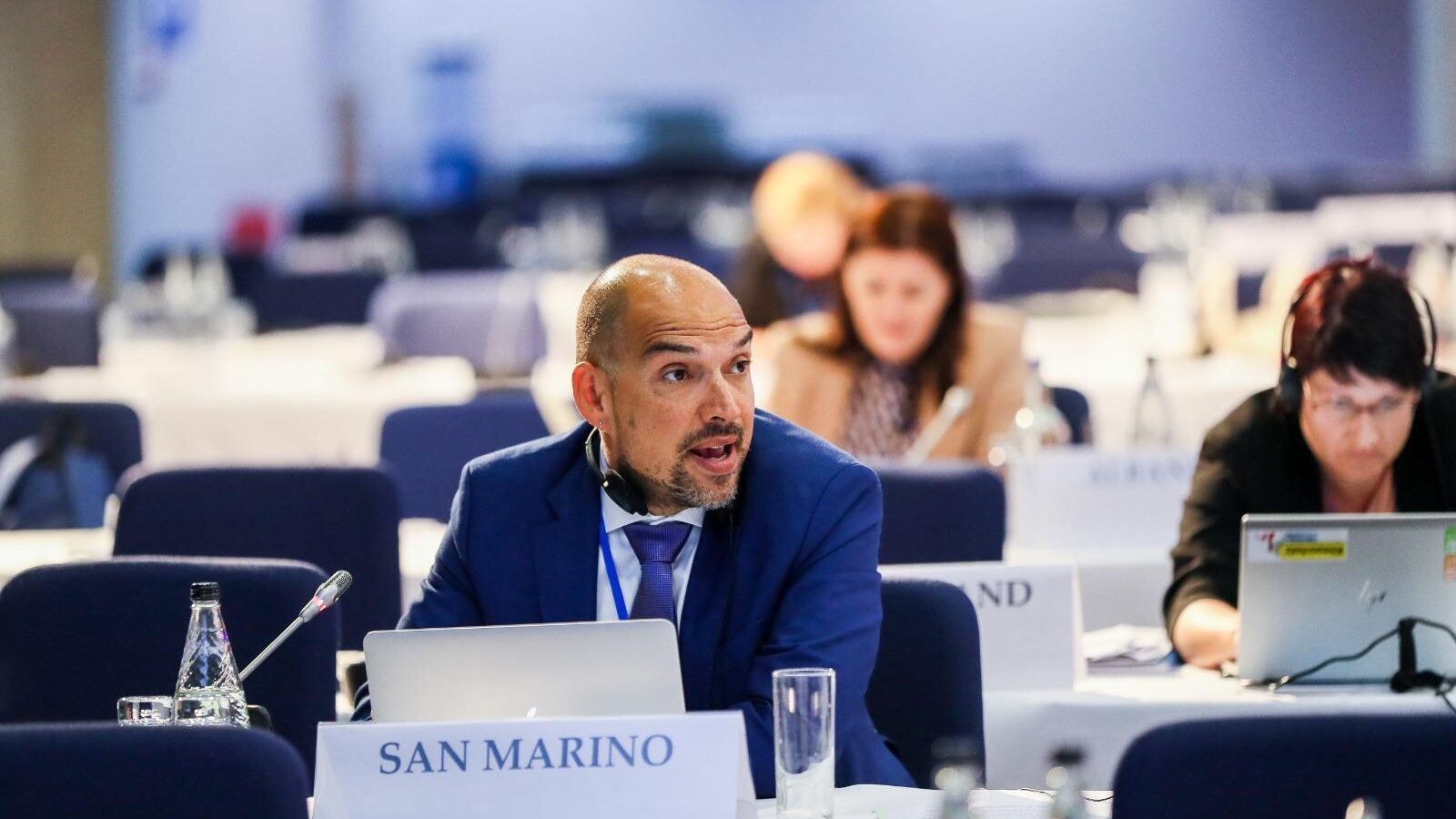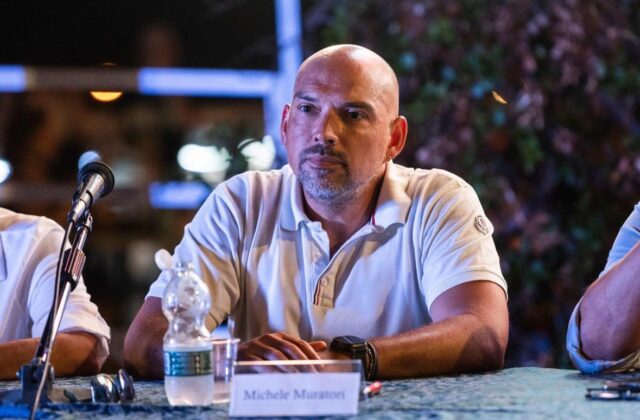
The in-depth column curated by Michele Muratori, leader of the Libera group, continues its analysis of current political affairs, the main institutional challenges and the topics of greatest interest to the Republic of San Marino.
There is one aspect at the heart of the European project that often escapes even the most preconceived criticism: the Union was not created to standardize, but to make diversity cooperate. Far from representing the bureaucratic stranglehold that many denounce, the EU has established itself as a solid political space for peace and cooperation, conceived to unite forces, strengthen its presence on world markets and defuse historic tensions between nations. This unifying effort does not impose a single model. At home, in the day-to-day exercise of their state sovereignty, each country continues to decide independently on the decisive aspects of public life. An objective examination of how European institutions function, together with international data, confirms that the Europe of rules is also a Europe of physiological asymmetries — an ecosystem in which continental cooperation and respect for national identities are not conflicting principles but two sides of the same coin.
Consider the single market, in force since 1993, which has lowered internal barriers, and the 1995 Schengen Agreement, which guarantees free movement without border checks in as many as 25 of the 27 member states, with only Ireland and Cyprus exempted. Alongside these structural achievements, the European journey continues to tackle the challenges of an evolving Union, one in which judicial sovereignty, police forces and tax systems retain firmly their national specificities. The adoption of the euro by 21 countries — soon to be joined by Bulgaria from 1 January 2026 — together with the historic instruments of European financial response and solidarity, testify to an extraordinary capacity for reaction, even as they coexist with the currencies of Poland, Sweden, Denmark, the Czech Republic, Hungary and Romania. On the fiscal front, significant differences remain between national frameworks, with nominal corporate tax rates ranging from 9 percent in Hungary to 35 percent in Malta. This heterogeneous picture has prompted the European institutions themselves to open a debate on how to reconcile the competitiveness of individual territories with the harmonization of opportunities for businesses and protections for workers.
Within the EU budget, where 9 countries are net contributors and 18 are net beneficiaries, Poland stands out as the top net beneficiary in absolute terms and Hungary as one of the top beneficiaries relative to GDP — this despite funds frozen over the Orbán government’s past breaches of the rule of law, and alongside Poland’s considerable humanitarian effort in hosting almost a million Ukrainian refugees since 2022.
Even when confronting the most complex international crises, the European Union shows a growing ability to forge shared responses, even as it navigates a plurality of national sensibilities. In managing support for Ukraine, while financial aid flows steadily through the common budget in proportion to GDP, the supply of weapons reveals very different levels of commitment among member states — from Denmark, which allocates over 3 percent of its GDP, to Italy, which remains at just 0.14 percent, and from Hungary, which has chosen not to send any arms at all, to Germany, confirmed as the largest donor with around €22 billion, according to the Kiel Institute Ukraine Support Tracker.
Similarly, the unanimous approval of as many as 21 sanctions packages against Russia has caused the share of Russian gas in Europe’s energy mix to fall from 45 percent to 12 percent, and although in 2025 €12.6 billion was still paid for supplies, the route toward energy independence remains clearly marked.
In the grave context of the Middle East, the search for a common position is reflected in the recognition of the State of Palestine by 16 member countries and in the debate over the Commission’s proposal to suspend the trade agreement with Israel, which was rejected by the Council on 21 April 2026, partly due to the opposing vote of seven states — including Germany and Italy — which together represent a third of the European population.
On the security and defense front, the absence of a unified European army and the existence of 27 separate armed forces, with four countries outside NATO, confirm that national security and defense remain a prerogative firmly in the hands of individual states. The four EU member states that do not belong to the Atlantic Alliance maintain this position for very specific historical and constitutional reasons. Austria preserves its permanent neutrality, enshrined in its Constitution and in the 1955 Austrian State Treaty, signed as the chosen condition for the withdrawal of Allied and Soviet occupying forces after the Second World War. Ireland pursues a long-standing policy of military neutrality and non-alignment, based on the so-called “triple lock” mechanism, which requires government approval, parliamentary scrutiny and formal UN authorization for any deployment of troops abroad, safeguarding the country’s decision-making autonomy. Cyprus remains outside the Alliance mainly because of the island’s deep division and tensions with Turkey — a NATO member state that formally vetoes any potential rapprochement or institutional cooperation. Malta guarantees its neutrality through Article 1 of its Constitution, approved in 1987, which establishes the country’s status as a non-aligned neutral state, ruling out membership of military alliances and prohibiting the use of national territory for foreign bases in peacetime. Differences in military spending — with Poland at 4.1 percent of GDP in 2024, compared with Italy and Spain below the 2 percent threshold — are matched by distinct strategic responses from individual states, such as Germany’s €500 billion fund launched in March 2025 and the technology investments in artificial intelligence and nuclear energy announced by France in February 2025, confirming that Europe respects the autonomous choices and specific features of each national system.
The path of European integration is also constantly measured by its ability to translate shared values into policies of solidarity and justice within Europe’s common borders. The difficulties encountered in managing migration flows, compounded by crises triggered by foreign states, highlight the need to achieve a genuinely European and fair asylum system.
Managing the tension between the specific identities of individual states and the universality of European principles is the great political challenge of our future. To hold its own against global powers such as China, the United States and Russia, Europe is called upon to strengthen its strategic synergies and coordination on the great continental challenges, turning every diversity into an opportunity for collective growth.
It is within this context that the analysis of the Association Agreement between the Republic of San Marino, Andorra and the European Union fits in. European integration does not entail any indiscriminate surrender of state sovereignty, nor an uncritical adoption of EU law. The association agreement, which will not turn San Marino into a member state of the Union, guarantees the preservation of solid decision-making and legislative autonomy, limiting regulatory alignment exclusively to the matters and shared rules necessary for access to the single market.
The agreement does not grant the European Union any authority over the fundamental pillars of the Republic’s sovereignty. Specifically, San Marino retains its full and exclusive sovereignty over taxation and fiscal policy, independently setting its own rates and its own tax system. The conduct of international relations and the safeguarding of San Marino’s historic neutrality remain entirely within national sovereignty, as do the judicial system, the administration of civil and criminal law, and internal security, which remain the exclusive domain of the state. Likewise, the organization of public health, social security, education, culture and labor policy remains the exclusive prerogative of our institutions.
The European agreement is a pragmatic instrument of integration aimed at eliminating the discrimination to which Sammarinese citizens have been subject as non-EU nationals. It includes safeguard clauses to protect the Republic’s specificities, together with various committees to manage them. Integrating states while preserving their institutional sovereignty is not a contradiction — it is the best synthesis between blind openness and pointless isolation. It is proof that, in the Europe of rules, one can live better while remaining, in every fundamental sphere, fully master of oneself and of one’s own future, together with others.