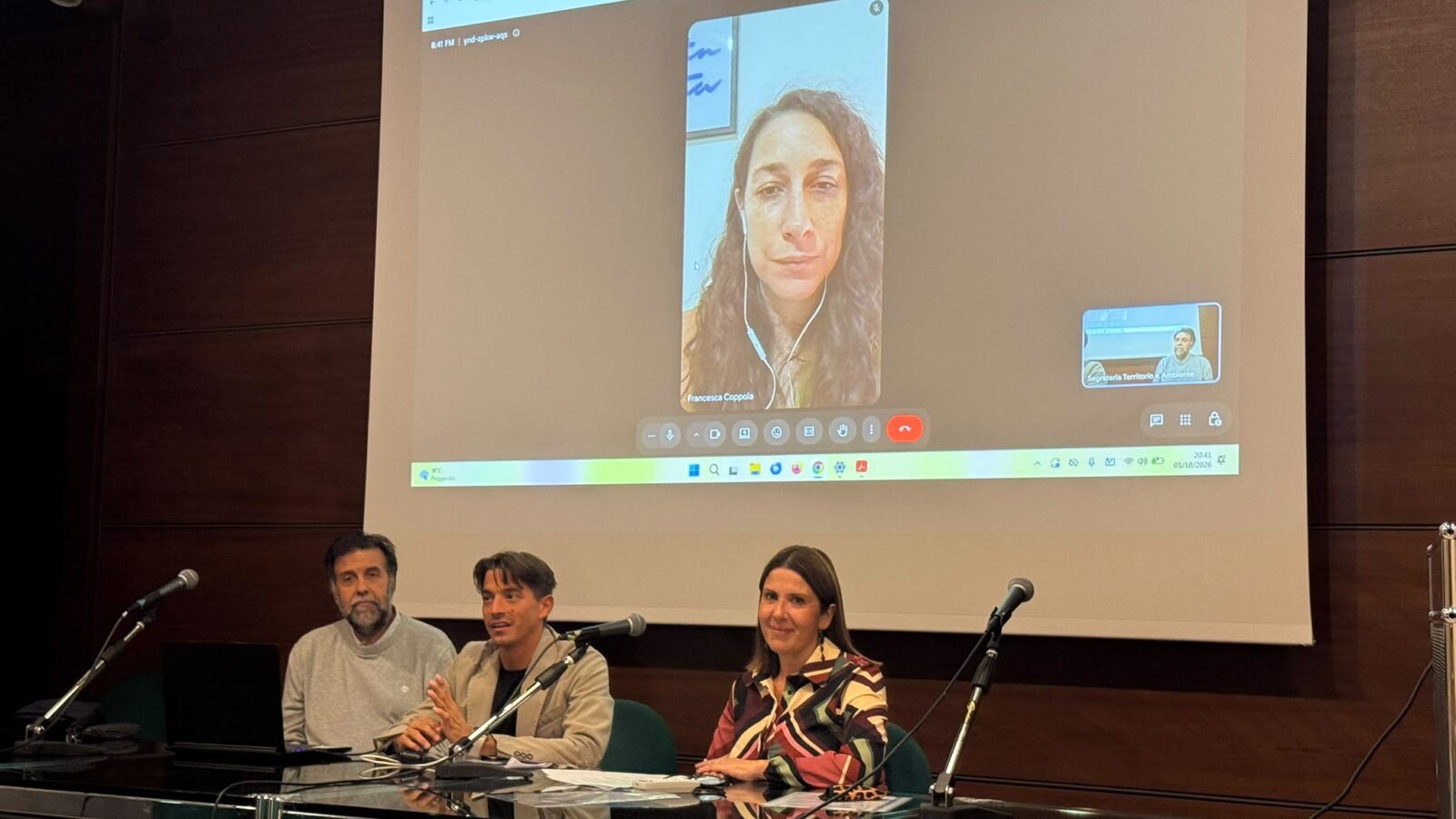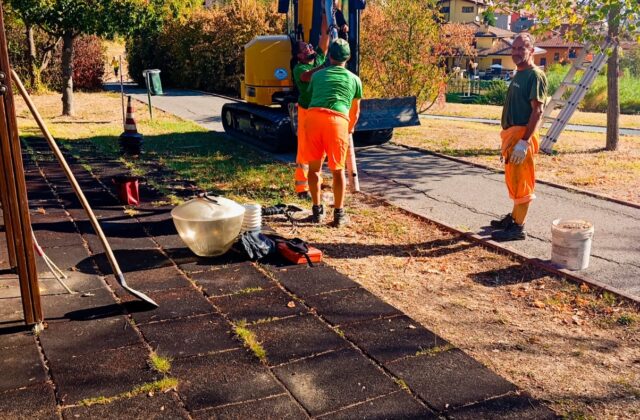
Removing asphalt and concrete where they are not needed, to restore permeability to the soil and make room for greenery. That was the focus of the public meeting “Depaving e opere di de-sigillazione dei suoli” (“Depaving and soil de-sealing works”), promoted by the Secretariat of State for Territory and Environment and held on Monday, October 5, at the Sala Montelupo in Domagnano.
The evening opened with remarks from Secretary of State Matteo Ciacci, who presented Delegated Decree no. 111 of 31 July 2026. According to the press release, the measure implements the Law on Strategic Territorial Planning and introduces rules and incentives for depaving public and private areas.
“Depaving isn’t just a slogan — it’s already a reality,” said Secretary Ciacci. “With the piazzale next to the Menicucci space, we showed that it’s possible to free an area from asphalt and give it back to residents, and the next project will begin in Laiala. Now, with Decree 111, we have the rules to carry this out more widely, involving private citizens as well. Fewer impermeable surfaces mean less flooding, less summer heat, and better urban quality. Comparing notes with cities like Genoa and Forlì helps us improve.”
The discussion then turned to how such interventions are incorporated into urban planning, with contributions from Francesca Coppola and Stefano Bazzocchi.
Architect Coppola, from the Department of Urban Planning, Urban Greenery, Smart City and the “15-Minute City” of the Municipality of Genoa, presented the role of depaving within Genoa’s Municipal Urban Plan, “outlining its challenges, strengths, and practical use by residents,” the statement reads.
Bazzocchi, from the Municipality of Forlì, explored the theme “Restoring urban soil: depaving between planning and European goals,” supported by a slide presentation. “His talk showed how depaving is not merely a symbolic gesture, but a process embedded within a broader framework of urban planning and European climate adaptation goals,” the press release notes.
The evening also focused on the effects of removing impermeable surfaces on rainwater management and urban temperatures. “The discussion highlighted how the practice of depaving — which originated in Portland in 2008 and has since spread to many European cities — now represents a concrete climate adaptation strategy: it improves soil permeability, reduces the risk of flooding, strengthens biodiversity, and helps make cities cooler and more livable.”