Proceedings in the Grand and General Council (Consiglio Grande e Generale) continued on the evening of Wednesday, 25 November 2026, with item 9 on the agenda, dedicated to the bill on the prevention and countering of violence and harassment in the workplace.
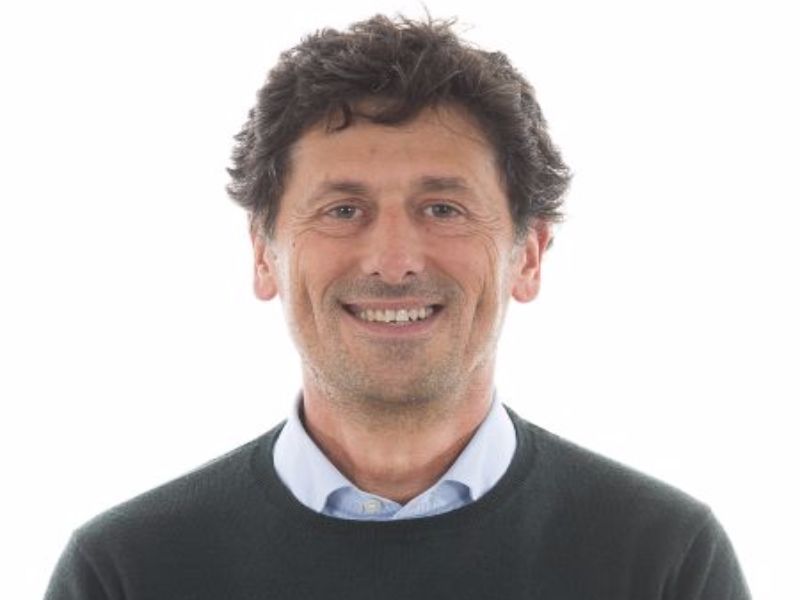
During the debate, Guerrino Zanotti (Libera) spoke, outlining the main measures contained in the bill, from resignation for just cause to paid leave, as well as protections for confidentiality. The councillor also reiterated the need to invest in prevention, involving institutions, schools, families and citizens.
Below is his speech in full.
Guerrino Zanotti (Libera): I think it’s right to acknowledge that Councillor Rossi admitted the mistake that was made at the time, because I do believe it truly was a mistake.
It’s difficult to speak at the end of a debate like this one, where so much has already been said about this issue — at times even beyond the bounds of decorum. Many have referred to the statement issued by the Secretary of Labour. I sense a kind of Cinderella syndrome creeping through the opposition benches.
When I saw that statement, even though I belong to a majority party, I admit I felt stung by those criticisms, because I believe they stemmed precisely from a desire to finally see this important bill come to fruition — which we are preparing to bring to completion today.
Doing so on 25 November is, I believe, the most meaningful way to honour this day, dedicated to the fight against violence against women. Marking it with such a concrete act is truly an added value, because we believe that days dedicated to any cause are only honoured if, from the day after, we change our behaviour. In this case, we are doing so through a law that will become part of San Marino’s legal framework.
This is the first comprehensive step San Marino has taken to implement Convention 190 of the International Labour Organization, ratified by San Marino in 2022, which for the first time affirmed at the international level every person’s right to work in an environment free from violence and harassment.
I believe this is a valuable achievement, and to remain so, it must be honoured by introducing legislative tools with the concrete substance that this bill ensures.
Throughout this process, San Marino has been able to count on the effective and truly constructive contribution of Dr Gianni Rosas. I’m glad to mention him, because Dr Gianni Rosas, Director of the ILO Office for Italy and San Marino, has worked alongside our country for many years, accompanying it with expertise and dedication through its labour reform processes. For this, I believe we owe him our gratitude.
This bill goes to the heart of an issue we have already examined together in joint committee sessions, because it introduces tools that make the protection of women and the most vulnerable workers in the workplace truly effective.
Those who suffer violence or harassment do not leave it behind at the office when they go home. Unfortunately, they carry it with them — in the fear of having to return to work the next day, in the difficulty of telling the people they love, and in the doubt of whether they themselves are somehow the real problem.
This applies to everyone, but especially to women, who, according to international data and figures gathered over time by trade union organisations, face a disproportionate risk, often in contexts where power dynamics are far from balanced.
The bill addresses this with three concrete measures. The first is resignation for just cause. This allows a woman who has suffered violence or harassment to resign without losing her economic and social security protections.
This matters because, today, a victim must choose between staying near their harasser or leaving — and paying the price of losing income and pension contributions. That is a choice that should never have to exist, yet many women, unfortunately, endure in silence rather than face it.
The second measure is paid leave of up to 100 days for those involved in a protection pathway, applicable to both employees and self-employed workers. As I read it, this should not present any issues in its application.
The third concerns confidentiality at every stage of proceedings related to workplace violence or harassment — something especially crucial in a small country like ours.
We believe the approach taken by the Secretariat is the right one, grounded in tripartite dialogue with trade unions and trade associations, and linked to an international convention.
What stands out in cases of violence — and this has also been confirmed by data gathered by trade union organisations — is that the majority of episodes involve workers on fixed-term contracts. Here, there is truly a weapon of blackmail, pressuring the worker, who is sometimes forced to suffer in silence.
Alongside measures like this bill, we believe it is vital to carry forward all the preventive work that we have seen is necessary — work that must involve institutions, schools, families, and all citizens, both men and women. Escaping gender violence cannot depend solely on a woman’s courage. Everyone must take responsibility for it.