Women’s economic independence as a tool against violence, the need to invest in educating new generations, and the value of dialogue between institutions and social partners.
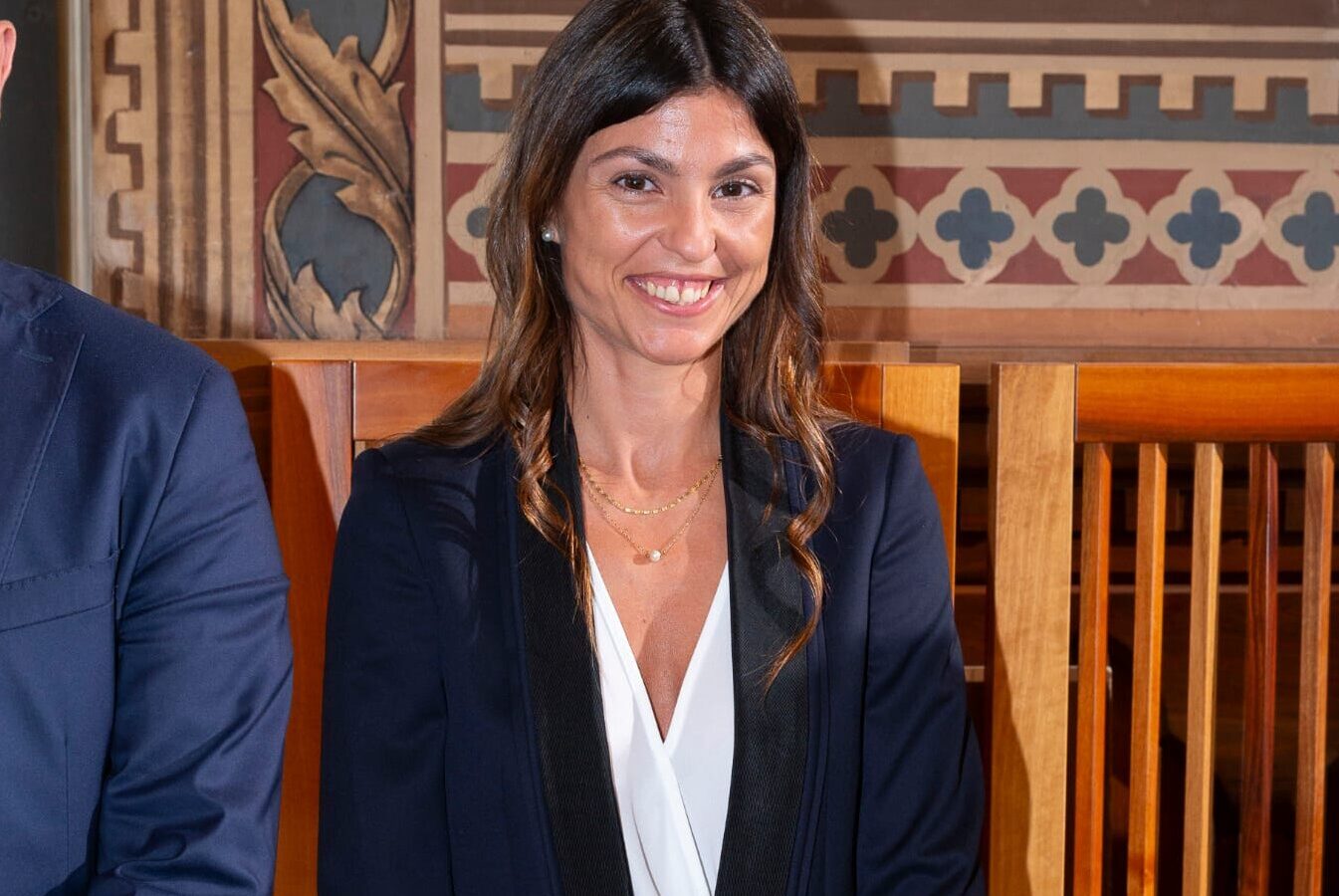
These are among the themes addressed by Libera councillor Gemma Cesarini during her speech in the Grand and General Council (Consiglio Grande e Generale), in the session of Wednesday, 25 November 2026, during the debate on paragraph 9 dedicated to the bill on the prevention and combating of violence and harassment in the workplace.
Below is her speech in full.
Gemma Cesarini (Libera): Thank you, Your Excellency. I believe that discussing this bill precisely on the International Day for the Elimination of Violence against Women gives it particularly important political and institutional significance.
Today we have the opportunity to move beyond statements of principle and translate our sensitivity to these issues into concrete legislative responses.
When we talk about work, we are often inclined to think in terms of economic growth, employment, competitiveness and productivity. These are all fundamental elements for our country’s development, but they cannot disregard the centrality of the individual and the protection of their dignity.
Work must be a tool for emancipation, economic autonomy and personal fulfilment — not a place of suffering or abuse. No one should ever find themselves in the position of having to choose between their dignity and their job.
With this measure, we are giving concrete effect to the commitments made through the ratification of ILO Convention No. 190, introducing tools such as resignation for just cause and paid leave for people undergoing protection pathways.
It is significant, moreover, that our bill provides for one hundred working days of paid leave over a three-year period, compared to the ninety provided for under general Italian legislation.
This is not the first time our legal system has introduced improved provisions in the fight against violence. Indeed, when defining sexual harassment under criminal law, we had already distinguished ourselves by introducing the explicit reference to the “unwanted” nature of such conduct.
This is therefore the second time that, on an issue of such great social relevance, our legal system has shown that it can be at the forefront, guaranteeing more incisive and effective tools of protection.
In this regard, I would like to dwell on two aspects that I consider fundamental in the fight against violence.
The first is economic independence.
We know how much economic dependence can represent one of the main obstacles for a woman seeking to escape a situation of violence, as well as being in itself a tool of control and blackmail.
Because a right, if the material conditions for exercising it do not exist, risks remaining merely on paper.
I therefore believe that all policies aimed at promoting female employment, equal pay, work-life balance and a fairer distribution of caregiving responsibilities are also policies to combat violence.
Guaranteeing women economic independence means concretely strengthening their freedom of choice.
The second aspect is cultural and educational.
I deeply believe that the fight against violence must begin from the earliest years of life, above all through the example that we, as adults, are able to set.
The example of parents within families, of teachers in schools, of coaches in sporting contexts.
It is in these settings that children learn to relate to others, to respect differences, to manage conflict, and to understand that no human relationship can be based on abuse of power.
We cannot hope to change our society if we do not start with the education of new generations. And I believe this is a responsibility that concerns all of us, men and women alike.
I say this as a woman, aware that we are more exposed to certain forms of violence, but equally aware that men too can be victims.
The fight against violence must not become a battleground between men and women, but a shared path of cultural and social growth.
Returning to the bill, I believe one of its main strengths lies precisely in the method through which it was drafted.
The fact that, through the work of the Technical Table, full agreement was reached among institutions, trade unions and employers’ associations represents an important political achievement.
I believe this should be the approach pursued in future reforms of the labour market as well, in the awareness that protecting workers and meeting the needs of the business system are not necessarily conflicting interests.
We must continue to invest in prevention, training, protection against psychosocial risks, and organisational wellbeing.
In light of the ongoing transformations of the world of work, technological innovation must proceed hand in hand with social and regulatory innovation.
I hope this measure will find the broadest possible support within this Chamber.
The progress of a society is not measured solely by its economic indicators, but also by its capacity to protect people in moments of vulnerability and to create the conditions so that such vulnerability never becomes ground for abuse.
Today we have the opportunity to take an important step in this direction.
Thank you.