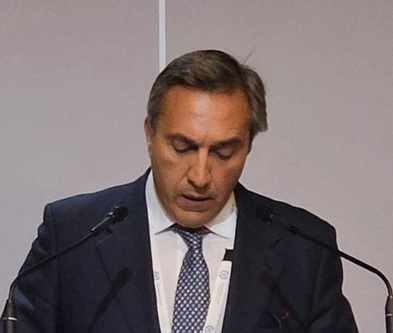
Five to seven years to allow San Marino’s banks to operate in the European single market, with considerably shorter timeframes for insurance companies and asset management firms.
That is the roadmap outlined by Finance Secretary Marco Gatti on the morning of Thursday 26 November before the Finance Commission (Commissione Finanze), a day after the ratification of the Association Agreement with the European Union. It is a staged process that could be accelerated should new foreign investors decide to inject capital into Titano’s banking system.
The first sector expected to enter the European market is collective asset management, with new regulations potentially ready as early as the first quarter of 2027.
The insurance sector would follow, with operations extended to non-life insurance and reinsurance. The banking sector presents a more complex challenge, as institutions will need to strengthen their capital base and overhaul their organisational, technological and control structures to align with European standards. The government’s goal is to halve, or reduce even further, the fifteen-year transitional period set out in the Association Agreement.
Meanwhile, the question of the clarifying addendum — the agreement with Italy aimed at strengthening cooperation between the two countries’ supervisory authorities — remains unresolved. Among the options presented by Gatti is the creation of a permanent technical working group involving the Central Bank (Banca Centrale), Banca d’Italia, Consob, IVASS and Covip.
There would be no transfer of supervisory powers currently held by the Central Bank, but rather greater information-sharing and closer coordination between the authorities.
The proposal has yet to be discussed with the Italian counterpart, however. The form the agreement will take also remains to be defined — it could be reached through a bilateral accord or, more quickly, through an exchange of government notes.
Gatti then reviewed the figures for San Marino’s banking system. As of the end of September 2026, total deposits reached €7.272 billion, up by €274 million. The ratio of non-performing loans, before adjustments, fell from 16.3% to 14.7% — a figure that nonetheless remains above European standards.
In the first nine months of the year, banks posted a positive net result of around €20 million, compared with €23 million in the same period of 2025. The solvency ratio stands at 18.7%, while seven-day liquidity reached €1.382 billion at the end of October.
There was also good news on the securitisation of non-performing loans: proceeds collected should allow senior notes to be fully repaid by the end of the year, ahead of the original schedule.
The debate was fuelled above all by the issue of official secrecy (segreto d’ufficio), one of the necessary steps toward securing recognition of equivalence for San Marino’s regulatory framework from the European Banking Authority.
Opposition members raised concerns that the new rules on confidentiality for information received from foreign authorities could limit the oversight powers of parliamentary commissions, including committees of inquiry and the Anti-Mafia Commission.
Nicola Renzi (RF) was particularly critical, challenging the picture of the banking system presented by the Finance Secretary and pointing to a gap between what emerges in public sessions and in the Commission’s closed-door meetings.
“Forget a parallel plan — it seems to me we are dealing with an entirely parallel world.” Similar concerns were raised by Gaetano Troina (D-ML), while Giovanni Maria Zonzini (Rete) asked for detailed information on the benchmarks credit institutions still need to meet in order to operate in Europe.
Majority representatives took a different view, defending the need to guarantee confidentiality for information exchanged between supervisory authorities in order to comply with international standards.
Luca Boschi (Libera) stressed the need to speed up the recapitalisation of the banks and their entry into the European market.
“San Marino’s economic system, our businesses and our families cannot afford to wait fifteen years.”
Earlier in the morning, discussion had focused on the rising cost of living and increasing utility bills. Renzi denounced a 50% increase in waste collection charges, with the annual cap — according to the Repubblica Futura commissioner — rising from €175 to €265.
Opposition members called for dedicated resources to help contain utility costs and household expenses.
The majority announced it would present measures on the cost of living, housing and energy during the second reading of the budget.
The Finance Commission will resume its work on Thursday 3 December at 8:30am.