The recovery of San Marino Rtv’s finances is acknowledged even by the opposition.
But when it comes to the broadcaster’s future, the requests are specific: more consultation on decision-making, guarantees of journalistic independence, and growth that can be sustained beyond the current leadership. These were the main points of debate in Committee II, during the hearing of chairman Pasquale Valentini and general director Roberto Sergio.
The government is touting the turnaround at the public broadcaster: budgets back in the black, renovated studios and technology, new programmes and increased staffing. The minority parties recognise the improvements but want to know how they can be made durable, what costs they entail, and what space is guaranteed for different political voices.
The thorniest issue remains editorial coverage. Nicola Renzi, of Repubblica Futura, called for coverage of government activity without a celebratory tone: «I believe all Sammarinese expect San Marino Rtv to also ask uncomfortable questions and dig into the facts.»
Matteo Zeppa, of Rete, recalled the editorial committee’s complaints about political pressure and asked what response had been given.
Fabio Righi, of Domani Motus Liberi, likewise stressed the need for balanced coverage and the ability to seek clarification without every question being read as an attack.
Secretary of State Federico Pedini Amati denied the existence of any interference, drawing a distinction between requests to correct errors and attempts at influence.
Sergio reiterated his position: «I demand that journalists be independent and answerable to no one.»
The director assured lawmakers of pluralism in political programming and announced a review of the airtime allotted to the majority and the opposition.
On the finances, the figures presented by management show a shift from a loss of almost two million euros in 2023 to two consecutive years of profit.
The forecast for 2026 is also positive, though it remains to be confirmed at year’s end.
Staff numbers have risen from 64 to 71. For the government, these results show that the financial recovery has gone hand in hand with job protection and new hires.
The opposition, however, asked lawmakers to look beyond the immediate results.
Renzi raised the question of the sustainability of investments and staff increases, as well as continuity in the broadcaster’s leadership. The point, he said, is to prevent the future of a public service from depending on a single person.
Sergio confirmed his intention to stay on, suggesting a reasonable horizon of at least through 2027, while acknowledging the need to make the results stable beyond his own tenure.
Another shared request from the minority parties concerns involvement in development plans.
Righi called for more frequent hearings and discussion of industrial choices.
Antonella Mularoni, of Repubblica Futura, asked for a longer-term outlook that takes into account technological change and the association agreement with the European Union. The government expressed willingness to share development planning with all parties and to organise meetings at least twice a year.
Editorial partnerships and sponsorships also remain under scrutiny. Renzi asked how relationships with private entities fit alongside the collaboration with Rai.
Zeppa sought clarification on the partnership with BYD during the Pope’s visit and on the concrete results of international initiatives, as well as figures on views and social media engagement.
Righi urged an assessment of the potential impact of sponsorships on San Marino’s reputation and international relations.
Management clarified that such partnerships must be evaluated by the board of directors for cost, sustainability and editorial consistency. Secretary of State Rossano Fabbri distinguished between Rtv’s commercial relationship with BYD and the initiative promoted by the Industry secretariat. Pedini Amati defended openness to private partners when conducted transparently.
The debate also touched on relations with Italy.
Secretary of State Luca Beccari underlined the value of national broadcast coverage and cooperation with Rai.
Dalibor Riccardi, of Libera, backed the direction taken and expressed hope that Sergio would remain in post beyond 2027.
For Valentini, growth must go hand in hand with the development of in-house expertise and sustainable workloads.
Francesco Mussoni (PDCS) expressed satisfaction with San Marino Rtv’s results, which he attributed to the skills of management and the work of its leadership. “What I expect for the future, then, is for these standards of quality and competence to be maintained.”
Alongside this appreciation, he raised the issue of relations with Italy and Rai, asking whether the current arrangement can support the broadcaster’s development. For Mussoni, growing commercial revenue also strengthens the broadcaster’s independence: “That’s why I consider the issue of the market and financial autonomy central.”
Matteo Rossi (PSD) acknowledged the financial turnaround and the relaunch of programming following the 2024 crisis. “As ordinary television viewers, we can see that, compared with two years ago, what has been carried out is not just an industrial plan but a revolution of state television.”
He described the San Marino Song Contest as an excellent opportunity in terms of revenue and international visibility. He hoped for continuity beyond 2027 and asked the government whether the broadcaster’s development plans include a new headquarters, with spaces suited to production needs.
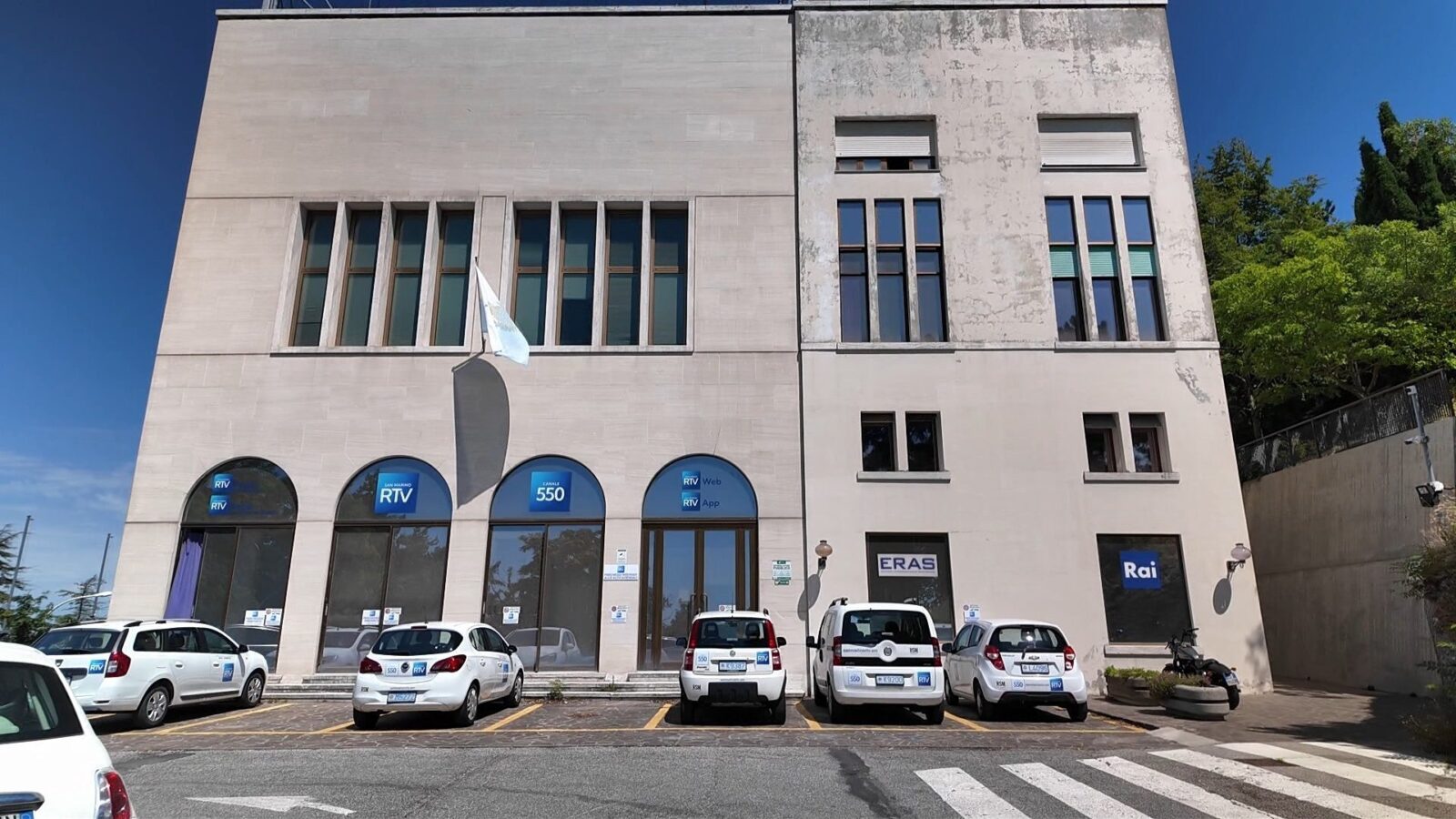
The question of the headquarters remains open, tied to security requirements, space and development needs.
Sergio clarified that the broadcaster needs a solution based on free loan-for-use arrangements, without major purchases or rental costs.
Mularoni asked what options are under consideration and suggested evaluating spaces that might be freed up from parliamentary activities.
The government confirmed that assessments are still ongoing, including regarding properties belonging to public entities and bodies.