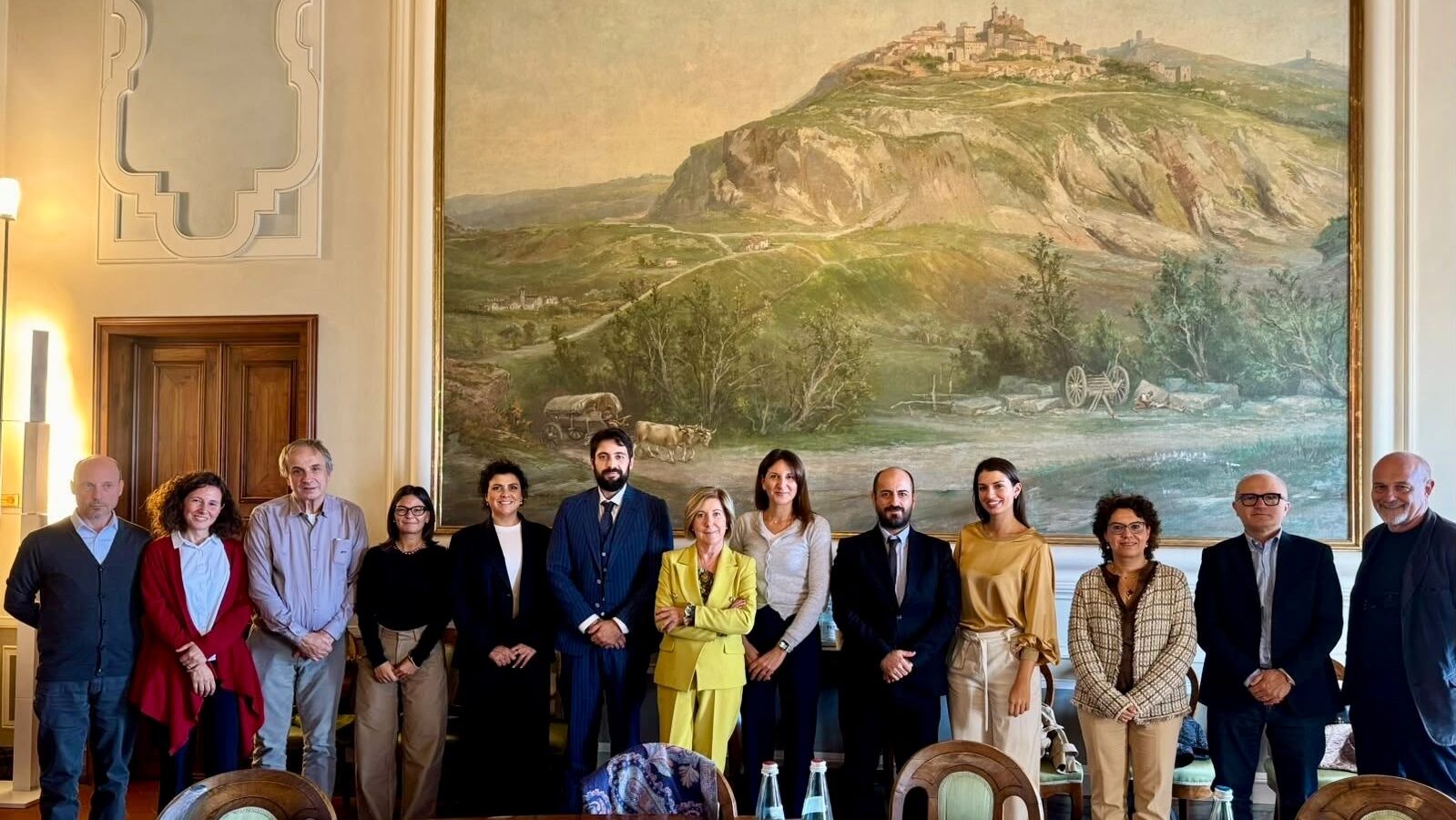
San Marino and the Province of Rimini are preparing to jointly manage European projects and funding through a shared body, complete with a permanent structure and shared decision-making powers. After roughly two years of institutional work, the European Grouping of Territorial Cooperation (EGTC) “Terre di accoglienza e libertà” (“Lands of Welcome and Freedom”) is approaching its first official assembly, which will mark the transition from the founding phase to full operational status.
These are busy days of meetings and preparations between Palazzo Begni in San Marino and the provincial headquarters on Via Dario Campana in Rimini, as the two sides define the next steps of a partnership aimed at moving beyond traditional administrative borders.
The EGTC is not merely a memorandum of understanding between institutions. It is a legal entity provided for under European Union law, equipped with legal personality and a stable structure, through which participating bodies can plan joint initiatives, submit projects and manage European funding.
The governance structure is also distinctive: San Marino and Rimini will have equal representation within the assembly, allowing them to jointly define the territory’s strategies and priorities.
The creation of the new body is the result of a process that has taken about two years. Key milestones included the incorporation of EC Regulation No. 1082/2006 into San Marino’s legal system through Law No. 78 of 30 May 2025, the approval of the Convention and Statute, and the registration in the Official Journal of the European Union.
“The EGTC is an institutionalized form of cooperation between the Republic of San Marino and the Province of Rimini,” explained Matteo Mazza, director of San Marino’s Department of Foreign Affairs. “We will have a single point of contact able to engage directly at the European level, for both direct and indirect funding, across a wide range of opportunities.”
One of the central aims of the initiative concerns access to European funds, with the possibility of submitting applications and developing projects through a single legal entity.
Around 90 European groupings of territorial cooperation are currently active across Europe, 14 of them in Italy. The one established between San Marino and Rimini has a distinctive feature: it brings together an Italian province and a foreign state engaged in the process of association with the European Union.
According to its promoters, this configuration could prove advantageous when it comes to participating in funding programmes.
“When it comes to allocating funding, the EGTC starts from pole position. That is perhaps the greatest advantage of this tool,” said Pierpaolo Deluigi, head of the Europe Office at the Province of Rimini.
The EGTC’s activities could span a wide range of sectors, from tourism to culture, from the environment to sustainability, as well as training, innovation and services for citizens. The decision was made not to restrict the body’s scope in advance to a single area, leaving it to representatives of the two territories to identify priority initiatives.
“The aim was to create a general-purpose EGTC. It will be up to those leading the EGTC to make choices and find the most appropriate synthesis. It’s a new challenge: we’ll need to think in terms of territory, rather than provinces or countries,” Mazza stressed.
During the preparatory meetings, the SLOW project — Strategies for Lands Of Welcome — was also presented. It is a participatory initiative involving local stakeholders through at least six co-design meetings and a concluding event. The goal is to build a network of public and private actors able to help shape the EGTC’s future activities.
At the same time, work will proceed on the body’s communication strategy and identity, starting from the message “Two systems, one territory.” Plans include the creation of a recognisable brand and the launch of a dedicated website.
The 2026-2027 operational calendar will begin with the first official assembly, currently being convened. At that meeting, the director, president, vice-president and auditor will be appointed, completing the group’s organisational structure.
This will be followed by the establishment of thematic working groups, the approval of the visual identity, and the launch of the first call for proposals — one of the first concrete steps in the cooperation between the Republic of San Marino and the Province of Rimini.