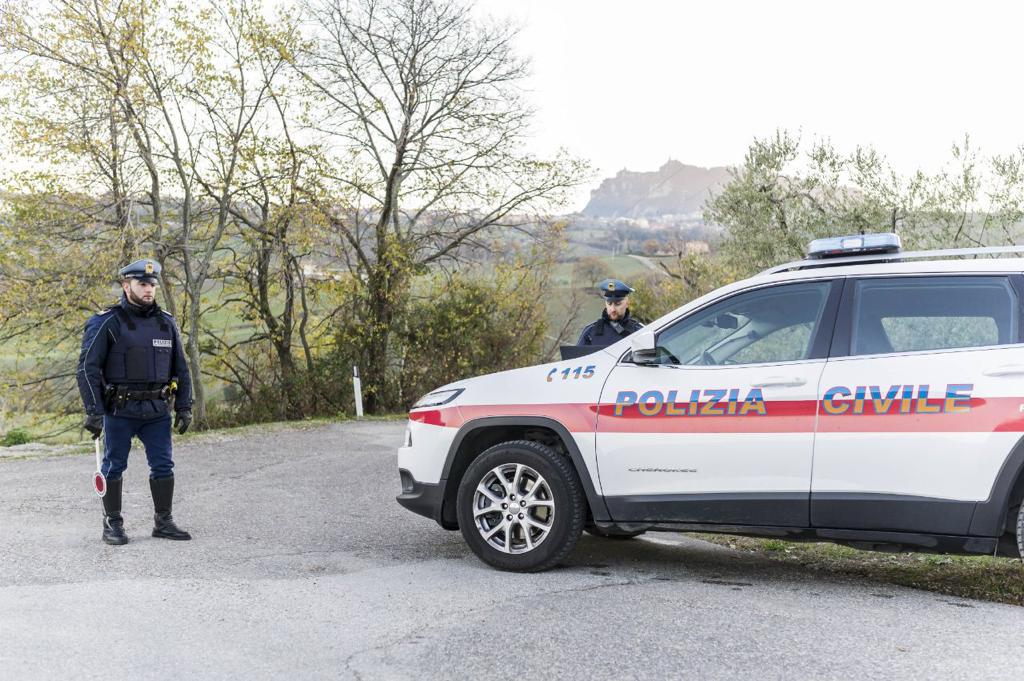
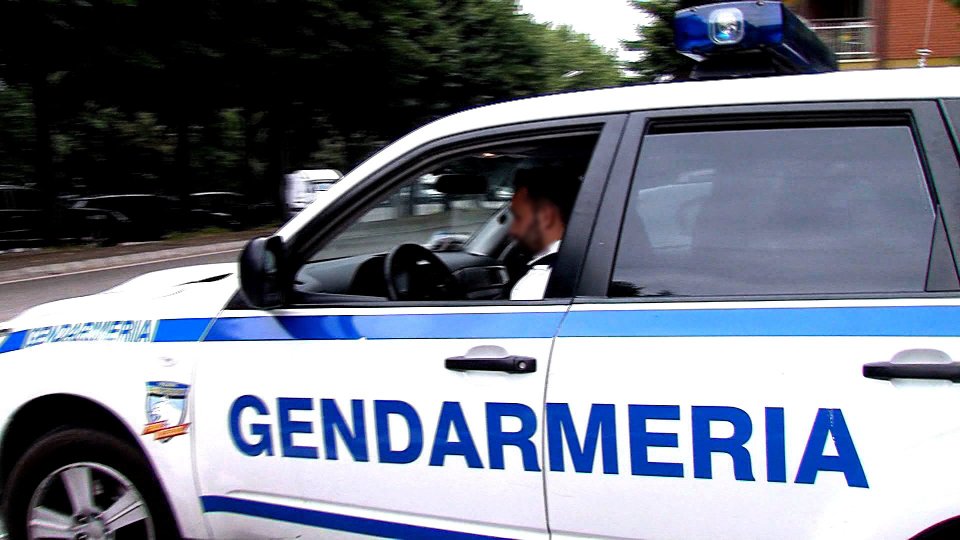
Mandatory helmets for cyclists, insurance for electric micromobility vehicles, and new measures to recover unpaid fines from drivers resident abroad. San Marino has updated its Highway Code (Codice della strada) with Delegated Decree no. 162 of 26 October 2026, which amends several aspects of road traffic regulation.
The measure also covers alcohol and drug testing, licence suspension, post-accident obligations, and permits for entering and parking in historic town centres.
The Secretary of State for Internal Affairs, Andrea Belluzzi, said the aim was to “update and bring greater consistency” to the legislation, strengthening safety, prevention and enforcement.
Cyclists will now be required to wear a CE-marked safety helmet. Bicycles must also be fitted with approved front and rear lights, and cyclists must ride along the right-hand edge of the carriageway.
At night and in conditions of poor visibility, riders will also need to wear high-visibility clothing or reflective gear. The obligation applies from half an hour after sunset to half an hour before sunrise, as well as in other situations of reduced visibility.
The decree bans cyclists from being towed by other vehicles, riding on a single wheel, and racing on roads open to traffic without an official closure order. Where cycling risks obstructing or endangering pedestrians, riders must dismount and walk their bicycle.
Alongside these obligations, new protections have been introduced. Two new road signs dedicated to cyclists will be introduced — one to signal their presence, the other to remind drivers to keep a safe distance when overtaking.
Where the safe-distance sign is displayed, anyone overtaking a cyclist must leave at least one and a half metres of lateral space. The provision also responds to commitments made following the approval of an Arengo Petition (Istanza d’Arengo) in November 2025.
Another section of the decree regulates electric micromobility. The definition covers e-scooters, hoverboards, unicycles and pedal-assisted mini-scooters, as well as three- and four-wheeled mobility scooters for people with disabilities.
These vehicles will be allowed to circulate in public areas, but only on certain categories of roads. On permitted roads, the minimum age will be 14, and third-party liability insurance will become mandatory.
The vehicles must bear CE marking, have power not exceeding 500 watts, and a maximum speed of 25 kilometres per hour.
Riders of e-scooters, hoverboards, mini-scooters and unicycles will also be required to wear a helmet and are banned from carrying passengers. Violations carry second-category penalties, rising to third-category in the event of repeat offences within five years.
San Marino’s decree does not introduce the so-called “mini licence plate” (targhino). The measure is intended to establish clear rules for new forms of mobility, setting conditions of use compatible with the safety of other road users.
A further crackdown concerns unpaid fines for foreign-registered vehicles. If a driver fails to pay the minimum amount of the contested fine immediately, the vehicle can be subject to administrative seizure.
To have it returned, the owner will need to pay the amount owed along with recovery, custody and storage costs. If payment is not made within four months, the vehicle may be confiscated.
The measure also applies to non-resident cyclists, moped riders, motorcyclists and operators of micromobility vehicles. According to Belluzzi, the goal is to ensure “the effective payment of penalties by drivers resident abroad and by foreign-registered vehicles.”
Rules on refusing alcohol and drug tests while driving have also changed. The decree explicitly addresses drug testing, extending to it the same consequences already in place for refusing a breathalyser test or medical examinations.
Penalties depend on the circumstances. Where there are signs of impairment due to alcohol, drugs or medication abuse, refusal results in third-degree arrest and a driving ban.
Where no such signs are present, second-degree arrest applies.
The measure also redefines penalties for driving without a licence or without the required qualification, distinguishing between different vehicle categories.
Licence suspension of one to four months applies to drivers who exceed the speed limit by more than 40 kilometres per hour. The provision also applies to those who drive inappropriately or fail to reduce speed adequately when doing so could endanger people or property.
Heavier penalties apply to those who fail to stop at a police checkpoint or refuse to show their documents: fines range from €500 to €1,000, with no possibility of a voluntary settlement.
In the event of a repeat offence within five years, the amounts double, reaching up to €2,000.
For failing to meet obligations following an accident involving only material damage, the penalty falls under the second category, ranging from €200 to €650.
If a driver cannot immediately produce their licence, vehicle registration and insurance documents, they must report to a police station within six hours to present the required paperwork.
Finally, the decree reorganises the management of access and parking in historic centres and restricted traffic zones. The Commander of the Civil Police will be responsible for issuing both permanent and temporary permits, including those for residents, people with local domiciles, businesses and public services.
A subsequent regulation issued by the Congress of State will define the areas involved, the requirements, the issuing procedures, and the methods of enforcement, including through electronic systems.
Failing to display a permit, or using it improperly, will be treated as not having one at all, triggering the relevant penalties and, where applicable, vehicle removal.
Those who forge or alter permits, or use counterfeit ones, face criminal consequences: first-degree imprisonment and a second-degree daily fine.
The decree is already in force and must be ratified by the Grand and General Council (Consiglio Grande e Generale) within 90 days.