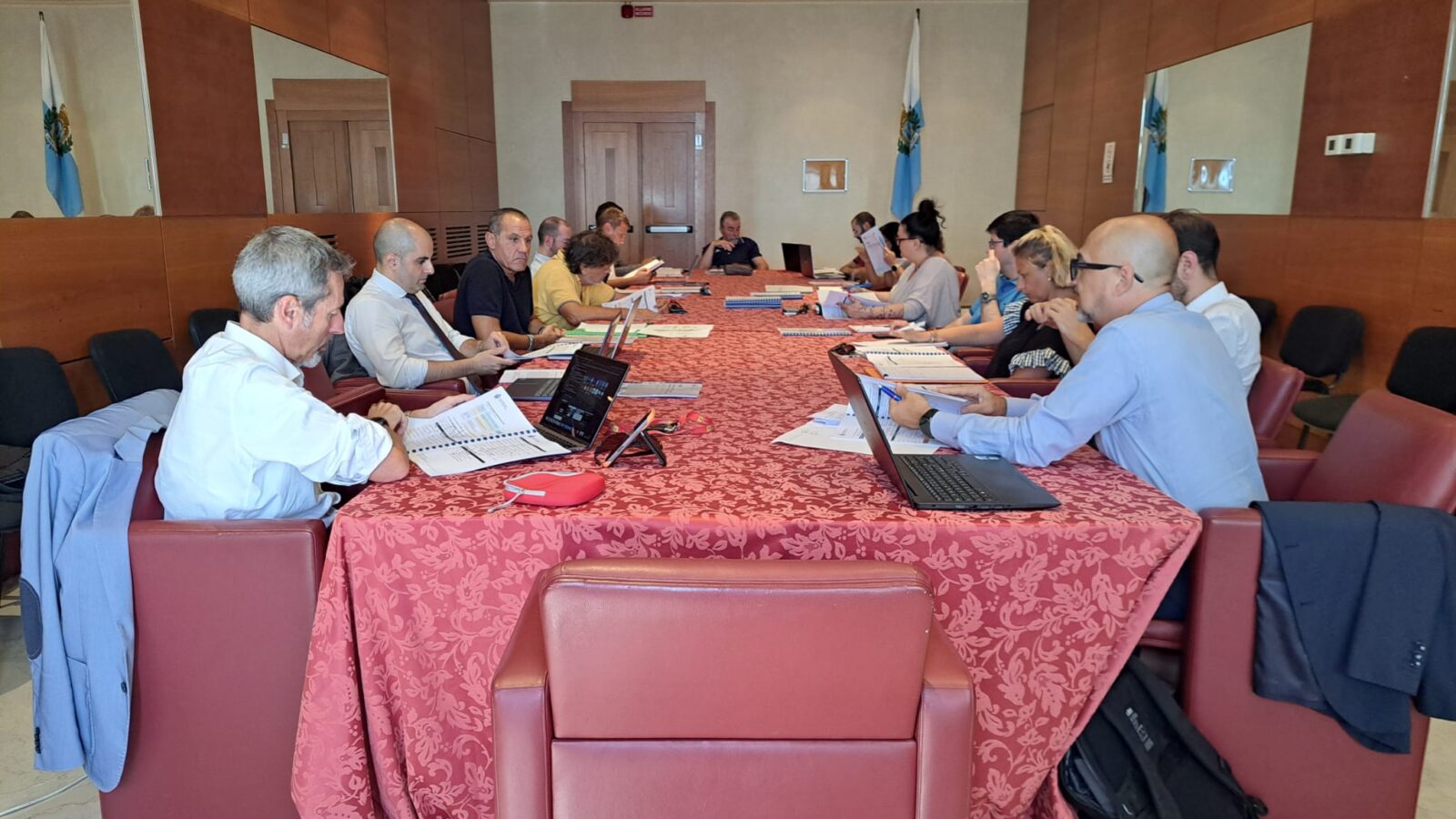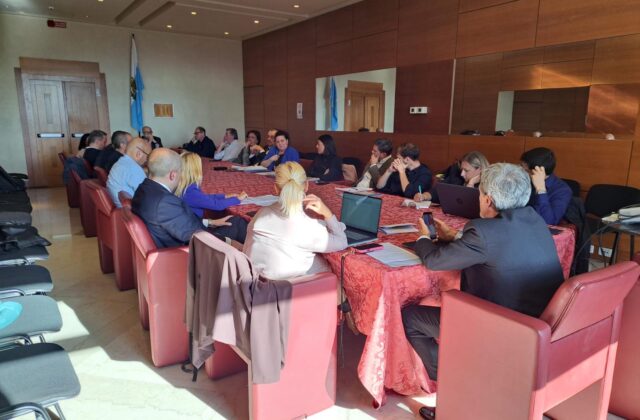
The ICEE is moving closer to its testing phase. The Observatory for the Indicator of Economic Condition for Equity (ICEE) met on the afternoon of Wednesday, 26 August, at the Kursaal Congress Centre, convened by the Secretary of State for Internal Affairs Andrea Belluzzi, to review the operational regulations and set out the roadmap toward implementing the new tool.
The ICEE, introduced by Law No. 16 of 4 February 2026, was designed to assess the economic condition of households and thereby identify beneficiaries of social benefits and public support measures. During the session, the Secretariat of State reports, members of the Observatory “held an in-depth discussion on the practical regulatory proposals needed to make the tool operational.”
Discussions focused in particular on the criteria for determining households’ income and asset situations, with specific safeguards planned for families with minor children or people with disabilities. Another key issue was the simplification of procedures. “Utmost attention was given to the issue of cutting red tape: the priority objective remains relieving citizens of excessive paperwork, thanks to automatic pre-filling of forms through cross-referencing public databases and the Tax Office” – the statement reads.
The meeting also served to define the steps for the ICEE’s trial phase, provided for by law and intended to test the system before it becomes fully operational. “This on-the-ground trial period will make it possible to verify the efficiency of the IT platforms, refine procedures and correct any operational shortcomings before the system’s definitive rollout.”
October 1 has been identified as the indicative start date for the trial. During this phase, citizens seeking access to certain benefits and services will be required to fill out the Asset and Income Declaration (Dichiarazione Patrimoniale e Reddituale, DPR). Areas affected include the right to education, the Supplementary Family Allowance, enrolment in job placement lists, the minimum monthly household income established under Decree Law 91 of 26 May 2020, and subsidised-rate services.
The Secretariat clarifies, however, that during the trial period the ICEE value will have no bearing on the benefits granted to citizens. “For the entire duration of the test, the calculated ICEE will not affect the actual disbursement or value of benefits, which will remain tied to the eligibility criteria currently in force,” the statement clarifies.
Collecting the declarations will therefore serve to put the new system to a concrete test. “This operational approach will make it possible to gather a valuable critical mass of data on declarations, allowing technicians to analyse the results in the field and precisely calibrate the tool ahead of its full rollout, without any impact or inconvenience for users.”
The Secretariat of State for Internal Affairs also stressed that the process was developed through dialogue with the various stakeholders involved. “The outcome of this work testifies to the soundness of the path taken by the Government and the Secretariat of State, which chose the route of dialogue and listening to overcome the doubts raised in the past, building a shared synthesis with all political forces and trade union organisations” – the statement notes.
Speaking on the sidelines of the meeting, Andrea Belluzzi commented on the initiative. “The ICEE is a landmark reform, destined to become the pillar of our welfare system,” the Secretary of State stated. “We want to ensure that public resources reach those who are genuinely in need, eliminating inequalities while avoiding unnecessary bureaucratic tangles for citizens. Today’s session and the upcoming trial phase show that we are on the right track to take this fundamental step forward.”
The next step will therefore be the on-the-ground trial, during which the new indicator will be calculated without altering the current eligibility criteria or the amount of benefits, ahead of the system’s subsequent full rollout.