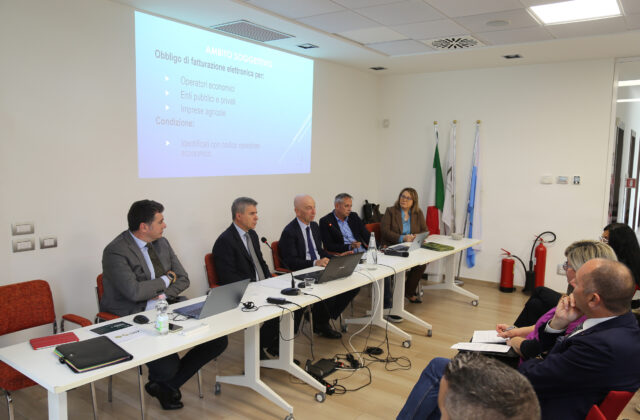
Cutting energy costs for San Marino businesses, reducing dependence on foreign suppliers and harnessing waste to generate electricity. These were the main requests put forward by Anis, the Republic’s industry association, during a meeting with the Government dedicated to the country’s energy policies.
As San Marino RTV reports, the Industrialists pressed for the discussion in order to tackle the issue of tariffs, which are considered uncompetitive compared with those paid by Italian and European companies.
The Government reportedly showed some openness on the matter. Anis President Emanuele Rossini said plans are already in place to eliminate the Fer contribution, the levy that supports the production of electricity from renewable sources.
Another possibility concerns the future photovoltaic plant in Visano. Part of the energy it produces could be set aside for San Marino companies with higher electricity consumption, through a mechanism similar to Italy’s Energy Release scheme.
The goal is to ease the bills of the most energy-intensive businesses and encourage new investment in renewable sources.
Also on the table is a more favourable gas tariff, potentially drawing on the agreement with Baku, along with the possibility of lowering the consumption threshold that allows companies to buy energy directly on the open market.
The talks also touched on water infrastructure. Among the measures discussed were the expansion of Lake Torello, studies on the wastewater treatment plants along the San Marino and Ausa streams, and the use of the water network as a public firefighting reserve for industrial areas.
These are projects that could improve water availability, strengthen safety for businesses and allow the resource to be recovered for agricultural and industrial use.
Finally, the question of waste disposal remains unresolved. Anis is proposing the construction of a plant directly within San Marino’s territory, sized to match the quantities of waste produced in the Republic and capable of converting waste into energy.
According to the Industrialists, such a solution would reduce management costs, limit reliance on external facilities and increase the country’s energy self-sufficiency.