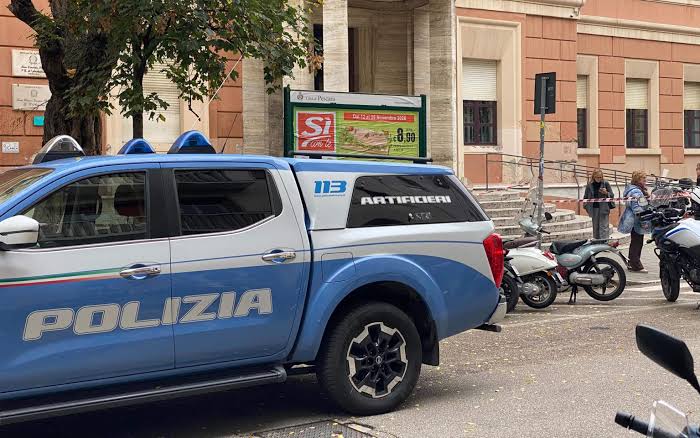
A single email was enough to put hundreds of schools on alert, interrupt lessons and mobilise law enforcement. That is what happened on Wednesday, November 11, when a new wave of messages containing bomb threats reached numerous Italian schools, with similar episodes reported in other European countries as well.
The issue, however, is not simply about how credible the threats are. The real question is who organised the sending of these messages, with what tools, and above all, for what purpose.
Even when the content of a communication appears grotesque, implausible or deliberately provocative, the consequences can be very real. A school that receives a threat must assess it, activate the procedures in place and, when necessary, secure the safety of students and staff.
The result is a disruption of school activities, accompanied by the deployment of police officers, bomb disposal units and other personnel tasked with verifying whether a genuine danger exists.
A device does not actually need to exist for a threat to have an effect. It is enough to raise a doubt serious enough to require the intervention of the authorities.
The scale of the day’s events shows just how widespread the phenomenon can be. According to updates released by Ansa, the threatening emails reached around 6,000 Italian schools. Not all of them were evacuated, but checks and precautionary measures were triggered in numerous cities.
What makes the affair particularly striking is the signature used in the messages: Mikhail Andropov, the self-styled leader of an organisation called the “Vilayat of Misoginistan” — a name that blends references to the Soviet era, extremist-sounding language and provocations typical of internet culture.
The same pseudonym had already appeared in previous threats directed at European airports and broadcasters, including Ireland’s RTÉ and Bulgaria’s Nova TV. A coincidence worth noting, though it does not by itself prove the existence of a single organisation responsible for all the incidents.
Another notable detail concerns the digital origin of the communications. According to initial findings reported by Ansa, the message sent to Italian schools appears to have originated from a compromised account at Daye University in Taiwan, apparently linked to a former student.
This detail does not mean the perpetrators are based in Taiwan. A hacked address can be used by people operating from elsewhere, precisely as a way of concealing their identity.
This is where the most delicate question arises. Are we looking at an organised provocation, a group of fantasists, or an operation designed to sow instability?
Several hypotheses have emerged. Some references contained in the messages have fuelled suspicions of pro-Russian circles, while others point towards Islamist extremism. But none of these leads currently constitutes proof of who is actually responsible.
Interior Minister Matteo Piantedosi has urged caution, explaining that it is still premature to speak of a single coordinated plot, not least because similar episodes could be the work of different actors or copycats.
The ability to cause disruption with relatively simple tools is perhaps the most troubling aspect of the whole affair. School email addresses are often public, easily found on institutional websites. Reaching thousands of recipients does not necessarily require breaching complex computer systems.
Those sending these communications can exploit an inevitable feature of security procedures: faced with the threat of a bomb, especially one involving children, no school principal can afford to ignore the risk without carrying out a proper assessment.
This creates an enormous imbalance between the means employed and the consequences triggered. A single email can force dozens of institutions to alter their activities, mobilising staff and public resources.
There is also a second risk, less immediate but equally concrete. If unfounded alarms become frequent, a gradual desensitisation could set in — one threat after another, until all of them are dismissed as unreliable.
For this reason, it would be a mistake either to automatically attribute these emails to some international strategy, or to dismiss them as mere pranks. Responsibility must be established through proper investigation, distinguishing facts from suggestions and from the clues deliberately scattered throughout the messages.
In the meantime, one thing is already clear: someone has managed to turn a single electronic message into a national emergency, without ever needing to prove the existence of a single bomb.