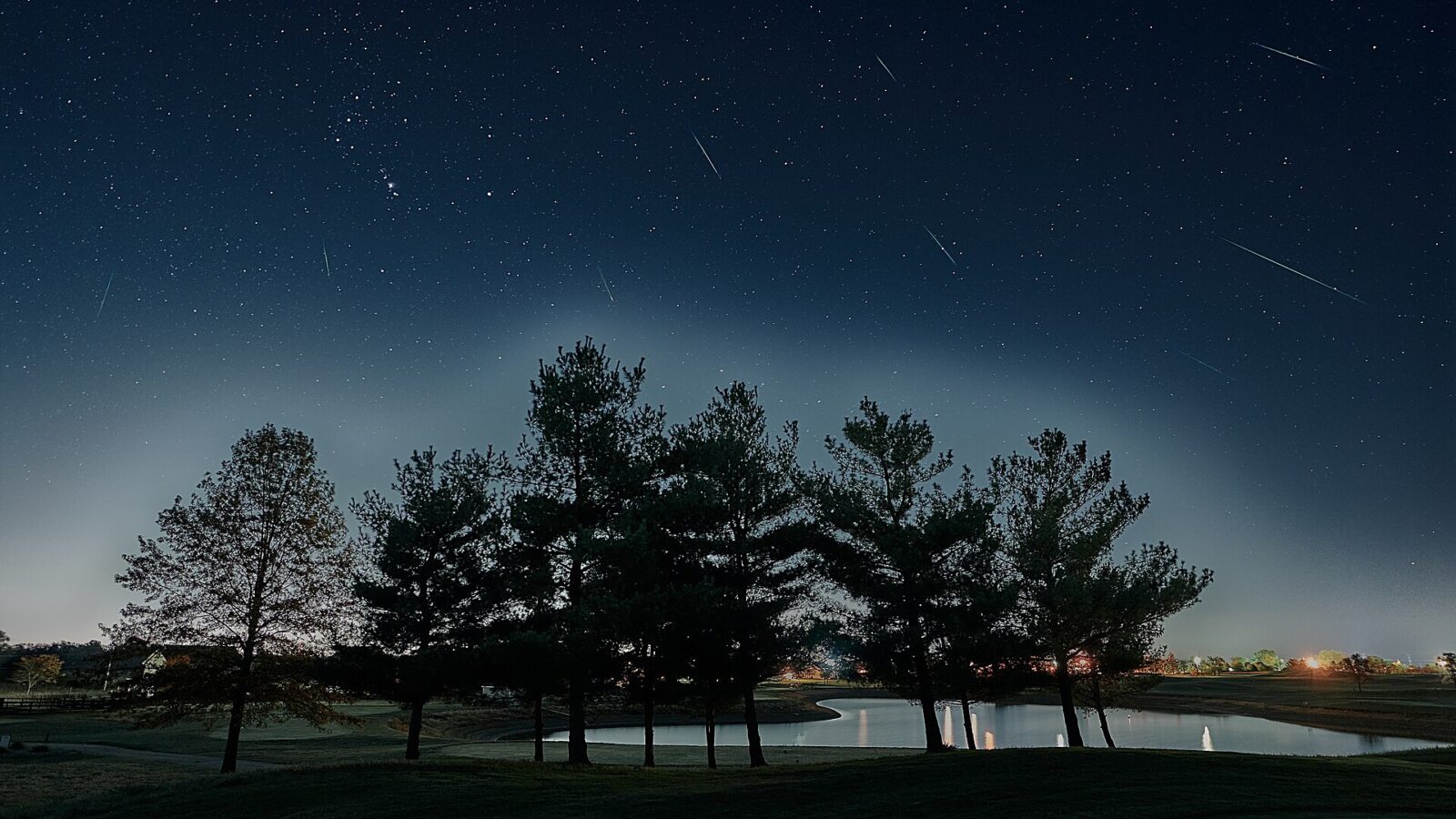
From Friday, October 2 until November 7, the Orionid meteor shower makes its annual return, peaking on the night between October 21 and 22. It’s a yearly appointment that falls on roughly the same dates, as Earth passes through the trail of dust and debris left behind by Halley’s Comet.
The particles enter the atmosphere at extremely high speed — around 66 kilometres per second — heating up and producing the streaks of light we know as shooting stars. The Orionids are among the fastest meteors of all, often leaving glowing trails that remain visible for several seconds.
Halley’s Comet is one of the most famous in the solar system, observed from Earth for centuries. It takes roughly seventy-six years to complete one orbit around the Sun and was last seen in 1986; it will next become visible in 2061. In the meantime, however, Earth crosses the material it has left behind twice a year: in May with the Eta Aquariids, and in October with the Orionids.
The meteors appear to radiate from the constellation of Orion, which gives the shower its name, though they can actually appear anywhere in the sky. Under ideal conditions, between ten and twenty meteors an hour can be counted at the peak.
No equipment is needed to watch them — no binoculars, no telescope, just the naked eye. What you do need is darkness. The best time is between midnight and dawn, when the sky is at its darkest; it’s worth finding a spot away from streetlights with as wide a view of the sky as possible, and giving your eyes fifteen to twenty minutes to adjust to the dark. This year there’s an added complication: at the time of the peak, the Moon will be in a waxing gibbous phase, and its light will make the fainter meteors harder to spot. The brightest ones, however, will still be visible, especially away from artificial lighting.