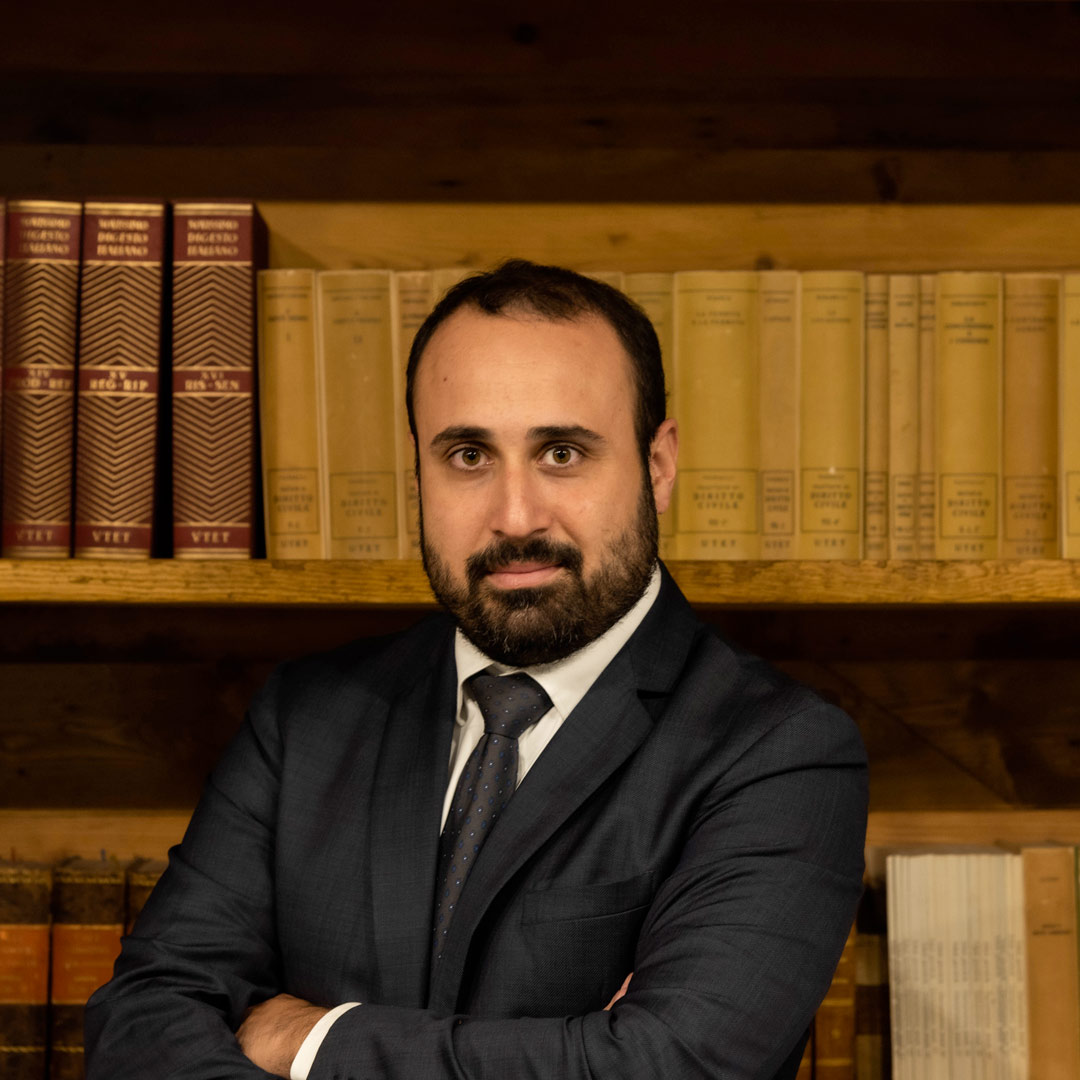
Repubblica Futura councillor Enrico Carattoni spoke on the morning of Tuesday, 24 November, during the debate on item 7 of the Grand and General Council’s agenda, dedicated to the ratification of the Association Agreement between the Republic of San Marino and the European Union.
Below is his speech in full.
I will try not to repeat some of the important points that many of the colleagues who spoke before me have already made, starting with the historic nature of this event and the importance that this Agreement has had, has today and will have in future for the Republic of San Marino — not only in economic terms, but also in terms of the political direction that the Agreement will help to chart from this point forward.
Some of the opportunities that this Agreement will bring to the Republic of San Marino have already been outlined, at least in part. What is important to understand, however, is that we ourselves must be capable of identifying and building these opportunities.
It will be up to us, first and foremost, to understand which sectors, skills and professional capabilities will be best placed to assert themselves within a much more complex and articulated market such as the European one, setting aside certain fears and concerns that are nonetheless legitimate.
Whenever we face a major change, a historic shift, it is right that the population should ask questions and even have fears. It is up to politics to try to provide answers, to be persuasive and, above all, to be well prepared for this kind of change.
However, I would not like to start from the points already made by my colleagues, but rather to focus on what will be different compared to the current situation, and to try to respond to the concerns already emerging in this debate.
The main concern being voiced is that, from today onward, we will be subject to a much broader and more complex set of regulations, restrictions, rules and bureaucratic obligations that will end up heavily limiting economic activities, businesses, public administration and everything else.
To this concern I would like to respond with a simple observation. Forgive me, but wasn’t that already the case until now?
I would like to give two concrete examples. The first concerns the protection of personal data. In 2016, the GDPR was adopted at European level.
At that time, San Marino businesses and professionals realised that, had equivalent legislation not been introduced within the Republic of San Marino, no Sammarinese company would have been able to interact any longer with an Italian, German or French company — or indeed with any company operating outside our borders, mostly in Italy.
What happened then? What happened was that, quite rapidly, the then Secretary of State Guerrino Zanotti had to bring before the State Congress a law introducing into our legal system legislation equivalent to the European rules on the protection and processing of personal data.
This legislation, once introduced in the Republic of San Marino, incidentally also brought considerable financial resources into the State’s coffers, through a series of fines imposed not on Sammarinese companies, but on large foreign multinationals which, failing to comply with the standards set out in the data protection legislation, paid several tens of millions of euros into the coffers of the Republic of San Marino.
That is the first point I wanted to recall.
The second example concerns a measure adopted during this legislature, relating to the ratification of the convention on timber trade. This was an issue of particular concern to some Sammarinese companies operating in that sector, which, in the absence of equivalent legislation within the Republic of San Marino, risked finding themselves excluded from that market.
In that case, the damage would not have fallen on the European Union, but on Sammarinese companies and the workers employed within them.
So what did we have to do? We had to scramble to fix the situation, acting with extreme urgency to transpose that legislation, implement it within the Republic of San Marino, and thereby allow that type of trade exchange to continue.
The fundamental point is that today it has become impossible — not only for San Marino, but for any state entity located within a geographical context like the one in which our Republic finds itself — to imagine avoiding constant dialogue with the reality that surrounds it. This is the first premise we must start from, and in my view it is an indisputable one.
The question, therefore, should not really be whether or not to sign this kind of agreement, because I consider this path inevitable, but rather how to build this Agreement in the best possible way for our country.
I believe that what we have before us today is the result of negotiations that lasted a long time, but which produced significant results.
This is an Agreement that does not merely regulate certain areas of the economy or the movement of people on a sector-by-sector basis, but which governs a range and variety of areas without precedent. The European Union itself, the European Commission itself, has described it as probably one of the most comprehensive agreements, in structural terms, that the European Union has ever signed with another state entity.
This in itself signals that we are dealing with an instrument that offers, in my view, far greater protection to the Republic of San Marino than could have been achieved through the signing of numerous small sectoral agreements.
I would, however, like to urge the Government and the majority, from today onward, to keep their guard up, so that no one can continue to sabotage this path, because I fear there will continue to be people interested in doing so.
And let me be clear, I am not referring to citizens who, as I said at the start of my speech, may legitimately be opposed or raise doubts about the scope and application of this Agreement.
I am referring instead to those who, every time the Republic of San Marino has faced historic turning points — especially when these have concerned the transparency of our system — have tried to row against the current.
On this point, I believe we must be unequivocal.
I would therefore also like to extend an appeal to the Government and, at the same time, offer our cooperation. You will have noticed that, on this issue, our parliamentary group has always maintained an entirely consistent position.
We did so when we were in government, between 2016 and 2018, during which we made a significant commitment to contribute to the negotiations, which were then still in their early and intermediate stages, and we continued to uphold the same position even when we found ourselves in opposition.
I therefore believe that this political and institutional legacy of shared commitment, built up over time, must be preserved and carried forward even beyond the historic date of October 2026.
I invite the Government to ensure that, whenever questions arise regarding how to implement this Agreement, the same spirit of shared purpose that accompanied the signing of the Agreement and every stage of the negotiating process can be recreated.
I believe, in fact, that only through very broad political cooperation can we succeed in overcoming the various doubts that remain and, above all, isolate those who, from within our own system, still today do not want the transparency that the Republic of San Marino, on the contrary, strongly champions.