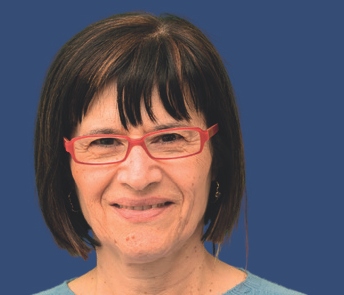
Antonella Mularoni (Repubblica Futura) spoke during the debate on item 7 of the Grand and General Council (Consiglio Grande e Generale) agenda, dedicated to the ratification of the Association Agreement between the Republic of San Marino and the European Union.
The former Secretary of State for Foreign Affairs traced the diplomatic work launched in 2009, dwelling on the opportunities for new generations and the challenges awaiting the country.
Mularoni also called for greater recognition of Sammarinese professional expertise and for careful planning in transposing European regulations, without rushing the process.
Below is the full text of Antonella Mularoni’s speech.
Today is a day of celebration, and I want to say so right away. I even dressed for the occasion, because I believe we must acknowledge that today is truly a historic day for the Republic of San Marino.
It was historic, in its time, when San Marino decided to join the Council of Europe, just as the decision to become a member of the United Nations was historic.
Today represents another historic moment for our Republic, and I am glad to be in this chamber to give my firm support to the ratification of the Association Agreement with the European Union.
I believe that today we are giving a great gift — a necessary one — to our young people, to whom we are guaranteeing a future that matches what they themselves hope for.
Our young people are citizens of the world; they feel like European citizens. And we know well that many of them, those who chose or were only able to keep Sammarinese citizenship, have faced enormous difficulties in recent years, both when deciding to study abroad and when trying to begin working and professional careers outside the borders of our Republic.
Today, therefore, a new chapter opens in the history of our country.
I would also like to say something very personal. One of the reasons that convinced me to accept running again for this term as a member of the Grand and General Council was precisely the awareness that, during this legislature, we would reach the ratification of the Association Agreement with the European Union.
I must say that initially I was not at all convinced I wanted to run again, because I thought I had already concluded my political and institutional journey.
However, the prospect of being able to take part in the ratification of the Association Agreement was one of the reasons that convinced me to take on this commitment once more, because it meant being able to contribute to building a new path for our country — one that, in my view, can truly guarantee opportunities for growth for everyone.
This makes me truly proud to be in this chamber today.
During these two days of debate, I have also had the chance to revisit many events, and many memories have resurfaced, especially for those of us who, like me, had the privilege of serving as Secretary of State for Foreign Affairs.
I had this privilege at a particularly difficult time for the Republic of San Marino, a time when, even in our relations with the European Union, we had to patiently try to mend the threads of a fabric that had become deeply frayed.
I remember that, at the start of this journey in 2009, every time we visited the European institutions we had to explain that the Republic of San Marino had genuinely and resolutely set out on a different path from that of the past.
We had to explain that San Marino would do everything possible to exit the Moneyval enhanced procedure as soon as possible, and that it was committed to putting an end to all those fraudulent schemes that had multiplied within our territory and had also created problems for the European Union, since they resulted in lost revenue, including VAT shortfalls.
It was necessary to make our international counterparts understand that that chapter of our history would come to an end, and that we had set out, fully aware and fully convinced, on a different path.
That journey, which we began in those years, successfully led, already towards the end of that legislature, to the drafting of a document through which the European Union, taking into account the needs and requests the Republic of San Marino had expressed, identified the possible ways in which greater integration with the European context could be achieved.
In 2015 the negotiations were officially opened, and today, after so many years of work, we are here to ratify the Association Agreement.
I would therefore like to acknowledge the great work carried out by all the officials and members of the diplomatic corps of the Republic of San Marino, who worked tirelessly, with conviction and, I would add, with great passion, to allow us to achieve this result.
I want to extend my personal thanks to those who, at the time, held diplomatic posts at our mission in Brussels, Ambassador Giannicola Filippi Balestra and Antonella Benedettini. Without the work they carried out in those years, we probably would not have reached this result today.
They managed, with great skill, to carry out the daily work of dialogue and representation of our Republic’s interests before other countries and EU institutions, preparing in the best possible way all the meetings we would later have with the various European bodies, as well as with the highest institutional officials of the European Union, starting with the President of the European Commission and the President of the European Council.
These are people who truly never spared any effort in trying to make our international counterparts understand that the Republic of San Marino had resolutely and knowingly embarked on a different path and would not turn back.
Today they are both retired, so I believe I am doing no one an injustice by mentioning their names explicitly, while I do not wish to single out all the other officials and diplomats who are still working today.
But to these two, I truly want to express my personal gratitude for the contribution they made to building our Republic’s European path.
Today, however, we also face a great responsibility, because the work the Grand and General Council will have to carry out as a result of the Association Agreement with the European Union will be enormous. A very important challenge opens up, one that also concerns the way we are accustomed to working on a daily basis within our country.
We know all too well that we very often leave things to the last minute and are never ready within the timeframes we set ourselves.
Every time we adopt decrees or laws to introduce something new into our legal system, we end up having to provide for exceptions or amend the same regulations fifty times over.
Let us also think of all the corrigenda we are forced to issue every time we introduce something new. I believe that, from today onward, we must truly learn to work differently, with greater planning and organisational capacity.
I must say, Secretary — and here I am addressing Secretary of State Luca Beccari directly — that I would have expected to have, even today, although if it arrives in a week that would still be fine, an updated list of the regulations we are already prepared to transpose promptly, and of those where our work is still lagging behind.
I would also have liked — although perhaps the Secretary will provide clarification in his reply — for us to be able to agree together on the date by which the Republic of San Marino will actually be ready to announce that, as far as we are concerned, the provisional application of the Association Agreement can take effect.
I would not want us — and I hope the Secretary can reassure me on this point — to begin this process without actually being ready on those fundamental issues that the European Union considers particularly important.
Perhaps it would be better to wait an extra month or two, but to reach that moment having already transposed and introduced into our legal system, above all, those regulations that the European Union considers essential from the very moment we declare ourselves ready to grant provisional application of the Agreement.
We cannot think of joining the European family only to have our ears pulled from day one, risking finding ourselves in the same situation in the years that follow.
As Repubblica Futura — and the Secretary knows this well — we are absolutely ready to contribute to the text circulated by the Congress of State.
We are ready to cooperate and, indeed, as we have already said on other occasions, we are also open to establishing faster and more flexible procedures for adopting decisions and measures that are purely technical in nature.
As for issues that carry political content and implications, however, we believe it should be the Grand and General Council that has the opportunity to examine them properly and decide, within this chamber, what adaptations we intend to introduce into our legal system, in relation to those European legislative acts that allow for different modes of implementation and interpretation from country to country.
On this subject, I want to reiterate today, in this chamber, a proposal that I believe could be particularly useful for our country.
Let us try to create a kind of register through which we can identify Sammarinese citizens currently living around the world who have acquired specific expertise, perhaps because, in the course of their professional experience, they have already worked on the transposition of the EU acquis.
Let us try to find out who these people are and how we can make the most of their expertise, so that they can truly help us carry out the great task that lies ahead.
I am also thinking, naturally, of our young people, because I continue to insist that, within this chamber, we must not build a path only for young people, but build it together with them.
We must build this future together with them, because they too must tell us what they believe are the real priorities for their lives and their futures, helping to guide the work of the Grand and General Council so that the choices made take into account their needs, as well as those of our businesses.
What I would not want — and I address this appeal directly to the Government — is for us to continue doing what has often been done in the past, namely appointing Italian consultants who, at best, offer us draft laws built by copying Italian legislation and then trying, more or less adequately, to adapt it to our legal system.
I believe we can do better than that. Let us tackle this task by first and foremost valuing Sammarinese human resources, as we have already shown we know how to do in the past and as, I am absolutely convinced, we are certainly capable of doing today and in the years to come.