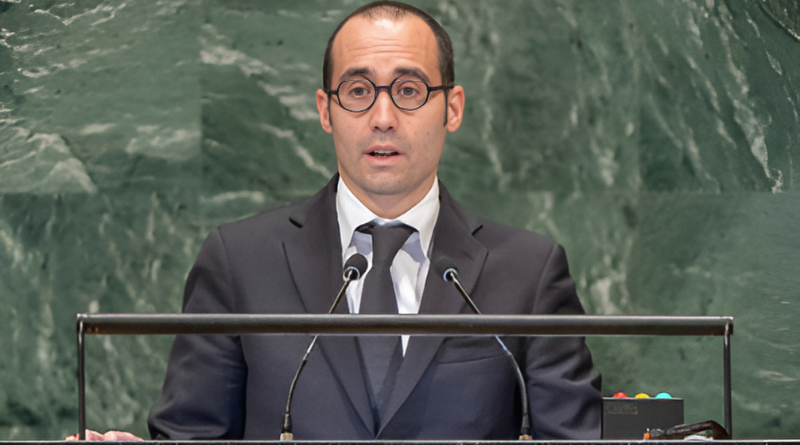
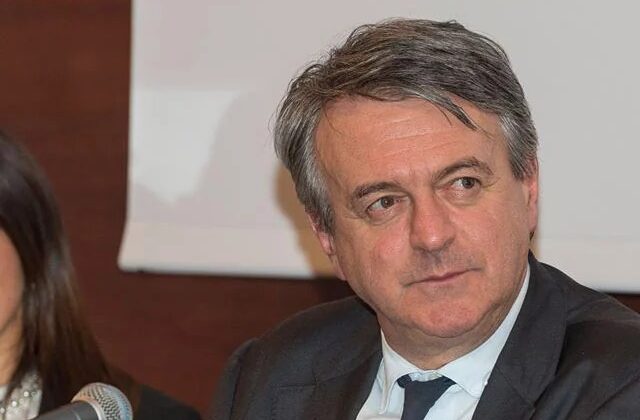
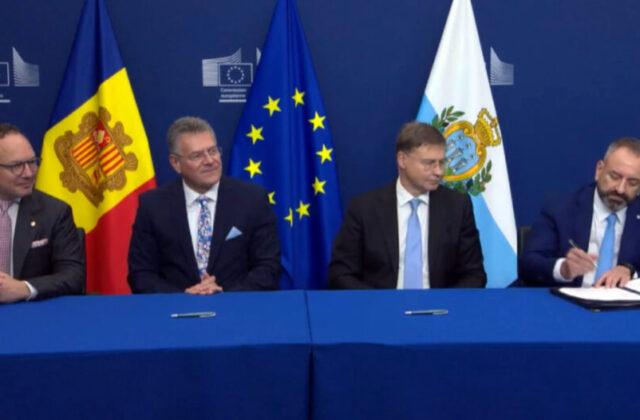
During item 7 of the Grand and General Council (Consiglio Grande e Generale) agenda, devoted to the ratification of the Association Agreement with the European Union, Nicola Renzi (Repubblica Futura) retraced the years of negotiation and explained why, in his view, the agreement gives San Marino sturdier tools to assert its interests in dealings with Brussels.
He then turned to what comes after ratification: on financial services, he warned, waiting fifteen years to act would be a mistake. The country, he said, should already have a plan for its banking sector covering the next five years, aimed at protecting jobs, attracting international operators and reducing entrenched positions of privilege.
Below is his speech in full.
«I believe it is genuinely with a measure of emotion that we take this step today in this Council chamber. I want to offer heartfelt thanks to everyone who worked on this agreement, including those who were already thinking about it well before 2008.
Many people within the administration, the professionals who chose to lend their contribution over time, almost always free of charge, every branch of the public administration, the Department of Foreign Affairs, the officials, the diplomats and the staff of the other arms of the civil service.
Thanks are certainly also due to all those political forces and individuals who chose to support this path, sometimes even setting aside preconceived partisan positions.
And to those who carried the weight of it personally, the Secretaries of State who have succeeded one another over the years, from when this path was first conceived in the minds of us San Marino citizens, right up to the current Secretary, Luca Beccari, who took the final steps in negotiating and signing the agreement.
I would like first to explain what the Association Agreement has been, and then try to answer some of the doubts that may still exist among our citizens. Honestly, I am not surprised — indeed, I believe it is the mark of a mature democracy — that within our population there are people who do not believe in the merits of the Association Agreement with the European Union.
So it falls to all of us, especially those in government, but also to everyone who feels invested in this mission, to constantly explain the reasons why, for more than ten years — indeed more than fifteen, perhaps even longer — this country has staked its political, economic, financial and entrepreneurial future on the Association Agreement with the European Union.
Because that is simply the fact of the matter. Today, in taking this step, I consider myself merely someone carrying out what was in Repubblica Futura’s electoral programme, not only in this most recent term but also in the one before it. Our programme opened precisely with the commitment to reach the signing of the Association Agreement with the European Union and to give it full implementation.
We have never made a secret of it. No one can say we changed our minds, no one can say we told citizens one thing when they voted only to do the opposite. I believe that in this chamber too we have always approached this issue, as with all others, with honesty and a willingness to work.
And I believe the last step we took was to make a genuine, loyal and concrete contribution to what is being discussed today as well — namely the law transposing the acquis communautaire.
We do this for free, because we are convinced that work carried out as collectively as possible, by common accord, can produce results for the whole country. We are not concerned with where we will stand in the next legislature, whether in government or in opposition as we are now.
The biggest task we undertook during the negotiation of the Association Agreement was to represent the Republic of San Marino and to provide our European Union interlocutors — the various services and the Commission’s political leadership — with an effective and realistic understanding of who we are.
Earlier, Councillor Morganti recalled some jokes, some stereotypes that unfortunately were widely held about the Republic of San Marino, from those about stamps and coins to those about banking secrecy and corporate anonymity. And we kept hearing these same things repeated many years after we had firmly set them aside.
I will always remember the hard, difficult years of negotiation. On every topic, the negotiation worked the same way. First, the country seeking the Association Agreement would explain the status quo on that particular matter.
We had to produce as precise a snapshot as possible of how the country behaved in that area. We did this often with the administration and with civil servants — whom I thank once again — who came to explain to the European Commission how the Republic of San Marino worked, topic by topic.
The European Union, in turn, explained what the acquis was and how it worked. From there the negotiation began, to address — wherever it was deemed useful, necessary or essential for our country — the famous red lines: that is, to secure time-limited safeguard clauses that would allow our administration, our jurisdiction and our practices to gradually align with the acquis communautaire model.
That was our first task: to demonstrate and clearly explain who we were at the time of negotiation, and to understand what we wanted to become by virtue of that agreement. As I have always said, the Association Agreement has been the greatest exercise in self-knowledge, and also in conceptual and programmatic elaboration, of what we wanted to become and of what we still today want to try to become.
And so I come to the paradox, Your Excellency. Who should care most about this Association Agreement? Precisely those who are most worried about, or who do not appreciate, the current reality of the European Union. That is the great paradox.
I am not one of them, I must say straight away. I am convinced that the European Union is a great attempt to keep alive those non-negotiable principles inherent in our representative democracies, principles that are unfortunately increasingly under pressure, called into question and attacked.
And how can one fail to see that today, despite the many shortcomings the European Union has, its ties with other countries are also expanding? Just think of the United Kingdom, which is even considering a return to the European Union, or the major agreements signed with Canada only a few weeks ago, with very strong partnerships.
It is no coincidence that these are democratic countries, which reject totalitarianism and the lack of freedom, and which place freedom — not freedoms, but freedom as a value that can never be called into question — above all else.
But why should this agreement matter even to those who hold an entirely negative view of this European Union? It is true, the Union is full of bureaucracy, and on that front we will need to be very shrewd.
The agreement we are about to conclude, however, is precisely the legal instrument that will protect us from any act of overreach that a member state, or the Union as a whole, might ever attempt against the Republic of San Marino. We have the Joint Committee, the Association Committee and the parliamentary group, as well as the role of the European Court, together with this framework agreement, its institutional component and all its annexes.
These are fundamental instruments and venues for asserting our interests. We experienced this in the past, when a directive would arrive that completely changed the European Union’s approach to wood products, plant protection products and many other matters.
In those cases, the only thing we could do, precisely because the Association Agreement was still being negotiated or concluded, was to request meetings without even having a legal basis for doing so. And the answer could simply be: “But you are a third country, why should this concern us?”
From tomorrow, however, we will have the tool to protect ourselves against sudden changes, because we will be informed of those changes at the very moment they are being conceived at a regulatory level within the European Union. This alone would be enough, setting aside ideals and what each of us individually thinks. This is an extremely powerful legal instrument that shields us from potential abuses and that does not exist today.
Indeed, until now we had only concluded an agreement of a financial nature, the Monetary Convention, and today we are completing it with this further major step. A tough chapter ends today, I can vouch for that personally, but another begins. There is emotion in this, and I feel it.
Let us mark this date, but let us roll up our sleeves.
And here we come to the well-known dispute. Are we behind? Are we ahead? Are we ready? Are we not ready?
I have no interest in using this as a political tool. I will only say that squandering an opportunity like the Association Agreement, spending two years showing our citizens that we are not prepared on this issue, would be catastrophic. That is all I will say, without passing further judgement on how prepared we actually are.
Then unfortunately — and with this I will conclude — I see certain sectors, certain niches, and here I also connect to other things said today and elsewhere, that are unwilling to let go of their grip.
That framework of international rules, which pulls us out of our own stagnant waters — because at times our system really is a stagnant system — and brings us face to face with the rules of the major players, rules that have had to withstand the scrutiny of history and of the present, meets with fierce resistance.
And I am not speaking of those who, entirely legitimately, say as citizens “I am not convinced, I do not want this Association Agreement.” I am speaking of the reaction of certain vested interests that are unwilling to put themselves on the line.
Because, ladies and gentlemen, if we truly believe that we will apply the part of the acquis concerning the banking system fifteen years from now, we are saying something absurd.
We should already have in mind what the management plan for our banking system looks like today, and how we would like to see it evolve over the next five years, safeguarding jobs, fostering development and the ability to attract international operators who come to work here, rather than the usual entrenched positions of privilege.
This is the great challenge at the heart of the Association Agreement.
If we do this well, those entrenched positions will be increasingly reduced and challenged in favour of broad, fair competition — one in which our talented young people, those who today cannot find the right ecosystem here in the Republic and must go abroad to build a future, will finally be able to do so here, in the Republic of San Marino, measuring themselves against competition that is nothing but a positive force.
And it is with this sentiment that I believe the entire Repubblica Futura council group will vote in favour of this ratification».