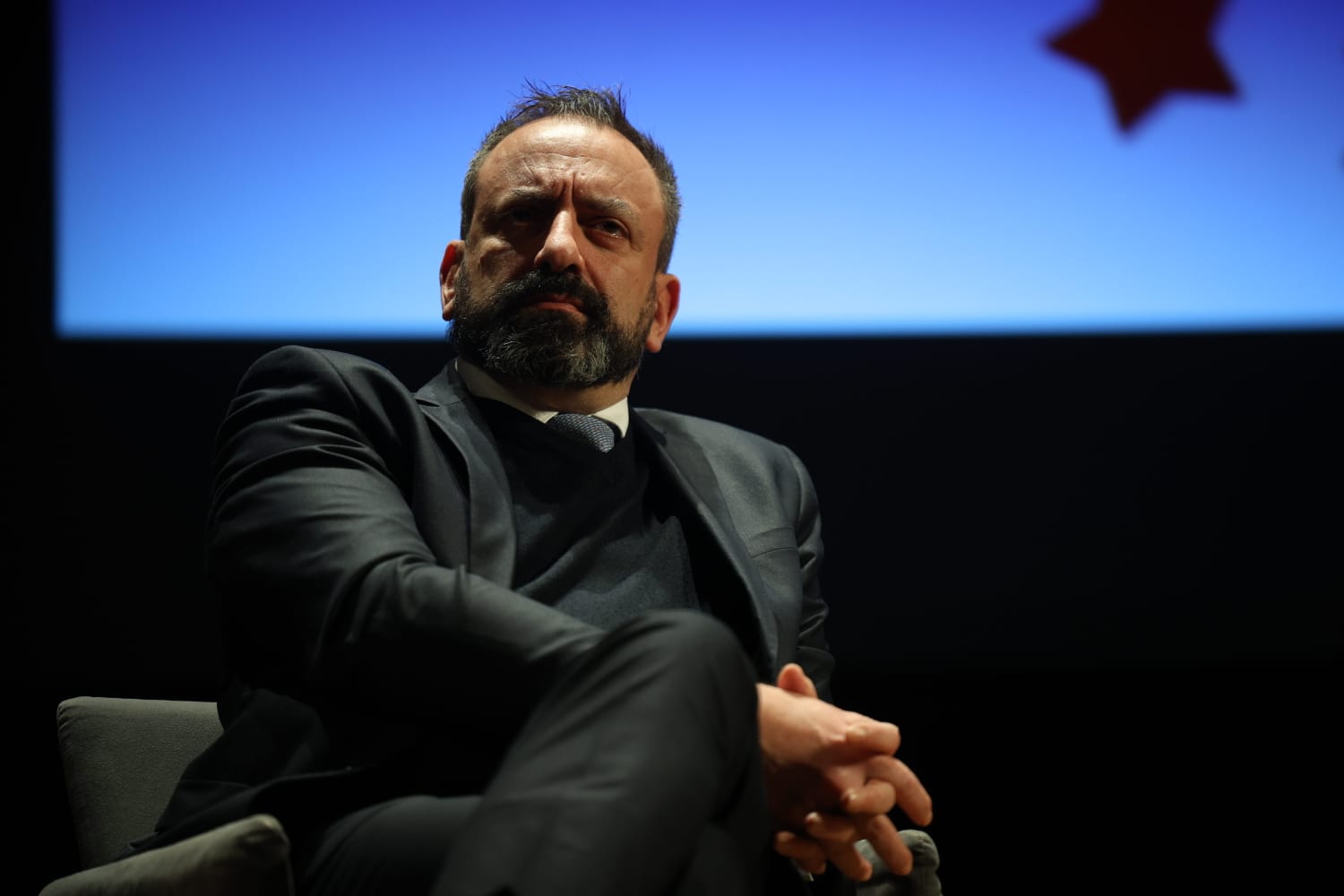
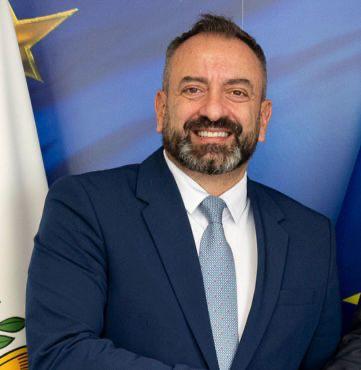
During the Communications item of the Grand and General Council (Consiglio Grande e Generale), Secretary of State Luca Beccari spoke in response to the opposition. On rulings by the European Court of Human Rights (ECHR), he urged lawmakers to assess whether changes are needed, while avoiding discussion of individual judicial cases within the Council.
On the Visano photovoltaic project, he defended the government’s decision to seek energy production solutions beyond the border. His full remarks follow below.
«I meant to speak with a few announcements, but as always, the debate on this agenda item takes a rather peculiar turn. Let me start with a bit of irony, because frankly I don’t even know how much, or how, to respond to the arguments made by the Motus Liberi councillors about the supposed collapse our State has reached because of this ruling political class.
Apparently, from seven in the morning until ten at night, we spend our time handing out favours to selected citizens, oblivious to the country’s actual needs and priorities.
When we reach this kind of narrative, it means we’ve run out of arguments. We open an important Council session, one with significant items on the agenda, and we begin by raising an alarm like this. Clearly a great deal of thought went into what to say during this Communications item.
I do, however, take very seriously the appeal made by several opposition representatives on social issues, which are of interest to both the government and the majority and call for everyone’s utmost attention. Unfortunately, there is also the instrumental use made of these issues in an attempt to corner the government.
It was interesting to discover that there are no photovoltaic panels in the Po Valley. I didn’t know that, and I’ll have to check with my colleague Bevitori, because I too was quite struck by this. Noted — perhaps we’ll move them to Sicily, somewhere sunnier.
There are photovoltaic panels in Austria, in Switzerland, or in the Black Forest in Germany, but apparently not in the Po Valley — there, they don’t exist and they don’t work. We’ll hold an extraordinary government meeting, because we want to get to the bottom of this, beyond the fog of these past few days, which does indeed seem to be causing some trouble in the Po Valley.
Forgive the irony, honourable councillors, but if we want to tackle the country’s real emergencies, let’s talk about things grounded in fact, things we can actually work on together. If this is the starting point every single time, it becomes difficult to have any real dialogue or to give proper consideration to proposals coming from the opposition. With what spirit are we supposed to sit down at the table with the opposition, if this is where we start from?
Political debate allows for a great deal, but that applies to the government and the majority as well. We need to find some common starting ground — for instance, the fact that energy is a commodity whose price is set by the market. Then there’s the question of how the supplier, public or private, brings it to market, the markup applied, and the social policies that accompany this good. That’s a separate matter.
Energy produced via photovoltaic, nuclear, wind, or hydrothermal plants doesn’t have a different price depending on how it’s generated. The price is the market price. What changes, if anything, is the producer’s margin and, consequently, the social policies that can be implemented as a result — just as with gas.
We are a territory of 61 square kilometres that will never be able to host large-scale energy production facilities. For the first time, this government is making an effort to find alternative solutions beyond our borders, ones that, moreover, have no impact on our own territory. Let’s discuss it, but let’s not discard the project simply because it was the government that proposed it.
We spent an entire session discussing social support policies. I believe they will continue to be the subject of our debate, because emergencies are always present — they change shape, but unfortunately they never disappear.
Then there’s the endless subject of justice. Perhaps we should manage to take a step forward and acknowledge that we are practically in 2027, that compared to 2017–2019 an eternity has passed, and that the world cannot simply be measured in terms of before and after. On that, I agree. But if justice continues to be used as a lever to build a political narrative, it becomes hard not to draw connections back to what was happening in 2017–2019.
The ECHR repeatedly condemns many countries. Out of sixty or eighty proceedings, San Marino has won many times, settled many times — partly for procedural efficiency — and has occasionally been found in violation.
I believe that, regardless of the scale of any given judicial matter, it is regrettable that we always end up discussing it in here, in a chamber that should be doing anything but debating individual court cases. We end up using them, or twisting them, depending on political convenience, to claim that things went one way or another.
The State has a duty to defend itself when it is summoned before the ECHR, and to defend the system. It defended itself in the Ingrid Casali case and in the Simoncini case, just as it has done at least sixty or eighty times since San Marino joined the ECHR.
It also defends itself in cases that sometimes have nothing to do with the current government, because they originated earlier. Then there is the separate task of analysing ECHR rulings and understanding whether they should prompt us to reflect on changes or shifts in approach — bearing in mind that the judiciary is a power separate from our own, or so I’ve always been told.
If we want to move forward, I believe the real challenge is to break away from the approach that used justice as a tool for political confrontation. Let’s do politics for the country, and let’s also discuss justice, which is indeed a political issue, but let’s do it properly — without tackling individual judicial cases here in this chamber».