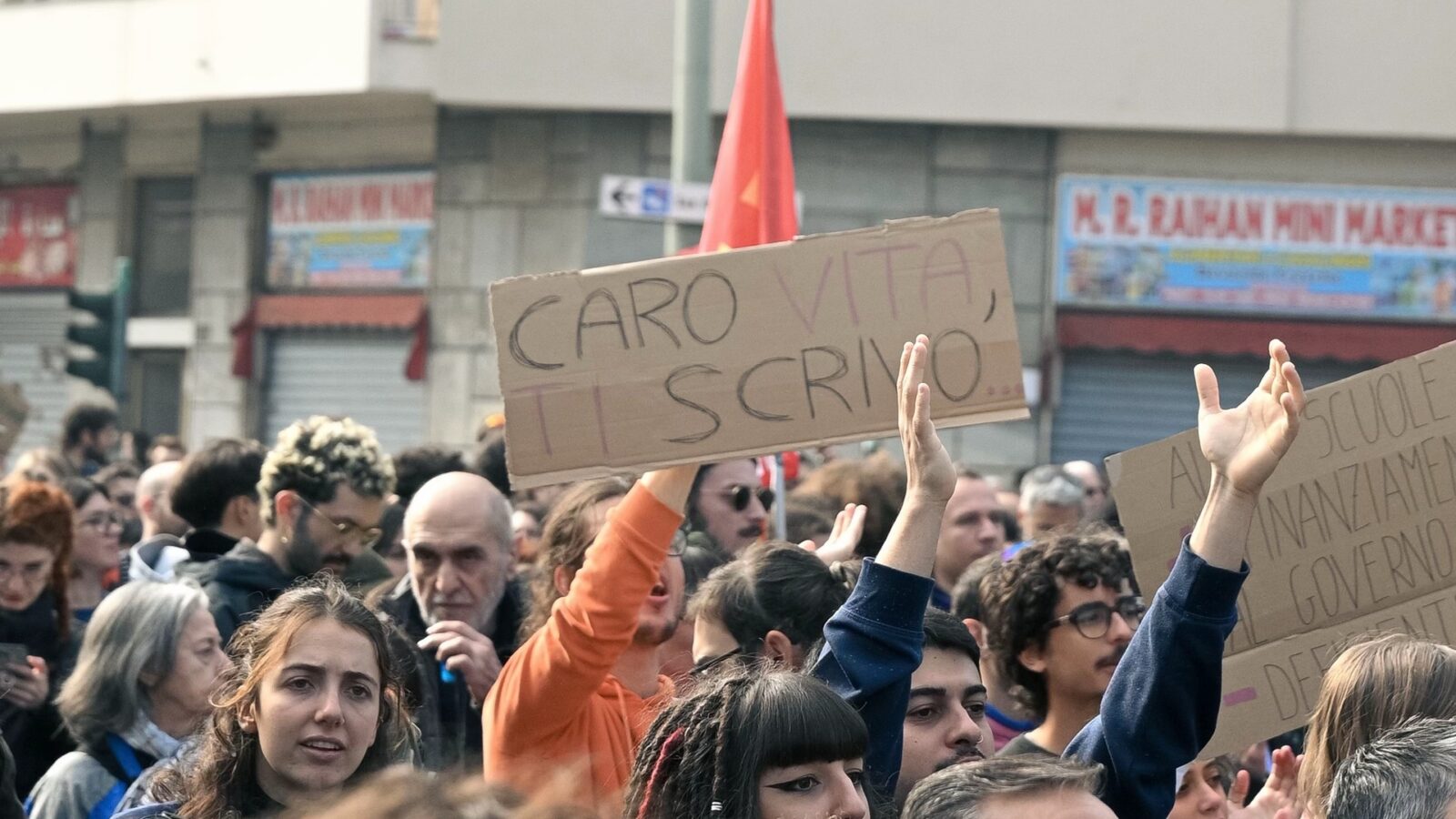
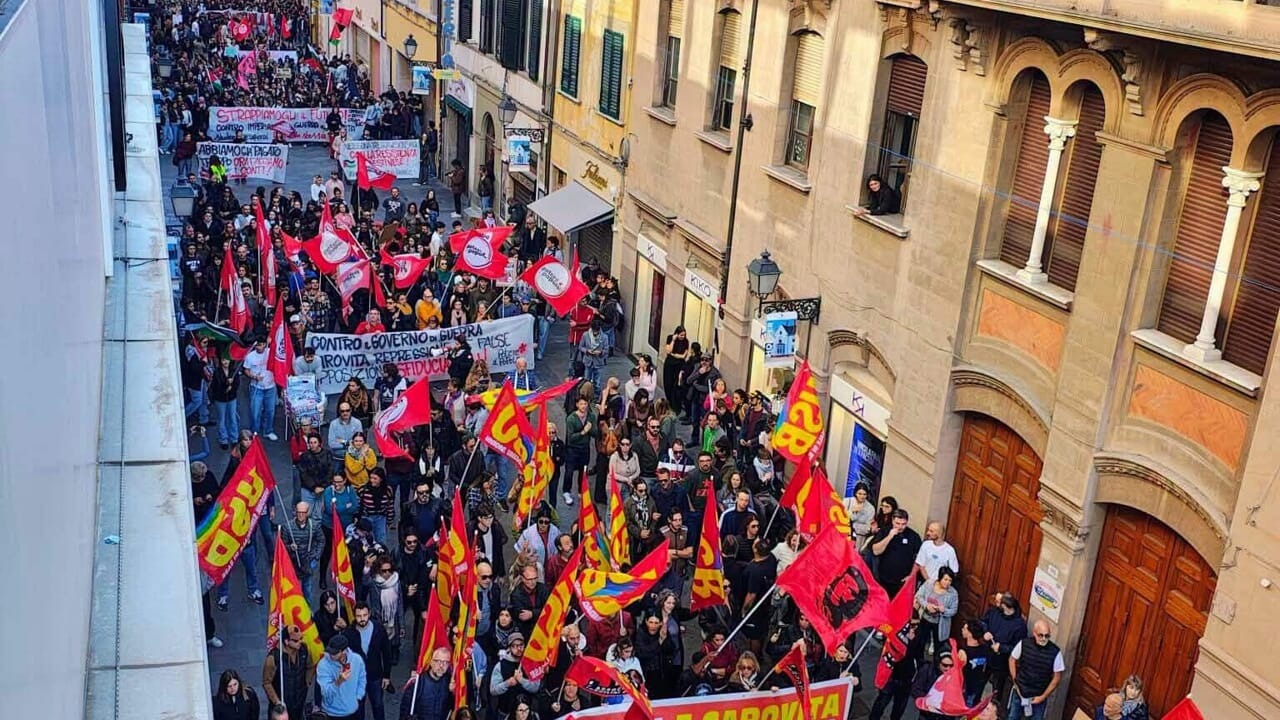
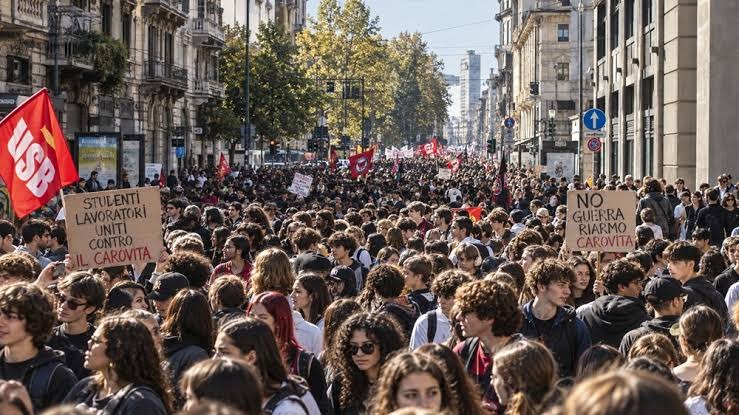
Italy came to a standstill on Friday 30 October for the general strike called by the USB (Unione Sindacale di Base) union against the rising cost of living, stagnant wages and military spending.
Protests took place in more than sixty cities, from dawn pickets at port entrances to afternoon marches, and the union spoke of more than a million participants — a figure no independent count could verify. The mobilisation, organised and led by the union, unfolded peacefully in nearly every city.
Who took part
The slogan on banners from north to south was the same: “We won’t pay for the war — lower the weapons, raise the wages.” Public and private sector workers, students, precarious workers, pensioners, housing rights movements, pro-Palestinian groups, grassroots unions and also farmers — who have been protesting for weeks over diesel prices and low farm-gate prices — joined the demonstrations.
Entire sectors took part, from schools to cinema and audiovisual workers.
City-by-city figures: Milan, Rome and Bologna each drew around 50,000 people, Naples over 20,000, Livorno 15,000, and Florence, Genoa and Padua at least 10,000 each. In Rome, USB spoke of a hundred thousand people in the march that ended outside the ministry led by Matteo Salvini. In Livorno, Francesca Albanese, the UN Special Rapporteur, also took part.
The day began before dawn on the docks. Dockworkers manned the gates in Genoa, Trieste and Livorno as part of an international mobilisation against arms trafficking that reached more than a hundred ports in seventeen countries. In Genoa and Naples, students and workers entered port areas without incident.
Protesters and police
One episode captures the mood of these marches better than any analysis.
In Milan, during a march of more than fifty thousand people, a university student spoke directly to riot police and financial guards in anti-riot gear: “We can’t make it to the end of the month, and your situation isn’t so different,” he said, adding “what would it take for you to join us in the streets,” and then “I’m not asking for a violent uprising, but a peaceful one.” In Turin, a protester handed flowers to officers lined up in formation.
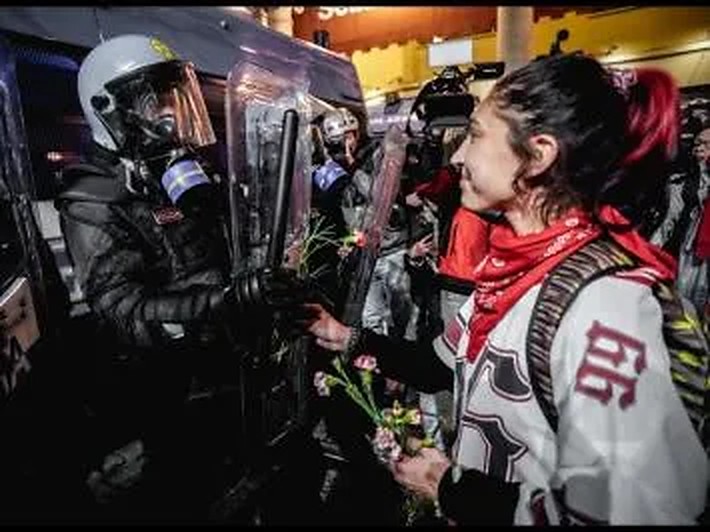
These are protesters addressing the very people policing them as if they belong to the same side of the problem — with the same frozen wages and the same rising costs. For those in government, it is a political fact far less reassuring than an angry crowd.
In Rome, they didn’t go home
At the end of the Rome march, a group of demonstrators from USB and the Coordinamento Lotta per la Casa (Housing Struggle Coordination) did not disperse: they pitched tents along Via dei Fori Imperiali, announcing they would stay until Sunday, when a national assembly is scheduled. It is a sign that the movement does not see the strike as the end of its campaign — and that the next step has already been set.