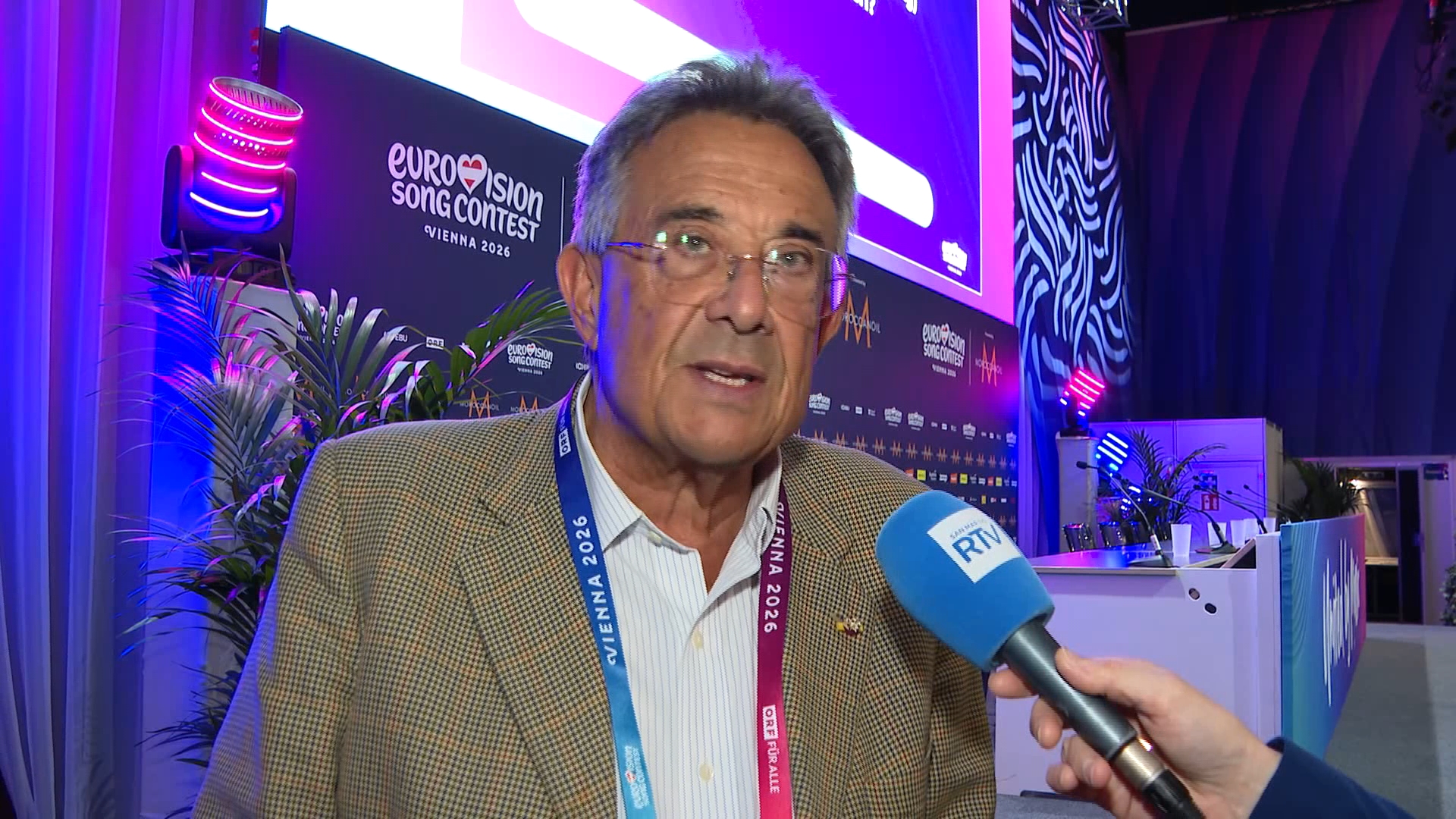
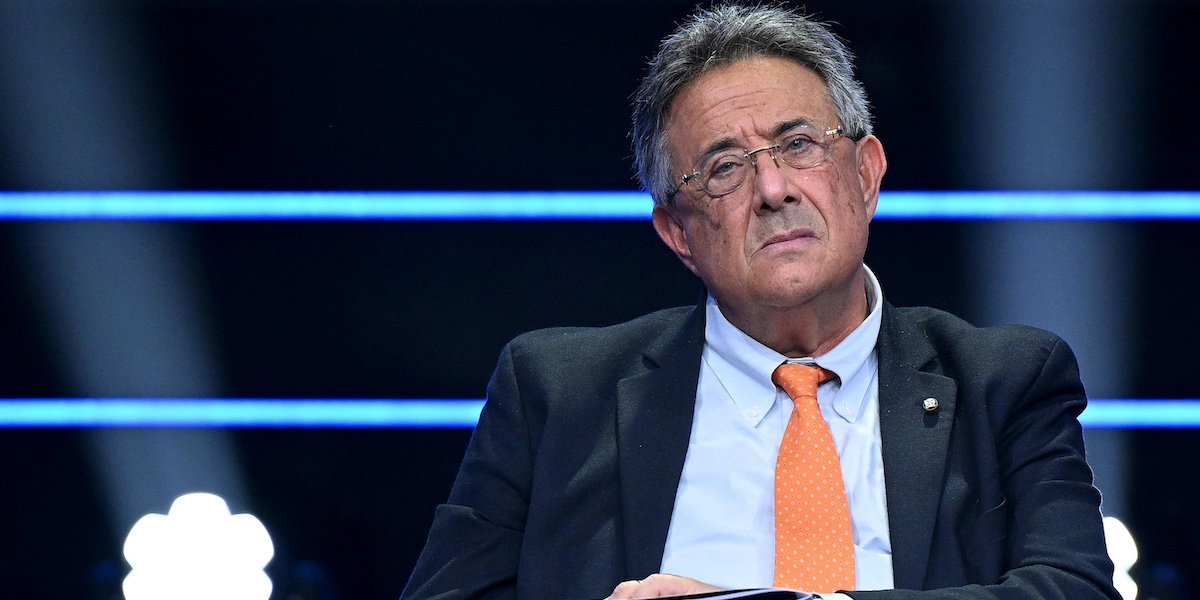
The Permanent Parliamentary Committee on Foreign Affairs, Emigration and Immigration, Security and Public Order, and Information met on the afternoon of Wednesday, October 28, 2026, with hearings of San Marino RTV’s board chairman Pasquale Valentini and director general Roberto Sergio on the agenda.
Below is the opening statement by Director General Roberto Sergio, reported in full.
Director General Roberto Sergio: Mr. Presidents, honourable committee members and secretaries of state, I would like to thank the presidencies for this further opportunity for institutional dialogue on the present and future of the Republic of San Marino’s radio and television broadcaster. I return before you roughly two years after my first hearing.
In 2024 we were facing an economic and managerial crisis that seriously called into question the prospects of the state broadcaster. Today we can speak of a company that has regained financial balance, strengthened its editorial identity, launched a thorough technological overhaul and expanded its international visibility.
I intend to account for the commitments made, distinguishing what has been achieved from what is still planned. The credibility of a management is measured by verifiable results.
The starting point was the crisis: 2023 closed with a loss of €1.94 million. At the start of the intervention, the 2024 forecast pointed to the risk of a further loss exceeding one and a half million. The company was burdened by unsustainable costs, liquidity strain, delayed cash flows, technological obsolescence and a prolonged lack of stable operational leadership.
The board of auditors at the time had flagged liquidity difficulties, financial burdens and, above all, the need to properly account for costs. We therefore reviewed purchasing, contracts, distribution, production organisation and commercial sales, alongside the administrative structure, employees and the RAI shareholder.
Credit is due to the journalists, technicians and administrative staff who ensured continuity of service, preserving expertise and ties with the local community. Staff were the foundation of the relaunch, not a cost to be sacrificed.
Turning to the financial results: two closed accounts and a positive forecast. 2024 closed with a profit of €18,786, 2025 with a profit of €103,313. For 2026, based on the most recent management update reported to the directorate, a profit exceeding €110,000 is expected. This is a forecast, not an approved balance sheet.
In 2025 total revenues stood at around €8.08 million. The third technical re-forecast for 2026 indicated total revenues of €9.372 million and commercial revenues of €2.298 million, up from €1.496 million in 2025: a projected 54% growth in commercial revenue.
These figures should always be read with caution, pending year-end verification. They do not imply that every production already turns a profit.
The turnaround was not meant to downsize RTV, but to restore its capacity to invest, attract sponsors and fund news and public-interest content that the market alone would not guarantee.
Let us turn to the two industrial plans and the direction of travel. In 2024 the committee members called for an industrial strategy. Today the company has two industrial plans approved by the board of directors.
The first, covering 2025-2027 and approved in 2025, organised the financial recovery and the editorial restart. The second, covering 2027-2030 and approved in 2026, accompanies the transformation into a multiplatform media company.
The second plan projects revenues of approximately €11.2 million by 2030, of which €4.5 million commercial, a gross operating margin of around €1.47 million and an expected profit of €220,000. Here too, these are targets, not achieved results. Passing through the company’s governing bodies nonetheless ensures shared responsibility and continuity for the industrial project, beyond individual people.
Now to technology, studios and infrastructure. In 2024 we reported equipment in some cases over fifteen years out of date, with concerns even for signal continuity.
A multi-year programme of work has been launched on Studio 1, Studio 2, control rooms, robotic cameras, digital scenery, virtual studio, visual radio, the website, apps and IT infrastructure. The technology investment plan for 2023-2030 will total around €2.75 million.
Much of this work has already been completed, some is under way, and some is scheduled. Digitising the archives will safeguard the Republic’s cultural, political and social memory.
The question of the headquarters remains strategic and must be addressed with criteria of safety, functionality and sustainability. The investments, in any case, are designed so they can be relocated without losing their value.
On the schedule and the new editorial identity: a public broadcaster is also measured by what it offers citizens. The 2026-2027 season includes Il grande gioco with Dario Fabbri, Titano globale with Mauro Mazza and Silvia Pelliccioni, Point Break with Monica Giandotti and Daniele Ruvinetti, Colibrì with Giovanni Terzi, Mirta Confidential with Myrta Merlino, Balamondo with Mirko Casadei, and Roxy Bar with Red Ronnie.
Alongside these are Breakfast San Marino, Rivediamoli and the new afternoon programming block, as well as an ever-growing number of news and service programmes.
Obviously, we do not want to imitate the major Italian networks. We want a recognisable identity, rooted in the Republic and able to speak beyond its borders.
News, institutions, associations, sport, business and San Marino’s culture must retain a central role. The San Marino Song Contest and the connection with Eurovision show how a local project can reach international audiences and generate commercial opportunities without losing its mission.
Here I touch on a point that has also been the subject of debate: the strategic agreement with the SAE group. The memorandum of understanding with the SAE group opens a collaboration between San Marino’s public broadcasting service and a publishing group with deep roots in Italian territory.
The areas covered include public interest, governance of joint projects, original productions, documentaries and reportage, cross-media development, podcasts, innovation, training, research and cultural events. For RTV this means being able to showcase its studios and expertise, involve new authors, develop co-productions and expand distribution.
A memorandum, however, defines opportunities, not results already achieved. Each implementing agreement will need to be assessed for costs, responsibilities, sustainability and editorial coherence, and brought before the board of directors.
Complementarity with a private partner can strengthen public service broadcasting only if its autonomy and identity are preserved.
Now to Pope Leo XIV’s visit, an international test. On August 22, 2026, San Marino RTV served as host broadcaster for the pastoral visit of Pope Leo XIV to the Republic.
Twelve hours of live broadcasting, direction and link-ups, coordination with Vatican Media and RAI, and the international distribution of the signal required an extraordinary effort from RTV staff and demonstrated the company’s remarkable production capacity. RTV helped tell the world a page of San Marino’s history.
The digital results reported include over one million views on Instagram during the event period and more than 12,000 YouTube users on the day of the visit, in addition to all those we cannot measure but who certainly saw us on San Marino RTV, in San Marino, in Italy and around the world through international feeds.
The technical report attributes to the operation projected direct revenues of €250,000 and direct costs of €190,000: estimates for the event, not an exhaustive measure of its economic value. This shows that even an operation of this scale had the opportunity to be supported by revenues not charged to the State.
The docufilm entrusted to Roberto Giacobbo, which will air in December for Christmas, will preserve its memory. At the same time, the company also covered the Rimini Meeting for over a week and the Mediterranean Games in Taranto, also for a week.
Now a brief note on Junior Eurovision 2026, a result of international significance. On October 24, 2026, at the Junior Eurovision Contest hosted in Malta, San Marino took fourth place with young Violamarie.
A highly prestigious result for the Republic and for RTV, one that showcases talent, artistic quality and investment in young people. Alongside the major institutional productions, this result reflects a complementary dimension of public service broadcasting: offering opportunities to talented individuals and carrying San Marino’s name before new audiences.
The live broadcast of Junior Eurovision reached more than sixteen European countries, where the performance, the word “Libertas” and the flag of San Marino received wide visibility thanks to this extraordinary eleven-year-old, who delivered an incredible performance.
Now a note on the agreements between RAI and ERAS and on RTV’s autonomy. San Marino RTV was born from the collaboration between two states and the equal participation of RAI and ERAS. Since 2024, the Italian contribution has passed through the Ministry of Foreign Affairs rather than through transfers from RAI.
RTV, in turn, purchases services and offerings from RAI on a contractual basis: distinct roles and financial flows.
I wanted to clarify this point as well, because press and media coverage often reports information that does not reflect reality. In an institutional setting such as this, I believe it is right to present the full picture.
The technical report indicates an Italian contribution of €4,718,000 for 2026, coming from the Ministry of Foreign Affairs, and a projected contribution from the San Marino state of €1.1 million, down from previous years. A distinction must be made between forecasts, allocated amounts and funds actually received.
Cooperation with RAI is strategic in terms of expertise and distribution, but it must fully respect the editorial and corporate autonomy of the Republic’s broadcaster.
On pluralism, information and public responsibility: in the first hearing, committee members rightly raised the issue of editorial independence and equal treatment among political forces. I reaffirm without reservation that San Marino RTV is not the broadcaster of a majority, an opposition or a management: it is the broadcaster of the Republic.
Pluralism means accurate news, a distinction between institutional information and political debate, freedom for journalists, respect for differing opinions, and attention to the life of businesses, young people, associations, culture and volunteering. It cannot be reduced to counting party appearances, nor to the expectation that every programme satisfy all sides.
Criticism is legitimate; it must engage with the facts and respect the work of professionals. I ask journalists to pose rigorous, even uncomfortable questions, with independence and expertise.
On dialogue with the opposition and continuity for the company: this hearing is an opportunity for transparency. The committee members’ observations, even the most critical, deserve documented answers.
Economic sustainability, programming, editorial autonomy and management continuity can be assessed in light of the financial statements, the approved industrial plans and the activities carried out.
The decisions of the relevant corporate bodies regarding the general management allow the work to continue according to the established guidelines. The stability of the project and the professional serenity of those working at RTV are in the Republic’s interest.
Even when public debate takes on harsh tones, I hope for dialogue grounded in verifiable data and mutual respect, without any limitation on the freedom to criticise.
As for the challenges ahead, and I will conclude here: the work is not finished. The 2027-2030 plan identifies clear priorities: consolidating economic sustainability and commercial revenue, developing proprietary formats and co-productions, completing additional studios, enhancing visual radio and on-demand platforms, extending DAB distribution in Italy, and launching Auditel audience measurement.
We must also continue digitising the archives, build on internal expertise and generational turnover, address the headquarters issue, and oversee contracts, disputes, distribution services and the regularity of financial flows. Measuring audience figures will help us understand the public, without becoming the sole yardstick for judging a public service.
Shortcomings should not be denied: they must be managed with method, transparency and shared responsibility.
Honourable committee members, the value of a public service is measured by the trust it builds through editorial independence, the quality of its productions and responsible use of resources. The challenge is to consolidate the results achieved and ensure stability and the capacity to innovate.
San Marino RTV must continue to be a home open to the Country’s diverse sensibilities and a recognisable window onto the Republic for the world.
This is a mission that transcends individuals and institutional seasons, and I entrust it to the shared responsibility of the institutions, the corporate bodies and all those who work every day at the company.