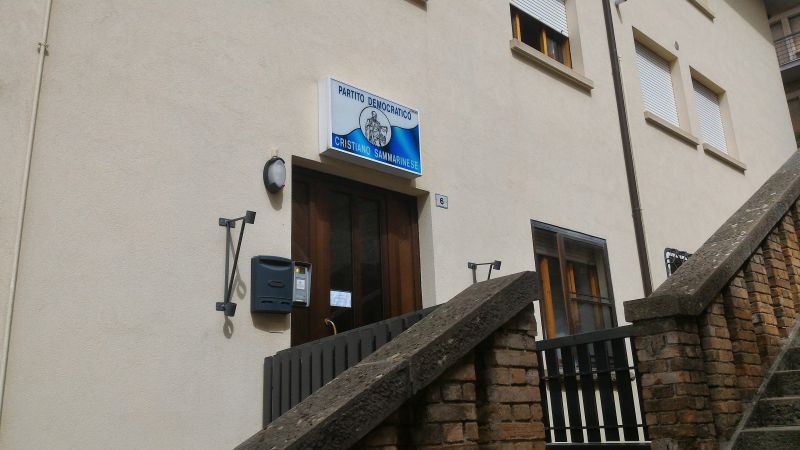
The approval of the new law supporting the family represents, for the PSD, “one of the most important social milestones of this legislature.” The party spoke out after the measure was given the green light, highlighting in particular the new range of protections for parents, children and those who care for elderly, sick or disabled family members.
“It’s a wide-ranging measure. It addresses the birth of a child, the early years of life, work-family balance, financial support, maternity, and also the care of elderly, sick or disabled people,” reads the statement. For the PSD, the value of the law lies precisely in bringing different measures together: “not a single measure, but a system of protections that supports families at different stages of life.”
The party acknowledges the work carried out by Secretary of State Stefano Canti, while noting that the result also stems from “a long process of discussion, the work of political forces, social partners and everyone who helped improve the law along the way.”
At the heart of the matter remains the issue of declining birth rates. “San Marino has a serious demographic problem. Few children are being born, and the younger portion of the population is shrinking,” the PSD stresses, adding that a law alone cannot reverse this trend. The goal, according to the party, is nonetheless “to make the choice to have a child a little less difficult.”
Among the new measures is the 1,000-euro bonus for every child born or adopted, within the set income limits. Family allowances are also increasing, and from 2027 they will be adjusted for inflation and calibrated according to a family’s financial situation.
There are also changes regarding parental leave. “In the first three months, the allowance rises to 80% of salary, with a minimum threshold of 1,500 euros. In subsequent periods, minimum amounts are introduced that make leave genuinely usable even for those with lower incomes,” the statement reads.
The way leave is managed between mothers and fathers is also changing. Parents will be able to take part of it simultaneously, while a portion will be reserved specifically for fathers. Both parents will also be able to request part-time work at the same time until the child turns four.
“Caring for children cannot continue to fall almost exclusively on women. And becoming a parent must not mean giving up work or inevitably slowing down one’s career,” the PSD argues. Periods of leave will in fact also be recognized for professional advancement purposes.
The measure also addresses maternity outside more traditional employment relationships. An allowance is planned for unemployed women without access to social safety nets, while student mothers will receive financial support until the child reaches 18 months of age. Protections are also strengthened for adoptions, foster care arrangements and fixed-term workers.
The PSD also points to measures affecting families’ daily lives: greater flexibility for part-time work, the option to request remote work when compatible with one’s job duties, expanded discounts on school fees and meals, and stronger protections in the event of a child’s illness.
A chapter considered particularly important concerns family caregivers. “There are people who every day care for an elderly parent, a sick spouse, a child or another disabled family member. It’s often invisible work. It demands time, energy and, in many cases, involves giving up work opportunities and income. As of today, that work is recognized,” the party states.
The law distinguishes between different levels of caregiving commitment and introduces financial support, part-time options and leave of absence, extending protections even to those who live in San Marino but care for a family member residing in Italy. “A society is not measured only by how much it helps those who are born, but also by how it cares for those who become vulnerable,” the PSD emphasizes.
The party is nonetheless careful not to present the measure as a definitive solution: “This law does not on its own solve the problem of declining birth rates, nor does it eliminate all the difficulties families face. It would be wrong to claim otherwise.”
For the PSD, however, the law “raises the overall level of protection and brings together policies that until now were often kept separate.” Hence the party’s final assessment: “It is an achievement of this legislature. And it is an achievement belonging to everyone.”
A milestone, then, but also a foundation to build on: “Because a country that wants to have a future must, above all, create the conditions for people to be able to imagine that future here.”