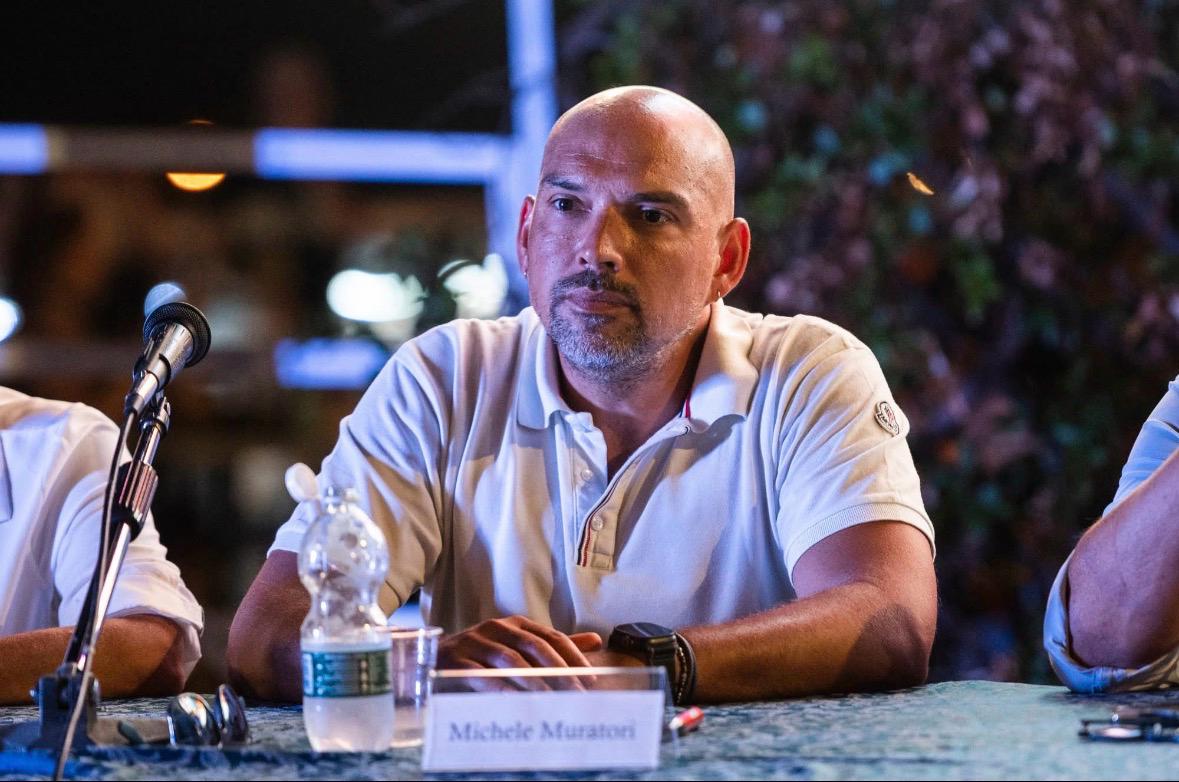
The series of in-depth columns curated by Michele Muratori, leader of the Libera group, continues, dedicated to analyzing current political affairs, the main institutional challenges, and the topics of greatest interest to the Republic of San Marino.
«As soon as you’ve got past all the Mr. Vinsons, you’re going to start getting closer and closer—that is, if you want to, and if you look for it and wait for it—to the kind of information that will be very dear to your heart. Among other things, you’ll find that you’re not the first person who was ever confused and frightened and even sickened by human behavior. You’re by no means alone on that score, you’ll be excited and stimulated to know. Many, many men have been just as troubled morally and spiritually as you are right now. Happily, some of them kept records of their troubles. You’ll learn from them—if you want to. Just as someday, if you have something to offer, someone will learn something from you. It’s a beautiful reciprocal arrangement. And it isn’t education. It’s history. It’s poetry.»
There is a deep, almost prophetic truth in the words J. D. Salinger has Mr. Antolini speak in “The Catcher in the Rye.” For anyone who has crossed the rough terrain of adolescence with that book in hand, finding in it an unexpected mirror, these lines are not merely literature — they hold the unshakeable force of a promise. The promise that true knowledge is never reduced to a tedious catalogue of facts, a race for grades, or a cold obligation, but instead lies in the startling discovery of not being alone with one’s own inadequacies, fears and doubts.
When September dutifully returns, bringing with it the unmistakable smell of new notebooks, the crispness in the air and the almost jarring sound of the first school bell, this thought stops being a simple exercise in nostalgic memory and becomes a civic and ethical commitment that concerns all of us.
For those who look at these years with a sensitivity sharpened by experience, it is clear that the inner turmoil of young people has lost its traditional gathering places. Whether due to a lack of real spaces for coming together or to changing habits, the world of teenagers risks fragmenting, retreating too often behind the cold glow of smartphones or barricading itself within the protective yet suffocating walls of a bedroom. This is a discomfort that rarely shouts or takes to the streets; it almost always chooses silence. It is consumed in isolation and in the subtle anxiety of never feeling “enough” in a society that is always rushing, obsessed with performance and immediate success. And when this silence suddenly explodes — as, tragically, recent news reports remind us — it leaves us all stunned, wondering where, as a society, we went wrong.
It is precisely in this deep divide between the obsession with efficiency and the unspoken need to have a place in life that the true challenge of our time is played out. And it is here that school must stop being a shell of concrete and become a living presence.
Salinger’s Mr. Vinsons represent the greatest risk: a school reduced to bookkeeping. A cold machine of forms to fill out, curricula to complete at all costs, and grades handed out like verdicts, where the container is assessed while the content — made up of the students themselves — is forgotten.
But the reality that fills our classrooms every day tells, fortunately, a different story. It is the quiet story of the many teachers who refuse to turn the lectern into a wall. True educators, faithful to the root of the verb “educere,” which literally means to draw out and bring forth what is unique in the soul of every young person. Teachers capable of noticing a gaze lost beyond the edge of a window, of deciphering an unspoken fragility, of catching a lump in the throat before it forms, and of finding the right word, or the right silence, at the right moment.
Giving a young person the certainty that there is a steady adult ready to listen without rushing to judge or the urge to label is a lifeline. It means knowing how to defuse shame, teaching that the sense of loneliness that sometimes tightens around the chest is neither a fault nor a sentence, but a stage of the human journey — a trial that others before us have gone through, written about, and overcome.
The school we want is not simply a dispenser of lessons, but a community. A place capable of evolving alongside the times it lives in without selling out to their frenzy, placing at its center young people, the quality of relationships, and the complexity of emotions. The start of this new school year should sound like an urgent call to forge a new, sincere pact of alliance among students, families, institutions and teachers. History, literature, philosophy and science stop being dry subjects of study the very moment they become tools for better understanding ourselves and others.
And so, in all their beauty, the words of young Holden Caulfield return, as he confesses his one true calling.
«What I have to do, I have to catch everybody if they start to go over the cliff — I mean if they’re running and they don’t look where they’re going I have to come out from somewhere and catch them. That’s all I’d do all day. I’d just be the catcher in the rye and all. I know it’s crazy, but that’s the only thing I’d really like to be.»
This is precisely where the authentic and revolutionary meaning of teaching lies. It is not about pushing young people to outrun one another in a sterile race, but about being there, present and watchful, ready to reach out and catch anyone at risk of losing their way or falling.
To all the students who cross the threshold of the classroom carrying their load of dreams and fears, to the families who accompany them with anxious hope — perhaps at the start of a new school cycle — and to the teachers who guide this journey with patience, rigor and deep dedication, I wish, from the heart, a year full of discoveries, genuine connection and great, sincere humanity.
Michele Muratori (Leader of the Libera group)