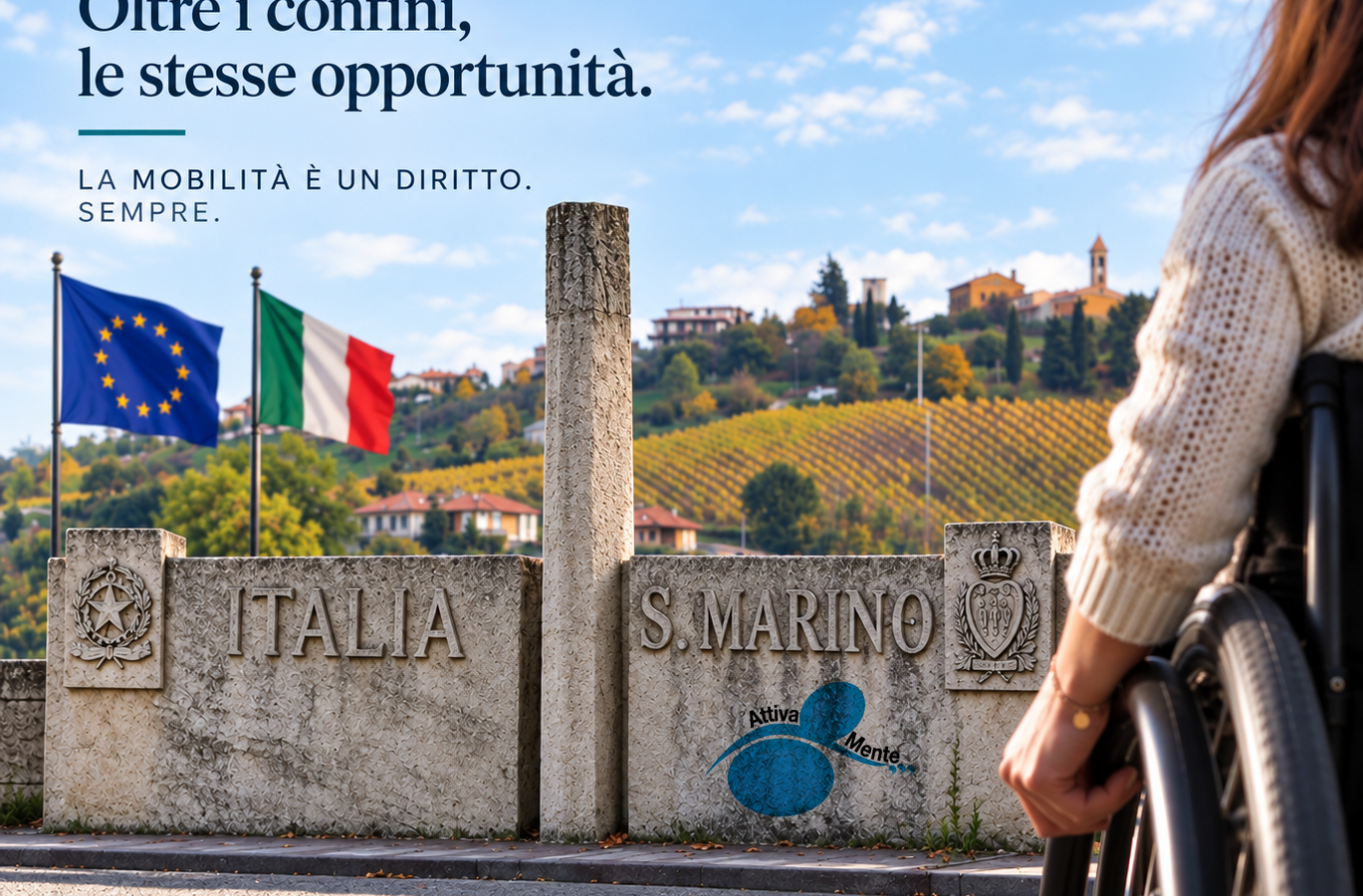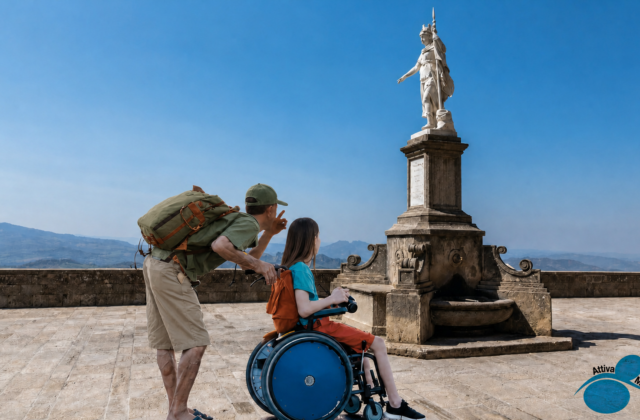
For a border community like San Marino, where thousands of people cross into Italy every day for work, study, medical care or leisure, the issue of mobility carries particular weight. For people with disabilities, however, travelling just a few kilometres can still mean confronting obstacles in transport and benefits that are not always recognised once outside the Republic. The issue has been raised by the association Attiva-Mente, which is calling on the institutions to look more closely into the matter through dialogue with Italy and, in the longer term, with the European Union.
The first sticking point concerns travel itself. “Significant progress has been made over the years on San Marino’s territory regarding transport accessibility,” the statement reads. As for road connections to and from the Republic, however, the association believes the situation still cannot be considered fully satisfactory. The example given is the public Rimini–San Marino line, the main link across the Dogana border crossing. “The operators running the service provide a lift platform and a wheelchair anchoring system, but only on request and with a telephone booking made at least 24 hours in advance.”
Attiva-Mente views this option positively, but raises a concern about independence. “It is an important and positive option, and it should be acknowledged. However, freedom of movement also means being able to decide to leave, change plans, or simply catch a bus without being forced to arrange every trip the day before.” Moreover, the problem is not limited to Dogana and the connection with Rimini. The Republic borders several Italian municipalities, and through the other crossings, options for accessible public transport are even more limited. This affects both San Marino residents travelling to Italy and people with disabilities wishing to reach Titano from outside.
The association nevertheless acknowledges the complexity of the issue. “We are well aware, however, that San Marino cannot act unilaterally: a cross-border connection involves different territories, administrations, operators and areas of authority.” Hence the call to address the matter through agreements and forms of cooperation with neighbouring Italian authorities.
A second front concerns the benefits granted to people with disabilities once they cross the border. Attiva-Mente recalls San Marino’s own experience with the PiùPerTe card, introduced to allow people with special needs, whether residents or visitors, to access discounts on the cable car and local public transport, as well as reduced rates for museums, cinemas, theatres and sports facilities. “A significant initiative showing how recognition of disability could translate concretely into greater access to mobility, culture and participation. The card’s own regulations, moreover, provided for the possibility of recognition in other territories on the basis of reciprocity. Over time, however, this card has not been given the value it deserves.”
The problem becomes especially apparent when a San Marino citizen travels to Italy. The association cites the example of rail travel and Trenitalia’s Carta Blu, which allows a companion to travel free of charge for those entitled to it. “A San Marino citizen with a disability, regardless of the type of disability, may use the same trains, cover the same distances and have the same assistance needs as an Italian citizen with a disability, yet not necessarily be able to access the same benefits.”
Attention then turns to San Marino’s path toward association with the European Union and the forthcoming European Disability Card. Attiva-Mente considers it “highly desirable, in the future, to explore forms of connection or agreement with the European Disability Card,” a European tool designed to promote recognition of disability status across national borders and access to the benefits provided in different countries.
“The central point of our considerations is not to ask for privileges. It is to ask whether it is possible to ensure that being a person with a disability from San Marino does not mean, the moment one crosses the border, facing greater difficulty moving around and fewer opportunities than another person with a disability from Italy or elsewhere in Europe,” Attiva-Mente stresses. Accessibility of transport and recognition of benefits are thus identified as two distinct but closely linked issues, with real consequences for the ability to work, study, receive medical care, travel and take part in social life.
This leads to a final appeal to San Marino’s institutions. “We believe, without expecting immediate solutions, that this issue deserves closer examination by the Institutions, through dialogue, cooperation and agreements, so that crossing a few kilometres does not mean losing accessibility, opportunities or rights.” The statement closes with a line that sums up the association’s position: “A border should separate two states, not a person from the ability to move and take part.”