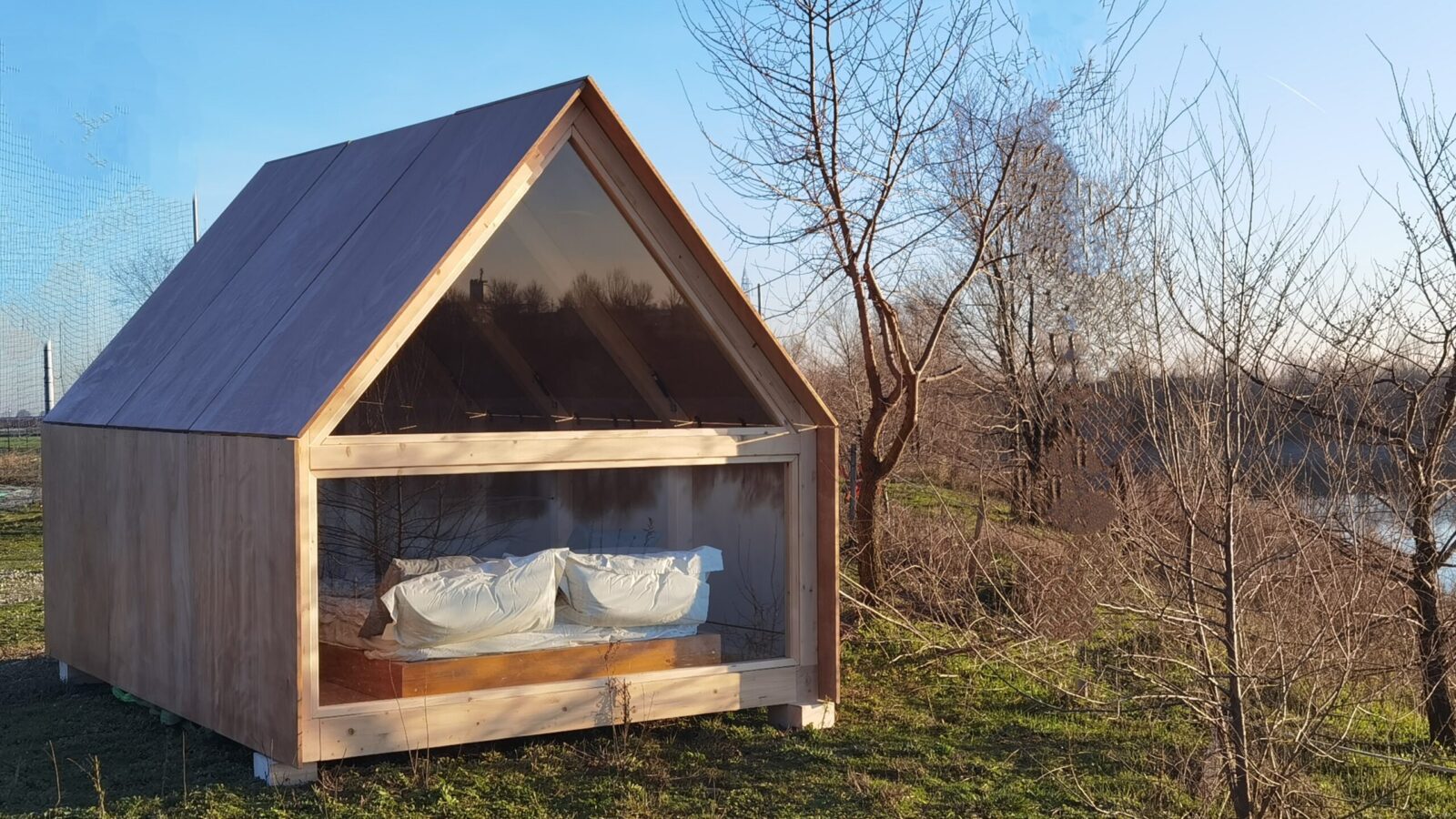
Glamping has officially entered the world of San Marino’s agriturismi. Farm-stay businesses will now be able to install up to six mobile housing units, using lightweight, removable structures such as wooden barrels, trailer-mounted setups, or accommodations built from natural, eco-friendly materials.
The change comes with the approval of an amendment to Delegated Decree no. 125 of 30 August 2016 on incentives for promoting rural tourism, jointly announced by the Secretariats of State for Territory and Environment and for Tourism.
The measure introduces into San Marino’s legal framework the so-called “Mobile Housing Units,” described in the official statement as “a new form of hospitality within agriturismi – light, fully reversible, and comparable to what is known elsewhere in Europe as ‘glamping’.”
In practice, farm stays will be able to expand their guest capacity without erecting new permanent buildings. The units can take the form of wooden barrels, trailer-based structures, or accommodations built using wood, straw, hemp, or linen.
“These are solutions that allow the accommodation offer to grow without permanent building works, and in full respect of the rural landscape,” the two Secretariats explain.
The goal is to give farming businesses a new tool to diversify their activities and tap into a segment of the market drawn to nature-based holidays and experiences rooted directly in the local territory.
“The decree’s stated aim,” the statement reads, “is to support agritourism activity and enhance the professionalism of farm operators, enabling them to offer visitors new, diversified forms of hospitality authentically tied to San Marino’s land and environment.”
Maximum of six units, and no new roads
The green light for glamping comes with a set of restrictions aimed at limiting its impact on the territory. Each business will be allowed to install a maximum of six mobile housing units, which must be equipped with sanitary facilities.
Works around the accommodations will also be tightly limited. Only a dry-built pedestrian pathway will be permitted, using stone, wood, or gravel, with a maximum width of 1.2 metres.
No new roads may be built to reach the units.
The same rules will also apply to entrepreneurial Bed & Breakfast activities, with the stated aim of maintaining consistent conditions across forms of hospitality considered comparable.
Incentives available, but no non-repayable grants
The new structures will also be able to access the incentives already provided for under Delegated Decree 125/2016, within the same overall spending cap.
There is, however, one exception: mobile housing units will not be eligible for non-repayable grants. According to the Secretariats, this choice allows businesses’ investments to be supported while maintaining “a balanced use of public resources.”
For the Secretary of State for Territory and Environment, Matteo Ciacci, the amendment gives operators an additional option without losing sight of landscape protection.
“With this measure, we are giving our agritourism businesses an extra tool for welcoming visitors, while keeping clear control over the impact of new structures on the territory. This is a form of tourism that grows out of our land and respects it: light, reversible, capable of showcasing San Marino’s rural landscape without damaging it,” Ciacci states.
On the tourism side, the aim is to broaden the visitor base and spread tourist numbers more evenly throughout the year.
“Glamping at farm stays taps into a growing demand for authentic, sustainable travel experiences. Diversifying accommodation options in this direction means attracting new types of visitors and reducing seasonality, while at the same time showcasing our rural areas,” notes the Secretary of State for Tourism, Federico Pedini Amati.
The amendment thus aims to bring agritourism regulations in line with those already in place for entrepreneurial B&Bs, opening up the possibility, also in San Marino, of staying in mobile accommodations set within rural areas, without resorting to new permanent construction.