Stricter inspections and the first sanctioning procedures against owners of buildings that fail to comply with regulatory requirements. Starting tomorrow, San Marino is changing course on the upkeep of its historic centre and the heritage included in the Unesco site, following an investigation carried out by the Environmental Prevention and Oversight Office (UPAV).
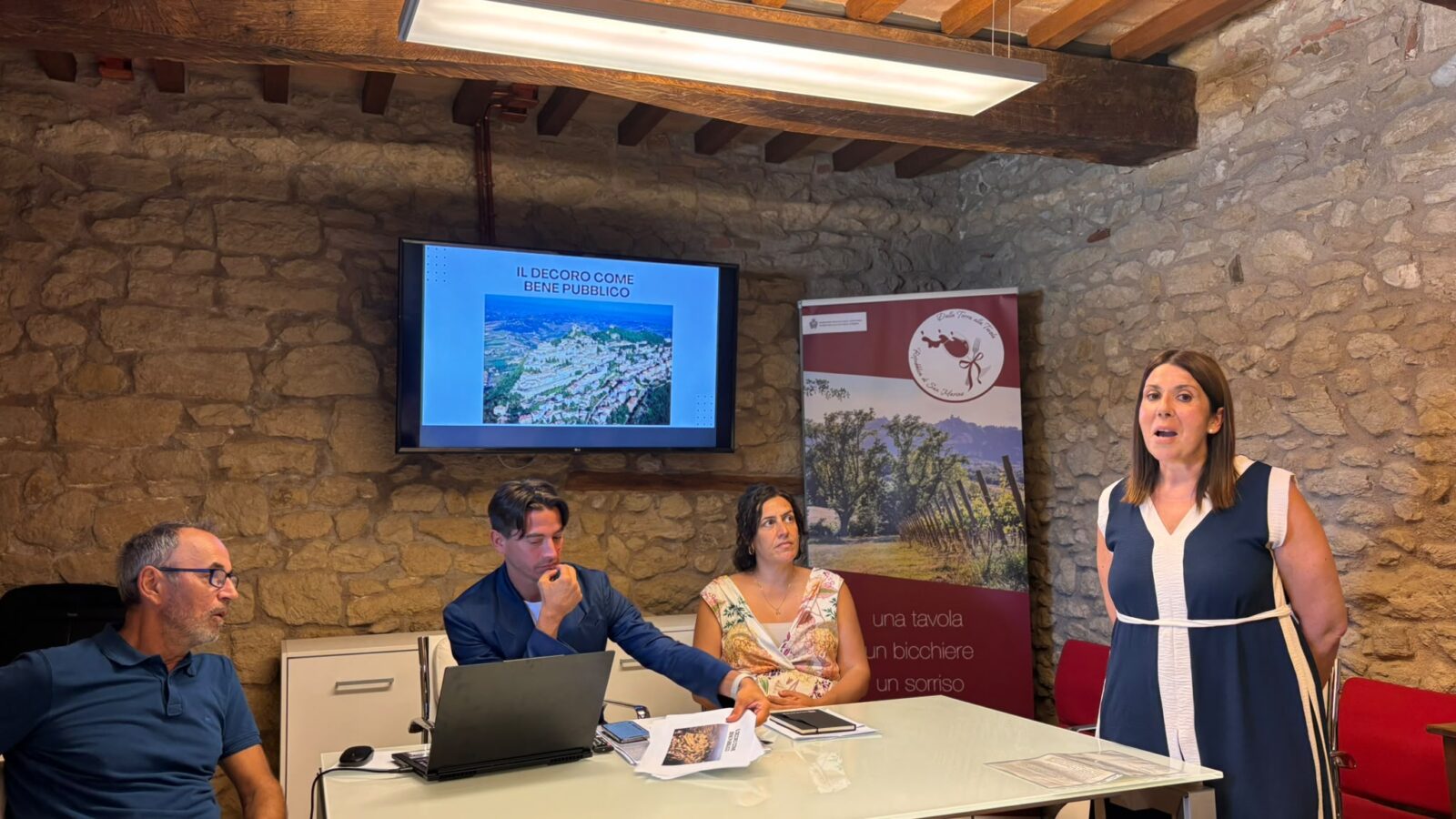
The findings of the monitoring effort were presented during a press conference held by the Secretariat of State for Territory. The survey systematically examined the state of conservation of buildings falling within the Unesco perimeter of the Historic Centre of San Marino and Mount Titano, as well as those located in the surrounding buffer zone.
“The work carried out by UPAV points to a clear conclusion: many of the problems identified can be addressed immediately by more rigorously applying the tools already provided for under Law No. 140 of 14 December 2017,” the Secretariat of State explains.
This led to the decision not to wait for new legislation before acting on the situations that were identified. “For this reason, the Secretariat of State has chosen not to wait for the full passage of new legislation and to act immediately, on the basis of the rules already in force.”
The first measures will take effect starting tomorrow. Within the Unesco perimeter, inspections will be stepped up, and private owners found to be in breach of the rules may face the procedures provided for by law.
“Starting tomorrow, the first operational measures will come into force: tighter checks across the entire Unesco perimeter and the launch of sanctioning procedures against non-compliant private owners,” the statement specifies.
The initiative also covers publicly owned buildings. For these, a dedicated budget line has been created to fund the restoration of decaying structures, aimed at addressing situations requiring maintenance or renovation.
Alongside the inspections, financial support remains available to help owners carry out work on their buildings. In particular, the Secretariat points to Delegated Decrees 86 and 87 of 2010, which provide for subsidised loans covering up to 60% of the costs incurred, up to a maximum of €150,000, for work carried out in historic centres and nuclei and on monumental buildings within the Unesco site.
The State covers 65% and 100% of the interest respectively. According to figures released by the Secretariat, over the past sixteen years the two schemes have authorised more than €5.7 million worth of works.
Notably, “more than half of the historical volume under Decree 87” is said to have been concentrated in the past four years. The Secretariat now intends to give fresh impetus in particular to Decree 86, which remains underused in several years, so that the tightening of controls is matched by access to the resources available for restoring properties.
What begins tomorrow, however, represents only a first phase. The Secretariat of State for Territory is in fact preparing a new delegated decree that will amend Law 140 of 2017 and further increase the penalties already in place.
“Alongside these immediate actions, the Secretariat of State for Territory is working on a delegated decree which, by amending Law 140/2017, will further increase the sanctions already set out in the consolidated text, strengthening over time the tools available to the Administration,” the statement reads.
Monitoring will continue through the joint work of UPAV with the Office for Territorial Planning and Building, the Cultural Institutes and the Commission for the Conservation of Monuments, which are tasked with tracking the condition of buildings and identifying the situations requiring the most urgent action.
“The goal of the Secretariat of State for Territory is clear: to strengthen the protection of one of the Republic’s most precious assets, fostering a culture of maintenance, prevention and shared responsibility, so that the Unesco heritage continues to represent a defining element of identity and a value for future generations,” the statement concludes.