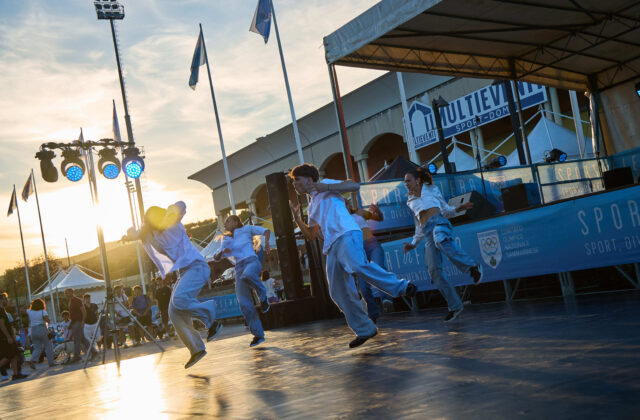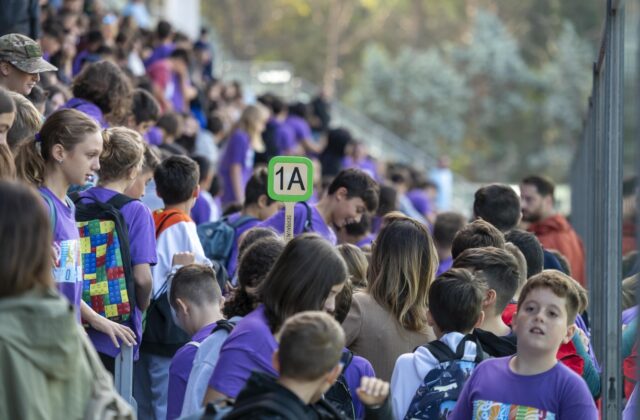
The decision to bring only first-year classes to SportInFiera didn’t convince me, and I still think it was a missed opportunity. But there’s an enormous difference between disagreeing with a decision and mocking those who made it, and that’s exactly where this story went off the rails. You can criticize the Scuola Media without turning its teachers into a caricature.
Let me start with what I actually think, because it’s only fair to say it. The second and third years of middle school are the age when many kids drop out of sport, and a day spent among the federations can be worth more than countless pep talks. That’s why I would have preferred to see all the students there, not just one grade out of three.
I say this as a director, and I take responsibility for it.
That said, the decision didn’t come out of nowhere.
It was made by the Teachers’ Council — the body that has the authority to make it — and was communicated back in June: first to the School Board, then to the Council.
It’s a debatable choice, not an unlawful one. And those who made it answer for those kids every single morning, in front of their families.
That’s why Pasquale Valentini’s remarks deserve to be read without sarcasm.
A man who has been through the whole school system — as a student, teacher, headmaster and Secretary of State — is asking for something simple: attention and respect in place of denigration.
I didn’t read into his words any claim that the school should be beyond reproach. I read a request not to belittle it.
Those who have raised their voices these past few days deserve credit for what is true.
Autonomy is not immunity: whoever decides autonomously accepts being judged, and schools are no exception. It’s equally true that the right to criticize is untouchable, and this newspaper exercises it every day. But the right to criticize protects arguments, not name-calling.
When an argument is solid, it doesn’t need ridicule; when it does need ridicule, it’s usually because the argument alone isn’t enough.
Valentini also speaks of threats.
I can’t say how many there were, or of what kind.
What I do know is that if they happened, they must be condemned without qualification, and that even if they didn’t, the tone remains an issue — the tone of mockery, which has taken up far too much space in this whole affair.
There’s also a detail that concerns precisely the kids everyone claims to care about. They’re watching, and social media reads them better than we do.
If the lesson they take home is that anyone who thinks differently deserves ridicule, we’ve all lost, regardless of which class was admitted to the fair.
The useful path lies elsewhere, and it’s a quieter one.
Back in June, dialogue between school and sport was missing: it can still be recovered now, by sitting down together with next year’s calendar in front of us.
I’ll stick to my opinion, and the teachers can stick to theirs.
But let’s discuss it like adults: one can be right in substance and wrong in manner, and at school, manner is already half the lesson.