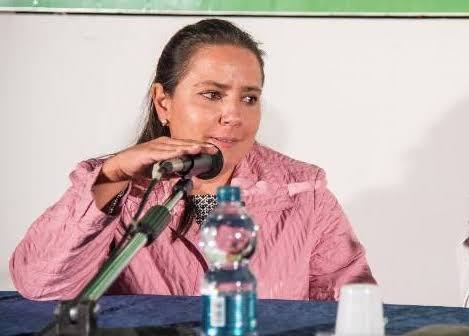
More rights and protections for workers, but a response still judged “superficial” when it comes to the real causes of the declining birth rate. This is the position expressed by Emanuele Santi (Rete) in his voting statement on the bill dedicated to family and birth rates, discussed and approved by the Grand and General Council (Consiglio Grande e Generale). Rete chose to abstain.
Santi openly acknowledged several steps forward contained in the law: recognition of family caregivers, part-time work during the first four years of a child’s life, smart working, pregnancy allowances, incentives for student mothers, paternity leave extended from 10 to 20 days, family allowances and measures on nursery fees. According to the councillor, these are positive measures that concretely strengthen protections.
The criticism, however, concerns the overall approach. For Rete, with births down by two-thirds, it is not enough to rely mainly on bonuses and incentives. Santi identifies the main causes as housing costs, the loss of purchasing power of wages, and job insecurity, which means many young people only achieve economic stability after the age of 30.
His assessment of the reform’s effectiveness was particularly blunt: according to Santi, “this law, like the one passed in 2022, will prove to be a shot in the dark” if the goal is to reverse the collapse in births. He also criticised the timing of the Observatory’s work and the survey addressed to families, which, he pointed out, only began after the bill had already passed through Committee.
Rete is therefore relaunching its own proposals: taking action on empty apartments, reducing fixed-term contracts from 24 to 12 months, and introducing an automatic wage adjustment linked to inflation. Santi also raised the issue of the ICEE (equivalent economic situation indicator), calling for assets and income to be genuinely declared in order to ensure fairness in access to benefits.
Below is the full statement.
Emanuele Santi (Rete): «To close this debate, I believe some final considerations are necessary. We said during the debate and during the examination of the articles that there are certainly some steps forward, and we acknowledge this, especially regarding the increase in rights and protections for workers. I want to mention some of the measures included, because when things go in the right direction, it is right to recognise it. The recognition of the family caregiver figure, with the possibility of receiving financial support; the possibility for parents to request part-time work during the first four years of a child’s life; the possibility of smart working; the 100% pregnancy allowance even for fixed-term workers; recognition of an incentive for student mothers as well; paternity leave extended from 10 to 20 days. These are certainly steps forward, as is the increase in family allowances or the intervention on nursery fees. Lastly, as we said, we supported the possibility for parents to take sick leave when they have children who are ill with a prognosis of more than two days. This certainly represents an increase in rights and, above all, in protections for workers, and on this we can only agree. The issue, however, is another one. We consider this measure superficial in relation to a true analysis of the crisis. We are faced with data that is by now merciless. Births have fallen by two-thirds. That is the merciless figure. Already with the 2022 law we said that relying solely on scattershot incentives — which, to be fair, can represent benefits and protections and, if the State is able to provide them, certainly help families — does not address the real causes. That is what we are contesting. In our view, the real causes lie in the reasons why people are not having children. Housing costs have become unaffordable. We are now talking about 4,000 euros per square metre for new builds, 3,000 euros per square metre for second-hand properties, and small rental apartments going for almost 1,000 euros a month. These are the real causes that need to be addressed in order to understand why people are choosing not to have children. We also have a major problem related to wages, which over the past ten years have lost more than 20% of their purchasing power. This too is a fact. Whereas before, a salary of 2,000 euros allowed people to live well and pay all their bills, today that income, with inflation having surged, is no longer enough. These are the causes. Mr Secretary, I told you: the fact that the Observatory remained stalled for a year and a half, and that the survey — the questionnaire addressed to Sammarinese families — only started two months after the law passed through Committee, is a problem. We understand well that if we draft a law before having investigated and understood the real reasons, we reverse the proper order of things. Young people now finish their studies well after the age of 25, finding stable employment means reaching past 30, and so the age of stable entry into the workforce has lengthened. Faced with this precariousness and wages that have lost purchasing power, if young people decide not to have children, we must also understand that today many are probably not in the economic position to do so. So all of this may be fine, but in our view this law, like the one passed in 2022, will turn out to be a shot in the dark. It will not address the real problem, namely the collapse in births. We will probably be giving incentives to those who have already chosen to have children and who already had the means to do so, but those who cannot afford it today will certainly not decide to have an additional child for a 1,000-euro bonus, or because a series of rights have been introduced which, admittedly, are positive for those who decide to have children. That is the reality. For these reasons we made proposals and pushed them forward, including in the development bill. These proposals were rejected. The development law was brought forward two years ago, and here too I must point out a culpable delay, because some proposals that were later included in this law could have been put in writing at least a few months, if not a few years, ago. They had already been on the table for some time. One cannot arrive at the last minute with amendments presented just moments before the opening of the paragraph, with even substantial changes to the text that had passed through Committee. So, in our view, this does not address the deep and true causes of the birth-rate crisis. It continues with this approach based on scattershot incentives. We criticised the fact that in many of these incentives, the reference to the ICEE had even disappeared. Fortunately, as we said earlier, someone from the majority took this observation on board and welcomed it favourably, because there is no point in introducing the ICEE and then basing family allowances exclusively on income. Clearly the ICEE will need to be implemented, but I want to anticipate a couple of issues. In our view, decrees 126 and 127 that were issued do not move towards fairness. We have made a cursory reading, but those who are able to avoid declaring their assets and income will be able to enjoy benefits they are not entitled to. There is a lack of political will to bring all assets to light, because if we want the ICEE to work properly, all assets and all income need to be declared. That is the point. On this we will have the opportunity to verify whether this is truly the Government’s intention, or whether there is a genuine will to move towards fairness. For these reasons we have also put forward proposals on the supply of apartments. Today, in our view, a cartel has formed. According to statistics on real estate units, there is a balance of around 2,400 uninhabited apartments — this is the 2024 cadastral estimate. And yet today there are no apartments available. So the question is: are there none because they are being rented illegally, or is there some cartel, some financial group that, through its real estate agencies, holds a large number of apartments and decides to release them onto the market drop by drop when prices, as today, are very high? We have said it: the rule already provided for since 1995, which established a tax on vacant properties owed by real estate agencies, is not being enforced. In our view, this could instead be a measure capable of helping to bring prices down. We also proposed reducing the length of fixed-term contracts. Today fixed-term contracts run for 24 months, and we know that around this threshold distortions can arise. Some workers, through fixed-term contracts, remain effectively precarious for much longer. We asked for this threshold to be reduced from 24 to 12 months. Our other proposal, which we are putting on the table, is an automatic wage adjustment linked to inflation. It cannot be that in one year there is 8% inflation and contract renewals amount to only 3%, because that means wages have lost 5% of their value. Because of this approach, which in our view is very superficial, we will therefore express an abstention on this bill. We believe it could and should have been done better, especially by starting from input coming from the population. Instead, the survey was carried out after the law had already been drafted».