The Grand and General Council (Consiglio Grande e Generale) has approved the law on end-of-life care and living wills, with 39 votes in favour, 5 abstentions and no votes against.
It marks the culmination of a process born from civil society: the bill was in fact a popular initiative, first signed by Patricia Busignani, president of the Emma Rossi Association.
The Rete party had also submitted its own proposal, later withdrawn so the work could be merged into a single text.
At the heart of the law lies the principle of self-determination. No medical treatment can be initiated or continued without a person’s consent, and individuals have the right to complete information about their condition and may refuse or discontinue care, including artificial nutrition and hydration.
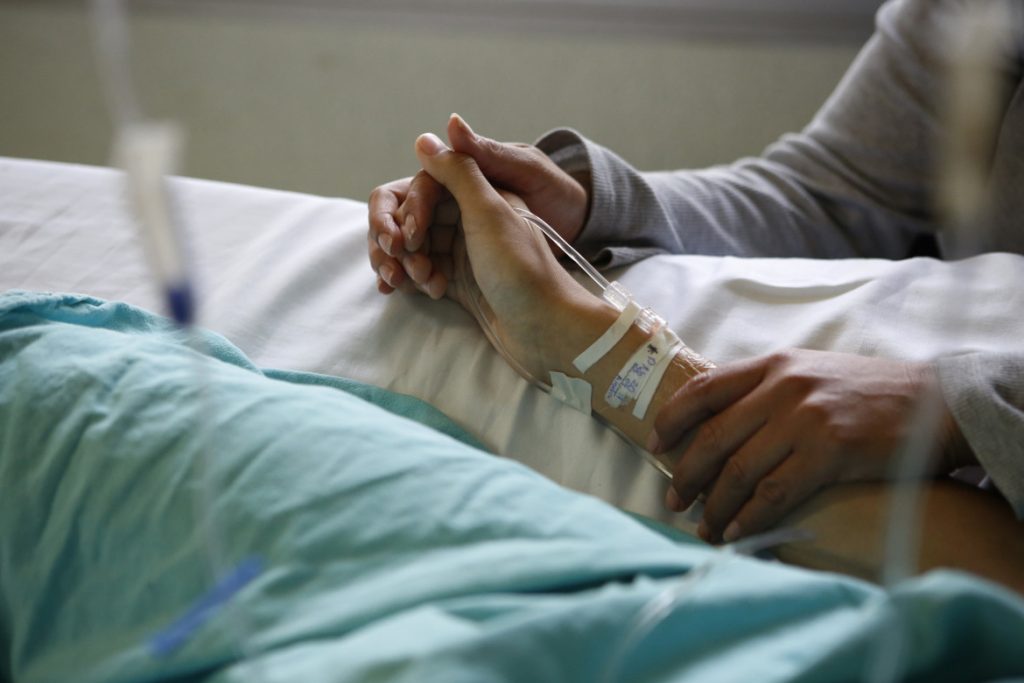
Palliative care becomes an enforceable right, available both at home and in hospice settings, and the law also allows for deep palliative sedation.
The operational tool is the DATS (advance treatment directives), through which any adult can state their wishes in advance in case they later become unable to express them.
An amendment requested by the opposition exempts anyone filing these directives from any fee. It should be stressed that the law introduces neither euthanasia nor assisted suicide.
The majority report was entrusted to Andrea Ugolini of the Christian Democratic Party (PDCS), who described the text as a mature and balanced synthesis.
The Christian Democrats highlighted their mediating role in shaping the bill and pointed to the weight palliative care already carries today: between January 2025 and June 2026, 102 people were accompanied through end-of-life care, most of them at home.
The PSD stressed the inviolability of freedom of choice, Libera emphasised the right not to undergo unwanted treatment and the relief this brings to families, AR underlined the value of popular-initiative legislation, and Rete pointed to the need to overcome cultural delays on civil rights.
Critical voices were not absent from the debate.
Repubblica Futura, through minority rapporteur Myriam Farinelli, judged the text insufficient and called it a missed opportunity for a truly shared law, raising concerns about artificial nutrition, the protection of minors and vulnerable people, and the DATS form itself.
Domani Motus Liberi reaffirmed the central importance of protecting life, calling for the State to verify that such declarations do not stem from depression or particular vulnerability.
The bill’s promoter expressed satisfaction, though she remains watchful.
Busignani described it as an important step long awaited by citizens, welcoming the absence of opposing votes but noting that the amendments made during the session did not improve the original text, which already included a DATS model later deferred to a decree.
Health Secretary Massimo Andrea Ugolini announced that talks with the Social Security Institute (Istituto per la Sicurezza Sociale) on the implementing decree would begin shortly, with the decree expected within sixty days, alongside a second measure on organ donation and a commitment to complete the hospice facility.
What remains is the political substance of a day that was far from a foregone conclusion.
On an issue that elsewhere divides and paralyses, the Council found broad convergence, choosing the path of human dignity and stronger palliative care without crossing into euthanasia.
Now, however, the law is only as good as the decrees that follow: it is their timeliness that will determine whether a right on paper becomes a right truly lived.