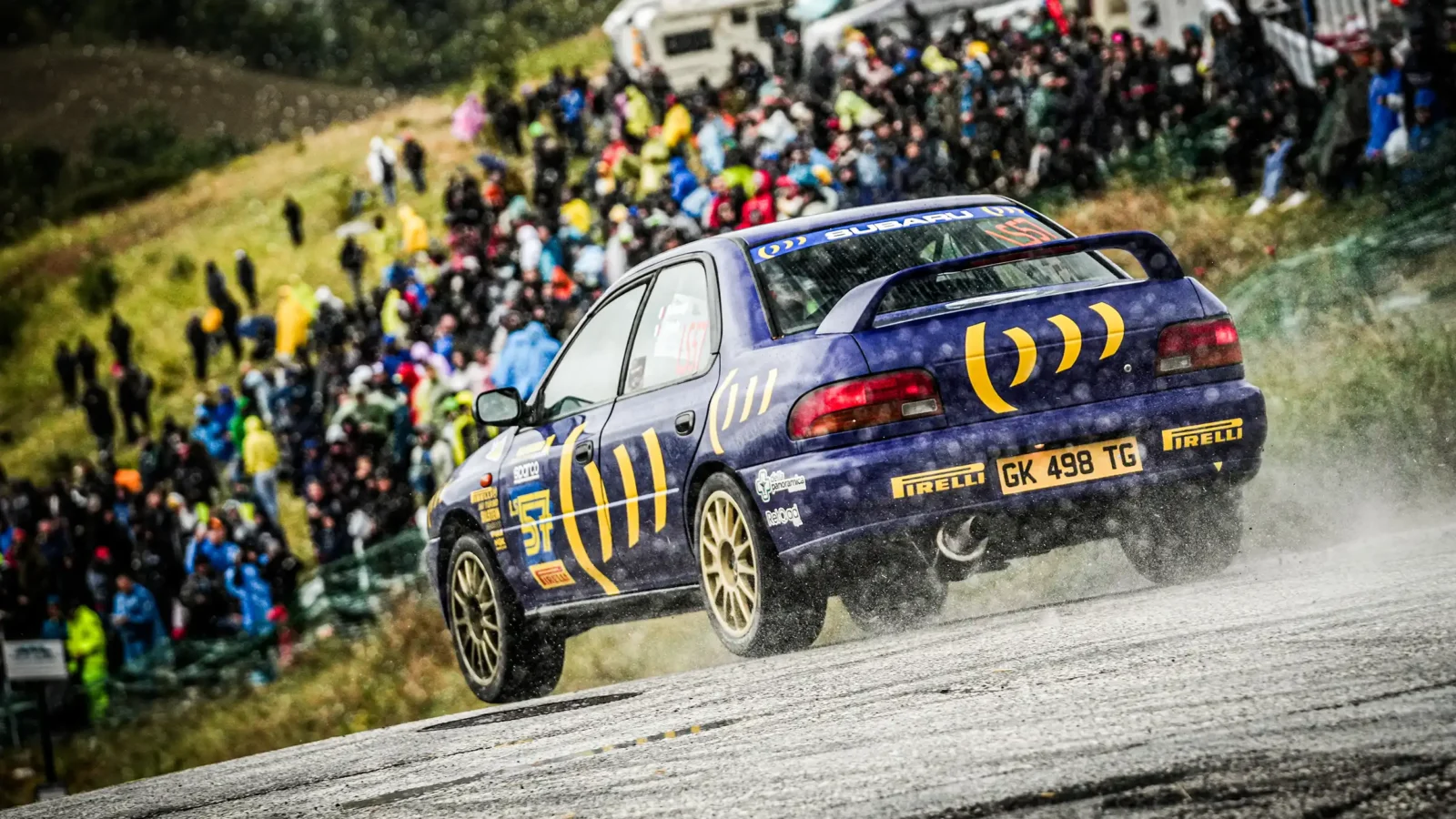
Some of those responsible for offences committed during Rallylegend will be banned from attending next year’s edition. This was announced by Secretary of State Rossano Fabbri during a debate in the Grand and General Council (Consiglio Grande e Generale) on the safety of the event.
The discussion brought together several issues: improvements along the special stages, risks on other roads, disruption to residents, and calls to clarify how much the event costs the State and what it gives back to the country.
Fabbri pointed to the use of drones and territorial monitoring, tools that help identify rule-breakers. The goal, he explained, is to put the authorities in a position to track down and prosecute offenders, even though eliminating all unlawful behaviour entirely remains difficult.
“It would not be right to say everything went smoothly. There are certainly aspects to improve, but it is equally certain that we are moving in the right direction.”
The government claims credit for the fact that no special stage had to be interrupted. Andrea Belluzzi described this as unprecedented in the last ten years and praised the work of law enforcement, organisers and the operations centre.
His assessment, too, remained cautious: “This year we cannot claim victory, but we have certainly seen important signs of improvement.”
Belluzzi defended restrictions on alcohol sales and bans on firecrackers and noisy devices. He expressed sympathy for the families of the two young people struck by vehicles and announced further meetings to address shortcomings, with greater involvement of local businesses in preparing for next year’s edition.
It is above all what happens outside the racing stages that worries councillors.
Nicola Renzi (Rf) acknowledged organisational progress but called for a clear message about conduct during transfer stages: “This is a cultural problem, and we need to send a very clear message: on the closed sections of road where the rally takes place, cars race because that’s what they’re there for. On other roads, however, even during transfers between stages, there must be zero tolerance for violations.”
Antonella Mularoni (Rf) focused on the sacrifices made by residents, from noise and traffic to uncivil behaviour. For the councillor, improvements on the stages do not resolve the management of the rest of the territory: “We have to address these situations, because for four days the country turns into the Wild West.”
Calls to strengthen security also came from within the majority.
Michele Muratori (Libera) backed the event’s tourism and economic value but warned: “We absolutely must boost security — our citizens cannot be made to feel unsafe in their own homes.”
Ilaria Baciocchi (Psd) called for more patrols on the roads, better-trained stewards and adequate resources for police and health services, suggesting that part of the public contribution be earmarked for security.
On the banning orders, Matteo Casali urged attention to practical enforcement. The Rf councillor noted that the ban only works if those targeted are actually identified and stopped before they can access the event or the territory. He also revisited proposals on steward training, caps on attendance, and having organisers cover the costs of public order.
Fabio Righi (D-ML) called for harsh penalties and swift action against anyone endangering others: “We must be able to punish them as an example to others.” However, he defended Rallylegend’s continued presence in San Marino, arguing that individual wrongdoing should not cost the country the event.
On the number of participants, Giovanni Zonzini (Rete) proposed a cap of ten to fifteen thousand attendees, aiming to make events more compatible with the size of the territory and the resources available to manage them. Matteo Zeppa raised concerns about pressure on emergency rooms and the difficulties faced by those who must keep working during the event.
Another sticking point was the budget. Several groups called for a comparison between the economic benefits, contributions received, and expenses borne by public bodies.
Oscar Mina (Pdcs) noted that 140 law enforcement officers were deployed for the event. Casali asked whether the €3,600 cap on additional police services was being applied.
Mirko Dolcini (D-ML) called for an assessment of costs and benefits, alongside more limited road closures, protection for local businesses, and checks on possible undeclared earnings.
Restrictions on commercial activities opened up another front of debate.
Carlotta Andruccioli (D-ML) called for stable rules, set well in advance and discussed with trade associations, to avoid penalising businesses unconnected to the event.
Mina stressed the need for clear regulations and consistent enforcement, including checks on unlicensed vendors: “Security and economic activity should not be seen as competing goals: we must protect both through rules that are clear, proportionate and applied consistently.”
Organisers were asked to step up their efforts. Andrea Menicucci (Rf) called for greater resources to protect both territory and people, backed by public investment in infrastructure.
Dalibor Riccardi (Libera) pushed back against suggestions that the event could be moved elsewhere: “The organisers’ threat frustrated me enormously.” He recalled the State’s commitment to security and healthcare and defended residents’ right to enjoy those four days in peace.
Matteo Rossi (Psd) likewise rejected ultimatums and called on organisers to cooperate.
Finally, there remains the question of timing: discussing measures only after the event has already taken place limits the Council’s ability to act.
The point was raised by several councillors, including members of the majority. Fabbri signalled openness to drafting general rules applicable to all events, to be adapted for individual occasions, and offered to present a fresh assessment of the economic benefits.
Belluzzi committed to presenting the measures for next year’s edition in time for them to be discussed and approved before Rallylegend takes place: “This way, every contribution can be timely and constructive.”