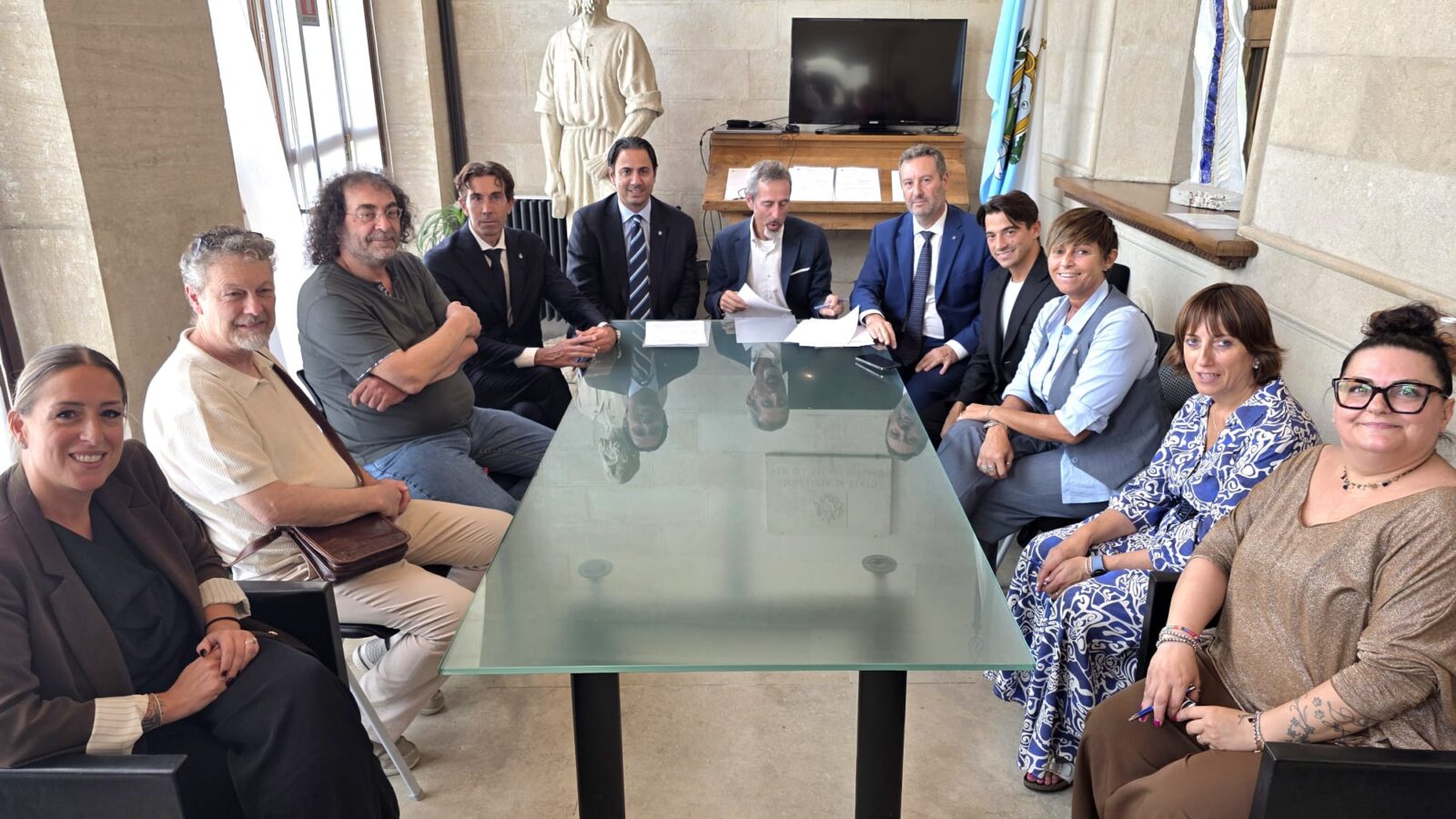
A 3% increase for 2025 and a further 2% for 2026, the latter as an advance pending the overall renewal of the contract. This is what the bridge agreement for public employment provides, signed by the Congress of State and trade union organisations – a first step towards defining the new collective contract for the Broader Public Sector.
The agreement primarily addresses the economic side, with retroactive effect. From 1 January to 31 December 2025, a 3% increase will be applied to base pay and seniority increments. The measure covers established and tenured public employees, staff hired on permanent contracts under the new regime, and fixed-term employees.
“The agreement stems from an awareness of the impact that the rising cost of living and inflation are having on household budgets,” reads the statement from the Congress of State. “The Government and trade union organisations have therefore identified an initial economic response, seeking to balance the protection of workers’ purchasing power with the need for public finance stability and containment of personnel spending.”
The increase also applies to auxiliary and operational support staff of the Public Administration and to wage earners employed by the State Autonomous Public Works Company, the San Marino National Olympic Committee, the Office for the Management of Agricultural and Environmental Resources, the State Autonomous Public Services Company, and the Public Administration.
From 1 January 2026, again with retroactive effect, a 2% increase on base pay and seniority increments will take effect. This is an advance on the adjustments to be defined through the renewal of the public employment contract, and it will remain in force until the new agreement is signed. The provisions also extend to members of the Police Corps.
“Having achieved fiscal balance and progressively restored order to public accounts now allows the Government to put in place concrete measures to support workers and their families, helping to offset the rising cost of living that citizens face every day,” the Congress of State further emphasised.
The signing, however, does not close the matter of the public contract. Talks will resume as early as September and will address both economic and regulatory/organisational aspects. “Among the stated objectives are the modernisation of work organisation, the enhancement of professional skills, and the creation of new growth and career prospects, with particular attention to young people who choose to work in the Public Administration,” the statement reports. The negotiations will proceed alongside the definition of the Third Staffing Requirement Plan (Terzo Fabbisogno).
The process also includes the reorganisation of the public administration ahead of the Association Agreement between San Marino and the European Union. “A modern, efficient Public Administration capable of leveraging its professional talent will indeed be essential to meeting new obligations, seizing the opportunities arising from European integration, and guiding the country through the changes ahead,” the Government stated.
Signing the agreement on behalf of the Congress of State were Secretaries of State Andrea Belluzzi, Marco Gatti, Teodoro Lonfernini, Massimo Andrea Ugolini, Alessandro Bevitori and Matteo Ciacci. For the trade union organisations, the agreement was signed by Francesca Busignani, Secretary General of USL, Enzo Merlini, Secretary General of CSdL, and Milena Frulli, Secretary General of CDLS, together with Antonio Bacciocchi of FUPI-CSdL, Daniele Gatti of FPI-CDLS, and Simona Mazza of FPI-USL.
One institutional step now remains: the agreement must be submitted for ratification to the Grand and General Council (Consiglio Grande e Generale). After that, discussions will return to the overall contract renewal, with the declared goal of reaching a contract lasting three or four years, expiring in 2027 or 2028.