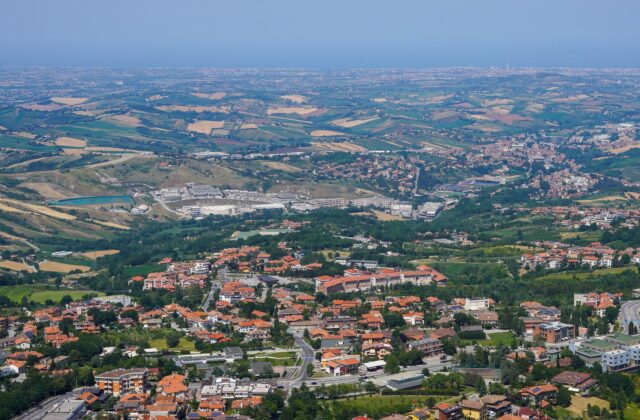
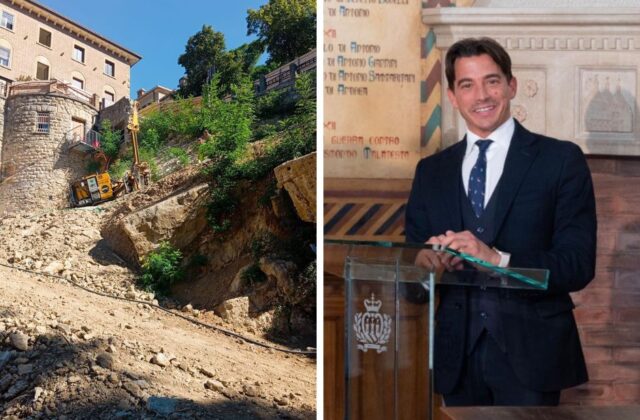
An underground car park with 30-35 spaces aimed at freeing Montegiardino’s main square from vehicles, along with the redevelopment of the adjacent building to create a multipurpose hall and spaces for the Castello (municipality). Secretary of State for Territory Matteo Ciacci presented the project today before the Fourth Commission, a scheme worth €1.5 million, with funding spread between 2026 and 2028.
Construction is slated to begin in 2028, though the timeline still depends on the design process and the necessary approvals. “If the design is completed by the end of this year, as we hope, and accounting for the time needed to secure the required opinions, I believe we could move to the tender procedure by the end of 2027 and subsequently begin construction,” Ciacci explained.
The goal is to give the historic centre back its living space, making it more enjoyable for both residents and visitors. “Now more than ever, our squares need to recover their social function and sense of community — values we consider essential, not least for reasons of civic decorum, which we are particularly focused on,” the secretary stated.
The project has drawn cross-party support, with calls for careful attention to timelines, costs and landscape impact. Paolo Crescentini (PSD) recalled how long-awaited the car park is: “I believe this would be an enormous answer for Montegiardino, since it addresses a long-standing problem.” He asked when construction could actually begin.
Matteo Casali (RF) backed the initiative but urged careful consideration of how it would fit into the historic centre, comparing multiple options before a final decision is made. “I encourage making better use of the preliminary design phases and feasibility studies, which can compare different solutions to the same problem and open up a range of possibilities, from which the one best suited to actual needs can be chosen.”
The question of costs also featured in the remarks of Gian Carlo Venturini (PDCS), who considers the car park strategic for enhancing the historic core. He recalled the options examined over the years, from an underground solution behind the public hall — shelved as too costly and potentially impractical — to one on an area near the square acquired in 2012. For the latter, he raised the possibility of tiered surface parking, which could meet the Castello’s needs while keeping costs down.
Guerrino Zanotti (Libera) supported the approach of spreading projects across the territory, noting that works of this scale require long timeframes. “The policy we favour is therefore one of works that aim to redevelop the entire territory, rather than concentrating only on a few Castelli while leaving the others to their own fate,” he stressed.
In his closing remarks, Ciacci reiterated that the project fits within the broader goal of delivering a project in every Castello, developed through consultation with the local Giunte (councils). For Montegiardino, before the design contract is awarded, the process will involve the Monuments Commission, the Public Works Authority, the Castello’s Giunta and some interested private parties, in order to arrive at a solution that is both practically feasible and sustainable.