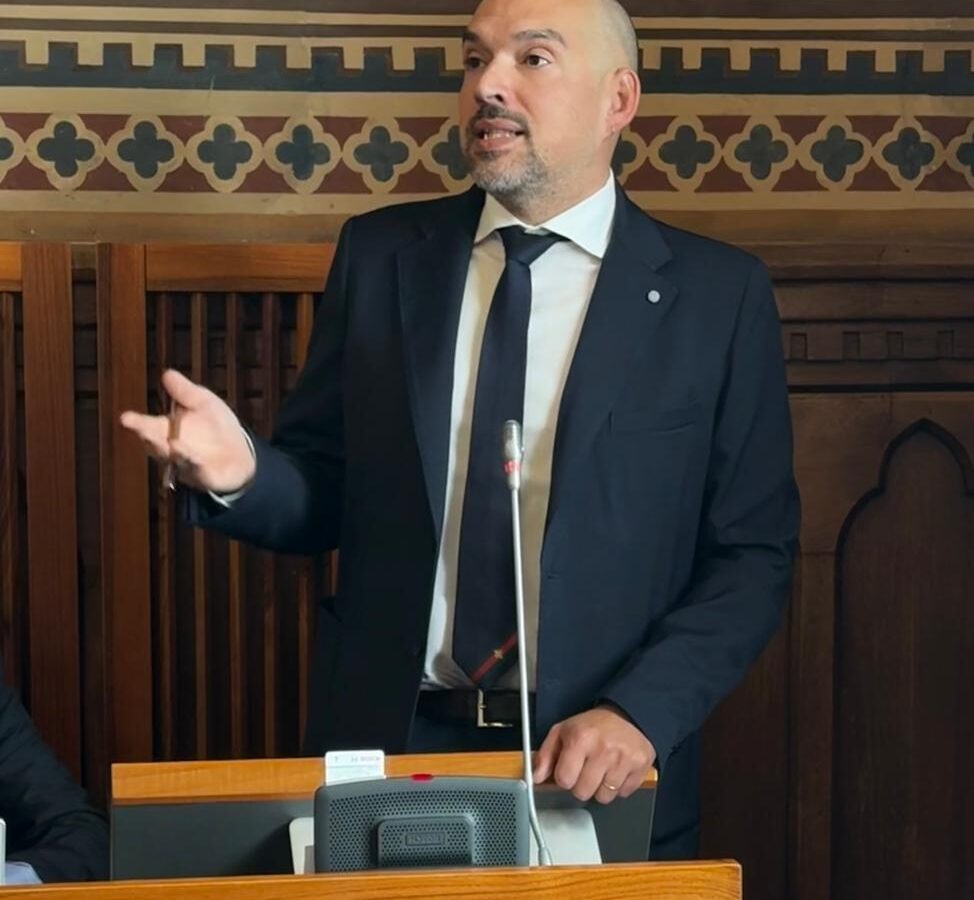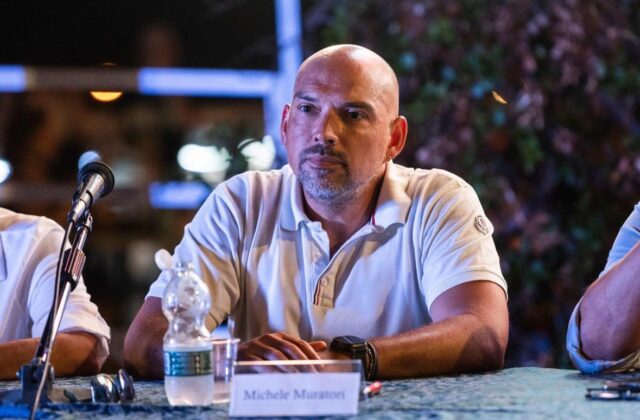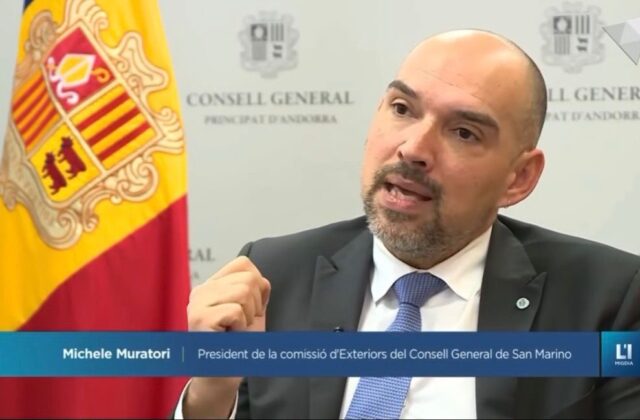
With this first contribution, we launch a new in-depth column curated by Michele Muratori, group leader of Libera, dedicated to analyzing current political affairs, key institutional challenges, and topics of interest to the Republic of San Marino. This space is designed for reflection and debate, offering insights and interpretive angles on the leading issues of the moment, through the perspective of one of the protagonists of San Marino’s political discourse.
Once upon a time, there was a Europe that knew how to dream aboard a riverboat. On June 14, 1985, where the slow waters of the Moselle trace the delicate border between three nations, the Princesse Marie-Astrid drifted before the banks of a handful of houses and vineyards. That place was called Schengen. There, far from the dusty rituals of the halls of power, five countries made a gesture that carried the flavor of heresy: they decided to erase the lines drawn on maps. It was not just another bureaucratic technicality, but an almost poetic wager born from the ashes and blood of the twentieth century. The idea was as simple as it was revolutionary, resting on the principle that the true strength of a people is not measured by the depth of its trenches, but by its capacity to trust whoever stands on the other side of the river.
It took ten years of fears, delays, and skepticism before those gates truly lifted, on March 26, 1995. That day, we did not merely abolish passports at the border — we gave future generations a beautiful illusion, one so often taken for granted: the feeling that the continent was one great shared home, where one could move, study, love, and work without asking anyone’s permission. When Italy boarded this train in the 1990s, it brought its considerable weight to the heart of a grand shared European project.
That breath of freedom went beyond even the formal boundaries of the Union, forever changing life for unique realities such as San Marino. Nestled in the heart of the Italian peninsula, the Republic of the Titano experienced firsthand what it means to eliminate border bureaucracy, as for decades the natural osmosis with Italy guaranteed an uninterrupted flow of cross-border workers, tourism, and goods — proof that the absence of barriers is the lifeblood not only of great capitals, but also of smaller, historically autonomous territories.
Today, however, that grand architecture shows signs of strain under the weight of increasingly complex geopolitical tensions and pressures.
Faced with the dramatic images from Ceuta and yet another surge of migratory pressure at Spain’s borders, the temptation to reinstate temporary controls between member states has resurfaced. It is an understandable reaction when the perception of security becomes a government’s absolute priority, but it risks reviving the old illusion of the fortress — the belief that one more stamp or an extra checkpoint at the airport is enough to manage phenomena of epochal scale.
Understanding the reasons for caution is legitimate, but it is essential to keep sight of the bigger picture. Reintroducing internal barriers risks failing to resolve the structural roots of migratory pressure, while burdening trade, slowing down border micro-economies, and complicating the daily lives of those who cross those checkpoints every day for work or study.
By repeatedly resorting to temporary exemptions to respond to individual crises, there is a real risk of slowly dismantling the most important pillar of European integration. Each time a gate comes down again, the space of mutual trust shrinks a little further. And a Europe that responds to emergencies by sealing off its own compartments risks losing its very sense of community.
Migration and border crises are enormous challenges that demand a genuinely collective response and an integrated management of the Union’s external frontiers. Suspending agreements or temporarily retreating behind one’s own borders may offer apparent relief, but it leaves the underlying issues unresolved for everyone involved. As the waters of the Moselle continue to flow indifferently past Schengen, the question remains whether we will manage to preserve that great legacy of freedom — or whether we will allow the fear of the moment to redraw the borders we had so painstakingly learned to overcome.
Michele Muratori
Libera Group Leader