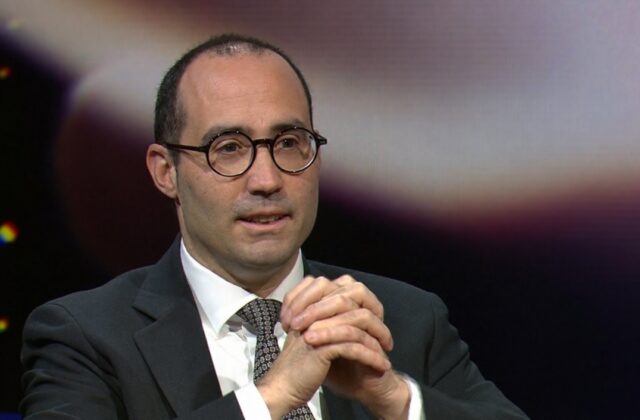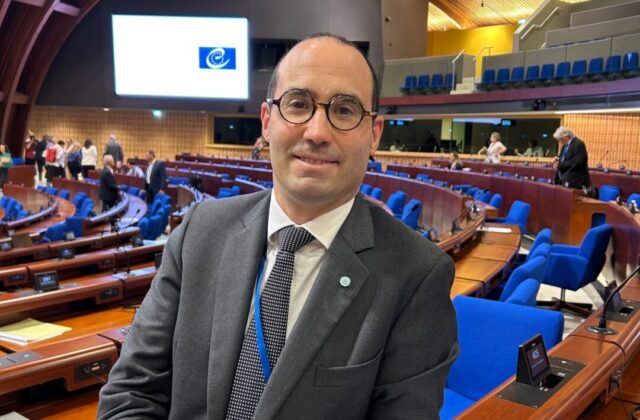
Jobs, housing and school are the three pillars that must truly be addressed to tackle declining birth rates. Matteo Casali (Rf), in his address to the Grand and General Council (Consiglio Grande e Generale), harshly criticized the method followed by the Government, the continuous changes to the text, and what he considers the absence of an overall plan. He also targeted the failure to listen to opposition proposals and a support policy he deemed insufficient. Below is his address in full.
«We finally arrive at the second reading of this measure which, in intent, is supposed to represent one of the fundamental pieces in the fight against the dramatic phenomenon of declining birth rates, through incentives for families and childbearing. However, the first thing I am forced to note is a matter of strong criticism, because if the political response times and the method followed in the approval process of this law are what we have had to witness, I believe there is truly cause for concern. Let me give a brief timeline: the agenda item, which represents the first driver of this legislative process, was approved by the Grand and General Council back in March 2025. Subsequently, we were presented with a very first draft law in the Fourth Commission in November 2025, with the solemn promise – promptly broken – that we would meet again the following week to begin the necessary discussions. The first reading in the Chamber took place only in March 2026, with a text extensively reworked compared to the initial draft and without any real discussion having taken place. At the end of April 2026, the Commission examined the law, but the text had been massively changed due to government amendments submitted at the last minute. As if that weren’t enough, today we have arrived at the second reading with further amending and additional amendments to a text already approved in Commission, submitted with the signatures of thirty-nine councillors; a situation such that the very reports of the rapporteurs of the reporting Commission risked being overtaken by events before they could even be discussed. Now, if this is the “dynamism” and added value the Secretary spoke to us about, I tend to think it is rather a blatant difficulty in finding common ground and a struggle in engaging with stakeholders. The reality is that we find ourselves discussing a bill that has become a veritable “blob,” a text we will be forced to examine “just in time” because of changes that kept arriving until just a few minutes ago. Mind you, I am well aware that the issue is complex and no one in this Chamber has the presumption of holding a magic wand to instantly solve the birth rate crisis; it is a deep-rooted problem affecting the entire Western world we are part of, a problem with social and above all cultural implications, meaning the State can only try to provide tools to mitigate it, but can hardly expect to reverse, with a simple regulation, a trend with such deep roots. Precisely for this reason, however, such a problem requires a multidisciplinary approach – something we have requested and reiterated on every single occasion. Beyond providing subsidies, I believe we need to seriously address three other fundamental pillars which, as it happens, emerged today while discussing other measures in this Chamber. The first pillar is employment: without the certainty of a stable job and decent pay, young couples will struggle to start a family, especially given the frightening cost of living and continuously eroding purchasing power; let us remember that full employment does not necessarily coincide with quality of pay. The second pillar is housing: we continue to witness an emergency that has by now become endemic in our territory, namely the high cost of living. Young couples who want to start a life project find the first, enormous barrier precisely in the difficulty of accessing housing, and here the Government seems intent on not solving problems – just think of the first-home law, territorial planning, or those subsidized interest rates that have nothing subsidized about them at all. It almost seems as though the Government takes pleasure in not solving problems so it can keep making propaganda and saying it will solve them in the future; the longer a problem remains unresolved, the better it is for your rhetoric. The third pillar is education: there is an issue of ongoing, continuous training, whereby today a young person is forced to study and train for longer and longer before being able to settle stably into the world of work. To address all this, a unified steering body would be needed – a tool we have requested repeatedly; we thought the Special Commission on Demographic Trends could be the natural forum for this coordination, but the Secretariat of State preferred to take on every competence itself, and this centralization has not produced the hoped-for results. There is also a dramatic problem linked to our political class’s chronic inability to analyze data, synthesize phenomena and formulate effective intervention proposals. Here too we see the same pattern: faced with perfectly clear data laid out by the offices, the ruling class is unable to understand the real phenomena and proposes solutions based on arbitrary thresholds, always resorting to round numbers, as if aid to families could be calculated by rule of thumb rather than starting from a real analysis of the needs of family units. Anyone who has been in Commission knows that the opposition’s attitude has been constructive, but the dominant feeling has been one of resignation; we were all aware that we were not discussing a piece of an overall plan, and with every amendment the refrain was that these small subsidies would not reverse any trend. The opposition’s proposals have been systematically ignored: we asked for a decisive extension of paternity leave for fathers, which instead was simply increased from ten to twenty days; we asked for family allowances to be calculated based on the ICEE (equivalent economic situation indicator), and we were told no in Commission, only to then see the majority struck by a Damascus-road conversion once the social partners forced you to backtrack. What the opposition says is constantly treated as a dead letter. We also strongly contested the limitation of the caregiver role to just fifty qualifications a year with a spending cap of one million euros: in my view, this choice shows that you don’t fully believe in this role, which we, on the other hand, have always supported. We have even seen minimal proposals rejected, such as free diapers and powdered milk for families in difficulty, despite an Arengo petition approved precisely in that direction; that petition was declared satisfied by the family law, but then the concrete amendment was thrown out. The same goes for the moratorium on nursery school fees and the halving of summer camp rates, measures that for us are long-standing battles. I believe we are facing an epochal challenge that must be tackled with a systemic approach, identifying a genuine “San Marino model” involving politics, civil society and the social partners. But if the timing and methods of this Government are the confused, “just in time” ones we have seen on this occasion, I fear that the game for the country’s future will not even begin».